The ‘land of the free’

- Update Time : Sunday, July 5, 2026
- 0 Time
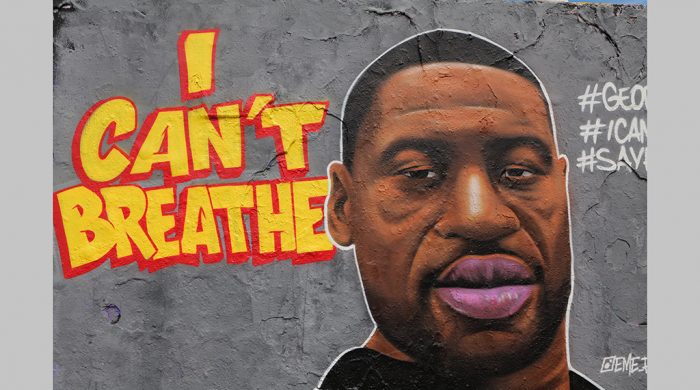
The world’s self-proclaimed beacon of liberty was built upon dispossession, slavery, and exclusion long before it became a global symbol of democracy. This essay revisits the republic’s uncomfortable foundations and suggests that history has left far more unfinished business than patriotic mythology admits. As such, subsequent discussions will examine how those legacies continue to shape America’s present, writes Simon Mohsin
EVERY year, the United States celebrates its founding principles of liberty, democracy, and the belief that ‘all men are created equal’. While these ideals transformed political thought and inspired global democratic movements, they coexist with a more troubling history tied to the nation’s achievements. The rise of the United States as a continental power involved not just the victory of republican ideals over colonial rule but also the dispossession of Indigenous peoples and the expansion of racial slavery.
Acknowledging this complex history strengthens democracy, as historians argue that understanding the US requires examining both the displacement of native American nations and the exploitation of enslaved Africans. These processes shaped the country’s institutions, laws, and social hierarchies long after slavery was abolished.
Before independence in 1776, European colonisation had already begun displacing Indigenous communities through warfare, coercive treaties, and disease. Scholars discuss this as settler colonialism and ethnic cleansing to permanently acquire Indigenous lands. The Indian Removal Act and the Trail of Tears symbolise this dispossession, which involved not only geographic removal but also attempts to erase Indigenous languages and cultures through various destructive policies and programmes.
Indigenous peoples faced systems of enslavement alongside the transatlantic slave trade, particularly during the seventeenth and eighteenth centuries. Native Americans were sold into forced labour and became part of colonial economies, but this history is often overshadowed by narratives focused solely on African slavery. Historians argue that coercive labour systems were more diverse and intertwined with territorial conquest than widely recognised.
The dispossession of Indigenous land and the exploitation of enslaved labour were mutually reinforcing aspects of the emerging American economy. Land taken from Native nations enabled plantation agriculture, while enslaved Africans provided labour that transformed this land into wealth through crops like tobacco, cotton, rice, and sugar. These economic arrangements were supported by legal and political institutions that established racial hierarchies, embedding patterns of inequality that persisted beyond the abolition of slavery.
The conquest of Indigenous America and the expansion of African slavery were interconnected foundations of the American republic. Displacement of Native nations created space for plantations, while enslaved Africans supplied labour, driving economic growth that ultimately fuelled the nation’s ascent into a powerhouse, all while denying liberty to millions.
Ironically, while the Declaration of Independence proclaimed that ‘all men are created equal’, the political compromises underpinning the new republic entrenched slavery rather than dismantling it. The irony ran even deeper. Often celebrated as one of history’s most influential constitutional documents, the US constitution simultaneously institutionalised profound inequalities within its own framework. Although it never explicitly declared Black people or Native Americans to be less than human, its provisions effectively denied them equal political personhood and citizenship. Through the Three-Fifths Compromise, every five enslaved Africans were counted as only three persons for congressional representation and taxation — a constitutional formula that increased the political power of slaveholding states while denying the enslaved virtually every civil, political, and legal right. In effect, the Constitution acknowledged their existence only insofar as it strengthened the political influence of those who enslaved them, reducing human beings to fractional constitutional units rather than recognising them as equal citizens under the law. Native American tribes, meanwhile, were largely treated as separate sovereign entities outside the constitutional community, while most Indigenous peoples remained excluded from the rights, protections, and privileges of US citizenship for much of the nation’s history. Thus, the Constitution’s celebrated promise of liberty coexisted with a constitutional order that institutionalised unequal political belonging and embedded racial hierarchy into the foundations of the republic. This contradiction would shape American society for generations.
The Civil War and the Thirteenth Amendment formally ended chattel slavery in 1865, but emancipation did not produce equality. Reconstruction briefly raised hopes of political participation and civil rights for formerly enslaved African Americans, yet those gains were systematically dismantled. Southern states introduced Black Codes that severely restricted economic and social mobility, followed by the Jim Crow system of legalised segregation that endured for nearly a century. Lynching, voter suppression, discriminatory policing, segregated education, and exclusion from public institutions became instruments for preserving racial hierarchy even after slavery had formally disappeared. As historian Glenn Loury has observed, for Black Americans, the abolition of slavery marked not the end of the struggle for democratic equality but merely its beginning.
Even the landmark victories of the Civil Rights Movement during the 1950s and 1960s did not erase the accumulated consequences of centuries of exclusion. Housing policies such as redlining restricted Black families’ access to mortgages and home ownership, preventing the intergenerational accumulation of wealth that became central to the American middle class. Educational inequalities, employment discrimination, unequal healthcare access, and disparities within the criminal justice system continued to produce profoundly unequal outcomes. Increasingly, researchers describe these enduring disparities not as isolated acts of individual prejudice but as manifestations of systemic racism — a pattern in which institutions, laws, and historical legacies interact to reproduce unequal opportunities even in the absence of explicitly discriminatory legislation.
This perspective explains the resilience of racial inequality despite significant legislative reforms. Disparities in wealth, incarceration, education, health, and political representation are rooted in cumulative historical disadvantage, not just contemporary prejudice. The legacy of slavery persists due to generations of unequal access to resources, creating structural inequalities that endure over time. Therefore, America’s racial divisions must be understood not only through individual actions but also through the institutions that shape opportunity and disadvantage across generations.
The story of racial exclusion in America extends beyond Black and Indigenous Americans. Over centuries, various immigrant and minority groups have faced discrimination shaped by political and economic anxieties. Chinese immigrants dealt with exclusionary laws in the 19th century, Japanese Americans faced internment during World War II, and Arab and Muslim communities experienced increased surveillance post-9/11. The Covid pandemic also saw a surge in anti-Asian hate. Despite differing contexts and levels of severity, these experiences underscore how prejudice targets various communities, drawing on long-established institutional practices.
Recognising this history is not about assigning guilt but understanding how institutions shape nations. The United Stgates has transformed significantly, abolishing slavery, dismantling legal segregation, and expanding protections. However, historical injustices leave lasting impacts on wealth, social inequalities, and political cultures. Acknowledging this continuity highlights that democracy is a process, and America’s narrative is one of an ongoing struggle to align its ideals with reality, rather than a story of straightforward progress or oppression.
America’s defining paradox lies in being a champion of democracy while denying freedom to millions within its borders. The nation, which advocates for human rights, also carries legacies of Indigenous dispossession, racial slavery, and various forms of discrimination. These contradictions highlight the challenge of extending ideals of liberty and equality universally. Every major expansion of American democracy, from the abolition of slavery to the Civil Rights Movement, has relied on demanding that the country live up to its founding principles.
Current debates on policing, immigration, voting rights, and racial justice remind us that the issues of the past continue to resonate today. Disparities affecting various racial and ethnic groups reveal that prejudice has evolved rather than disappeared. The challenge remains to ensure equal citizenship regardless of race or religion. As the United States approaches two and a half centuries of nationhood, its success depends not on achieving perfection, but on courageously confronting its imperfections. Acknowledging difficult history can strengthen a nation, and America’s legacy lies in its ongoing pursuit of a more perfect union, making its ideals a reality for all. This journey is unfinished, yet it embodies the essence of the American experiment.
Simon Mohsin is a political and international affairs analyst.