Banks sit on Tk 3.28 lakh crore excess liquidity

- Update Time : Sunday, July 5, 2026
- 0 Time
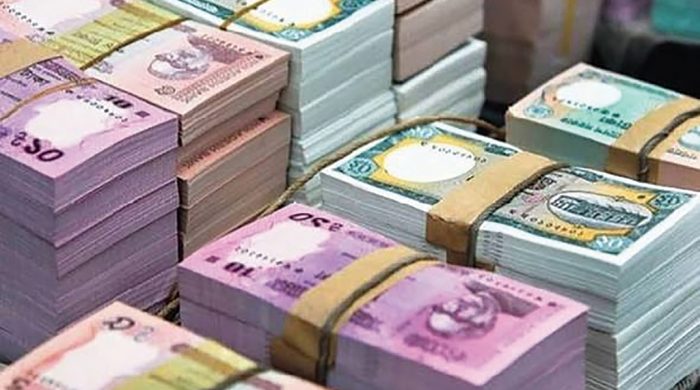
Excess liquidity in Bangladesh’s banking sector remained above Tk 3 lakh crore in May 2026, as banks continue to hold back from lending amid a soaring defaults, sluggish investment demand and persistent economic uncertainty.
Data from Bangladesh Bank shows that surplus funds climbed to Tk 3,27,877 crore in May from Tk 2,35,500 crore in May 2025.
The buildup has been relentless — rising from Tk 2,15,002 crore in December 2024 to Tk 2,92,745 crore in June 2025, before reaching the current elevated level.
The total liquid assets of all scheduled banks crossed Tk 7 lakh crore in May.
Therefore, over 70 per cent of all liquid assets in the banking system are now surplus funds with nowhere productive to go.
Of the total liquid assets of Tk 7 lakh crore, unencumbered approved securities — primarily government treasury bills and bonds — account for Tk 5 lakh crore, or nearly 72 per cent of the entire pool.
This means banks are not simply holding cash. They are actively converting idle funds into government securities to earn a safe, guaranteed return rather than taking the risk of lending to businesses and individuals.
Government treasury bills and bonds have been offering attractive risk-free income at a time when loan defaults are rampant.
The reluctance to lend is most visible in private sector credit growth, which fell to a historic low of 4.72 per cent year-on-year in March 2026, down sharply from 7.56 per cent a year earlier.
Experts said that when banks retreat from lending, businesses struggle to secure working capital, slowing production, hiring and investment.
A banking system awash in idle funds while the real economy starves of credit is not a sign of financial strength — it is a sign of deep institutional dysfunction, they said.
Government bank borrowing reached Tk 1.37 lakh crore in FY26, which is near Tk 33,000 crore more than its annual target.
The core reason banks are avoiding private lending is the catastrophic state of non-performing loans.
Bad loans jumped to Tk 5.88 lakh crore in March 2026 from Tk 3.45 lakh crore in December 2024.
Defaults now represent more than 32 per cent of total outstanding loans, the highest ratio anywhere in South Asia.
Nearly 20 banks have effectively stopped lending altogether, while others approve credit only after exhaustive scrutiny.
The crisis has grown severe enough that Bangladesh Bank has been forced to initiate mergers among five Shariah-based banks that collapsed under the weight of accumulated defaults.
Bangladesh Bank’s own monetary policy statement for July-December 2026 said that the excess liquidity remains highly polarised, with well-governed banks flush with funds while others face an acute liquidity crunch.
It also said that the existence of huge liquidity in the banking system can be attributed to several factors: weak credit demand from private investors, a significant increase in deposit growth, and banks’ higher investment in T-bills and T-bonds due to subdued investment activity and broader economic uncertainty.