Infrastructure, staff crises hurt delivery of justice

- Update Time : Saturday, July 18, 2026
- 0 Time

An acute shortage of courtrooms, judges’ chambers, support staff, and office facilities has plagued the lower judiciary, forcing nearly 500 judges to share courtrooms across Bangladesh.
The shortage of facilities and manpower signifies longstanding structural weaknesses that legal experts say also continue to undermine judicial independence and delay the delivery of justice.
– Over 40 lakh cases pending with subordinate courts
– Increasing number of judges alone not enough
– SC lawyers iterate demand for SC secretariat
– Law minister assures pursuing judiciary needs
The government has recently created about 378 new courts and special tribunals across the country.
But as constructing new court buildings is a lengthy process the law ministry has opted for vertical expansion or internal modification of existing court buildings to create additional courtrooms and judges’ chambers as a quick solution.
The ministry in a notification on July 8 asked the authorities concerned to urgently obtain cost estimates from the Public Works Department for such expansion or modification and submit them to the ministry.
According to judges and legal experts, the shortage of facilities and support staff results in the loss of valuable court hours, slows the disposal of cases, and adds to the country’s mounting judicial backlog, which has already exceeded 40 lakh pending cases with subordinate courts.
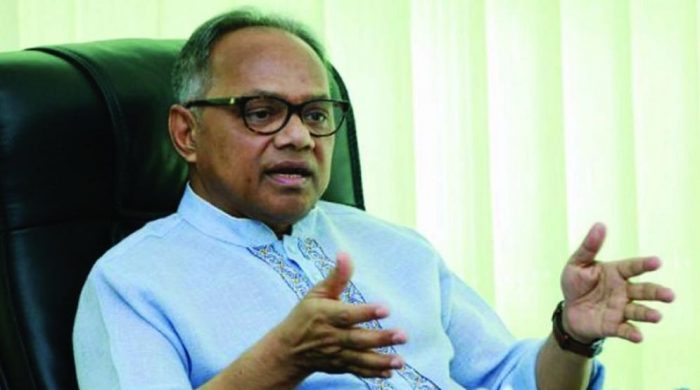
‘The judiciary can’t function efficiently without adequate infrastructure,’ High Court special officer and additional district judge Mazharul Haque told New Age recently.
The subordinate judiciary, he said, currently faces a nationwide shortage of courtrooms, which has become more acute after the appointment of judges against the newly created posts.
‘New judicial positions require fresh courtrooms, judges’ chambers, office facilities, support staff, and equipment. Many older district courts are also suffering from lack of support staff and essential office resources,’ he said.
According to court officials, the lower judiciary across the country currently faces a shortage of 241 court rooms, forcing 482 judges to share court facilities.
Dhaka faces the highest deficit, with 17 more courtrooms needed, followed by Khulna with 13, Chattogram with 12, Cox’s Bazar with 11, Feni with 10, Barishal with 9, Kishoreganj with 8, and Rajshahi with 8 more courtrooms required.
Most other districts also face shortages, ranging from one to seven courtrooms.
Legal experts warn that judges sharing courtrooms often cannot hold proceedings throughout the working day, reducing judicial productivity and prolonging trials for thousands of litigants.
Retired district judge Shahjahan Saju argued that although the judiciary was constitutionally separated from the executive, it continued to depend on the executive for financial and administrative support.
Shajahan, now practicing law at the Supreme Court, said that genuine judicial independence required not only decisional autonomy but also administrative and financial independence, allowing the judiciary to plan and finance its own infrastructure, recruit support staff, and modernise the court administration without relying on executive approval.
Supreme Court lawyer Mohammad Shishir Manir said that many pointed to the dissolution of the SC secretariat, established during the interim government, as a setback for the judiciary’s institutional autonomy.
Had the judiciary retained the Supreme Court Secretariat, many infrastructure requirements, staff shortages, and budgetary decisions could have been addressed more efficiently, he said.
Instead, he added, the judiciary remained dependent on the Ministry of Law Justice and Parliamentary Affairs for funding, development projects, and administrative decisions.
According to both Shahjahan and Shishir, the infrastructure crisis directly affects citizens’ constitutional right to timely justice.
‘More than 40 lakh cases remain pending with subordinate courts. People are losing confidence in the judiciary because justice is taking too long. Increasing the number of judges alone is not enough. Every judge must have a courtroom, a chamber, staff, and modern facilities to function effectively,’ Shahjahan said.
He also stressed the need to allocate a greater share of the judicial revenue for the development of the court system, iterating the demand for SC secretariat.
‘Without financial and administrative autonomy, the judiciary will continue to depend on the executive for its basic institutional needs,’ he observed.
While chief judicial magistrate court buildings have been completed in 41 of the country’s 64 districts, the construction is yet to begin or be completed in the remaining 23 districts — though the project was initiated in 2009.
The districts that are awaiting CJM court buildings are Nilphamari, Narsingdi, Narail, Bagerhat, Cox’s Bazar, Shariatpur, Natore, Sherpur, Madaripur, Feni, Gaibandha, Chuadanga, Chandpur, Bandarban, Meherpur, Rajbari, Naogaon, Khagrachari, Barguna, Thakurgaon, Gazipur, Lalmonirhat, and Netrokona.
The Planning Commission project evaluation committee, sources said, discussed the second phase of the CJM building project on January 1 this year and subsequently sought additional information from the law ministry, which submitted the required documents on April 23.
According to Judicial Service Association secretary general Mohammad Mustafizur Rahman, land acquisition problems remain in several districts. He urged the government to expedite construction.
The association, he added, will formally raise the shortages of courtrooms, judges’ chambers, staff, and equipment with the law minister.
The continued shortages of courtrooms, judges’ chambers, and judicial infrastructure have renewed calls from legal professionals for deeper institutional reforms to strengthen judicial independence.
While Bangladesh achieved the formal separation of the judiciary from the executive in 2007, they argued, true independence cannot be obtained unless the judiciary is given sufficient financial autonomy, administrative control, and modern infrastructure to discharge its constitutional responsibilities effectively.
Repeated dependence on executive ministries for court buildings, staffing, and budget allocations, they said, continues to limit the institutional capacity of the judiciary and thus ultimately affects citizens’ access to timely and effective justice.
Law minister Md Asaduzzaman on June 20 said that he acknowledged the judiciary’s longstanding concerns over inadequate residential facilities, courtrooms, transport, security and financial autonomy.
He urged judges to place all their demands before the government, assuring them that he would pursue the issues with the authorities.
The minister said that the chief justice had proposed constructing a 10-storey judicial building in every district to address the accommodation needs. He added that the proposal would be discussed with the prime minister.
He also said that arrangements were being made to provide microbuses to ease the transportation crisis facing judges.
Reaffirming the government’s commitment to strengthening the judiciary, the minister said that he would work to remove obstacles affecting the judiciary’s function and expressing the hope for ushering in ‘golden days’ for the judiciary.