PM heads to New York Monday for first UNGA address

- Update Time : Saturday, September 19, 2026
- 9 Time
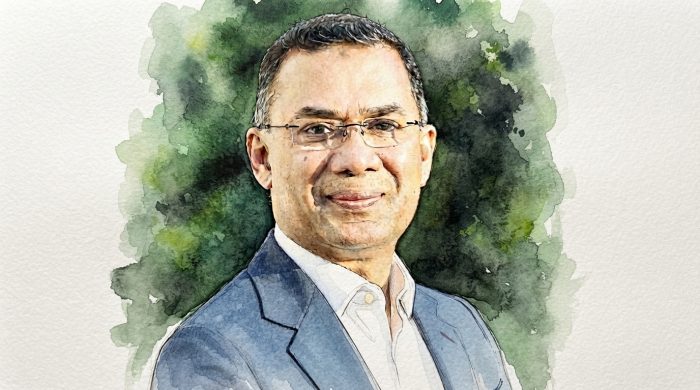
Prime minister Tarique Rahman will leave Dhaka for New York on Monday to attend the 81st session of the United Nations General Assembly and deliver his first address to the assembly on September 24, with a series of bilateral and high-level meetings scheduled during his brief visit.
The prime minister is scheduled to leave New York for Dhaka on the night of September 25, according to Foreign Ministry officials. His delegation has also been kept relatively small for the trip.
Tarique’s visit comes as Bangladesh’s foreign minister Khalilur Rahman is presiding over the 81st session. Khalilur was elected president of the General Assembly on June 2, becoming the second Bangladeshi to hold the post after Humayun Rashid Choudhury, who served as president of the 41st session in 1986-87.
The meetings are expected to include talks with Canadian prime minister Mark Carney, Thai prime minister Anutin Charnvirakul, Bhutanese prime minister Tshering Tobgay, Pakistani prime minister Shehbaz Sharif, Kuwait’s crown prince Sheikh Sabah Al-Khaled Al-Sabah, Croatian prime minister Andrej Plenković and Saudi foreign minister Faisal bin Farhan Al Saud.
He is also expected to meet UN Secretary-General António Guterres, UN high commissioner for human rights Volker Türk, UN high commissioner for refugees Barham Salih, European Council president António Costa, World Bank president Ajay Banga and Boeing Global president Brendan Nelson.
During his visit, Tarique is also scheduled to attend a dinner hosted by US president Donald Trump.
State minister for foreign affairs Humaiun Kobir said the prime minister’s UNGA address would focus on Bangladesh’s new vision, democratic transition and aspirations.
‘He will have a very busy schedule in New York,’ Kobir said, adding that Tarique would hold meetings with world leaders on the sidelines of the General Assembly.
The Rohingya crisis will also be a major focus of the visit, with Bangladesh planning a high-level side event on the issue.
‘There will be a high-level discussion or meeting on the Rohingya crisis as part of the visit. It is a major priority for us,’ Kobir said.
Asked whether the UN Refugee Convention would be discussed, the state minister said the government would focus on the broader Rohingya crisis.
On the possibility of a meeting between Tarique and Trump, Kobir said such engagements were often finalised shortly before or during major international conferences.
‘The primary focus of the prime minister’s visit is to address the UN General Assembly,’ he said, adding that details of the sideline meetings would be announced in due course.
State minister for foreign affairs Shama Obaed Islam said the 81st General Assembly would provide Bangladesh with an opportunity to present its national interests, economic potential and development priorities to the international community.
‘It marks a new journey, a new possibility and a new aspiration,’ she said.
Shama said the government’s ‘Bangladesh First’ foreign policy would guide the prime minister’s engagements, with an emphasis on presenting Bangladesh as a democratic, confident and responsible country.
She said the Rohingya crisis would receive particular attention, with a dedicated session planned during the General Assembly involving the prime minister.
The crisis had become increasingly complex because of the roles of Myanmar authorities, the Arakan Army, regional actors and competing international interests, she said.
‘In fact, the problem has deepened. A regional complication has been created. Without international pressure, resolving this problem will become very difficult,’ Shama said.
She called for greater international support for a sustainable solution to the Rohingya crisis and urged Bangladeshis abroad and civil society representatives to help mobilise such support.
‘The Rohingya crisis is a big problem for Bangladesh. But it’s not Bangladesh’s problem. The problem was not created by Bangladesh,’ she said.