Nurturing Merit and Affectionate Discipline: The ‘Farm Chicken’ Remark and Certain Misunderstandings

- Update Time : Thursday, July 16, 2026
- 0 Time
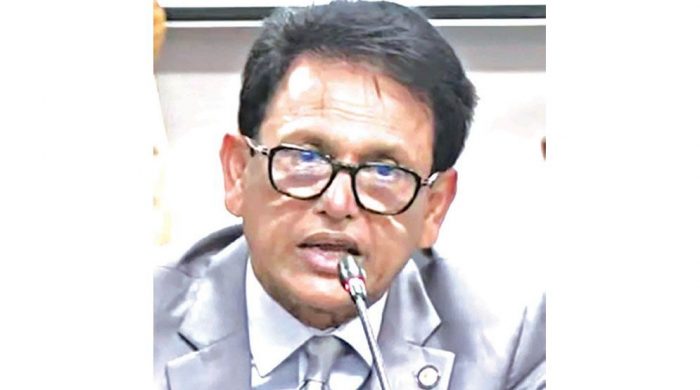
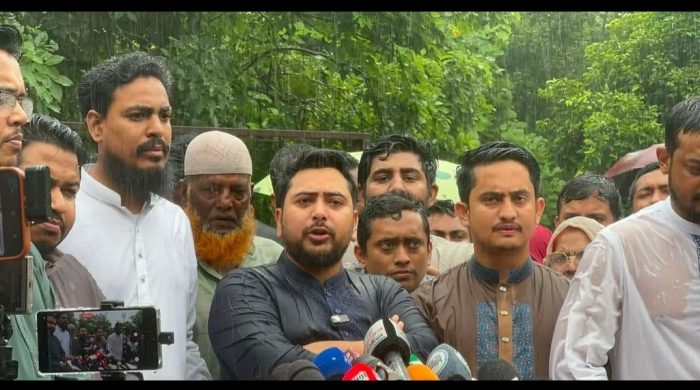
Recently, a storm of intense discussion and criticism erupted across social media regarding a leaked audio clip of a phone conversation between Bangladesh’s current Education Minister, Dr ANM Ehsanul Hoque Milon, and an HSC examinee. The controversy centered heavily on a specific phrase: “farm chicken” (farm-er murgi). However, amidst this rush to muddy the waters, have we paused even once to look into the true undertone of the conversation? Or are we, as usual, putting the sincerity of a lifelong reformer and responsible guardian on trial based on a fragmented truth?
Fragmented Truth vs the Real Truth
“They are like farm chickens… I have a daughter too, and she is just like a farm chicken. Getting drenched in just a little rain gives her a fever…”
It is evident that this choice of words did not stem from disdain, ridicule, or sarcasm. Instead, it is a very familiar expression used by middle-class and urban parents in Bangladesh. In urban life, parents often use this term affectionately—sometimes with mild regret—for children who are not accustomed to harsh weather or rigorous physical labor outdoors.
Such informal and intimate language only surfaces when a top policymaker views ordinary students as equals to his own children in his living room. He did not treat the students as outsiders; he thought of them as tenderly as his own family. His comparison stemmed from deep anxiety that weather changes might cause students to fall sick and lose their chance to sit for their exams. Furthermore, he immediately coordinated with the Bangladesh Meteorological Department and relevant authorities to take necessary measures to protect student health.
(Contextual Addition: Following the public backlash regarding these remarks, Education Minister ANM Ehsanul Hoque Milon formally expressed regret in Parliament on 14 July, 2026, clarifying that his personal remarks were never intended to offend or hurt the examinees.)
2001–2006: The Historic Reformer of the Education Sector
This sincerity from Dr ANM Ehsanul Hoque Milon is nothing new. Those familiar with the history of Bangladesh’s education system know that during his tenure as the State Minister for Education under the BNP government from 2001 to 2006, his contributions were revolutionary.
At that time, academic cheating and exam leaks were massive curses on the education sector. Minister Milan risked his safety to conduct surprise raids at various examination centers—sometimes traveling by helicopter—to curb cheating and establish a new culture of fair testing. His strict measures ensured proper evaluation based on merit and put an end to the culture of leaked question papers. Additionally, his policies promoting female education, upgrading school and college infrastructure in remote areas, and improving teacher training standards remain highly memorable.
The 5-Month Revolution: Turning Around from the Ruins
Since taking charge again as the Education Minister in February 2026, Dr ANM Ehsanul Hoque Milon has initiated extensive reforms over the past five months to salvage the sector from the previous administration’s chaotic curricula, flawed evaluation methods, and bureaucratic bottlenecks:
1. Halting Unnecessary Foreign Travel: He strictly banned the practice of government officials taking expensive foreign trips funded by state money under the guise of absurd training programs, such as learning how to cook or observing water hyacinth removal. He delivered a clear message that such waste of state funds will no longer be tolerated.
2. Session-Jam Free Academic Year and Modern Curriculum: He has taken initiatives to eliminate academic backlogs and session jams. Emphasizing “learning with happiness,” he is prioritizing sports, cultural activities, family values, and moral education within the syllabus.
3. Equity in Scholarship Distribution: To reduce disparity, he made a far-reaching decision to allocate a 20% scholarship quota for students of private kindergartens alongside government primary schools.
4. Rational Reforms in Education Management: He is maintaining an uncompromising stance against corruption and political nepotism, actively blocking the previous government’s manipulation regarding private university trustee boards to build corruption-free campuses.
Criticize, But Only After Knowing the Truth
One of the biggest issues with social media today is judging a quote without its context. It is time to reflect on whether it is fair to paint a well-intentioned, domestic, and emotional conversation with political or negative colors just to chase cheap likes, comments, and views.
The choice of words may not have been formal, but the underlying intent was entirely benevolent and affectionate. Parents and teachers say many things to children out of discipline or love that would sound offensive if spoken by a stranger. However, the position of a teacher and guardian remains sacred.
Making an earnest patriot like Dr ANM Ehsanul Hoque Milon—who dedicated his entire political career to refining the education sector and nurturing merit—the target of cheap internet trolling is highly unfair. This profound empathy for students and his effort to protect them like his own children should be applauded. Looking past negativity shows that this was not a slight; it was the affectionate discipline and deep anxiety of a true guardian.
The writer is a teacher and researcher at the Department of Sociology and IFSCS, National University Bangladesh