Experience Paradox

- Update Time : Sunday, April 19, 2026
- 60 Time

Bangladesh is producing graduates faster than it can employ them. Every year, roughly two million young people enter the labour market. Among them, a striking proportion discover that their job door is locked. It is not because the economy has stopped growing but because the system connecting education to employment was never properly built.
Nearly four in ten young Bangladeshis are classified as NEET: not in education, employment or training. That rate has nearly doubled since 2016 and sits at almost twice the global average. The scale is not a cyclical blip caused by a slow hiring season. It is a structural condition that has been hardening for years.
The problem begins in the classroom. Studies by the BRAC Institute of Governance and Development and the Centre for Policy Dialogue have found that Bangladesh’s education system is organised around certification rather than practical skill formation. Students taking a series of examinations emerge with qualifications but without work-ready competencies. The irony is sharpest at the top. Among university graduates, unemployment is higher than among those who never completed secondary school. Education, in other words, does not reliably improve a young person’s chances of finding work. In some cases, it appears to have the opposite effect.
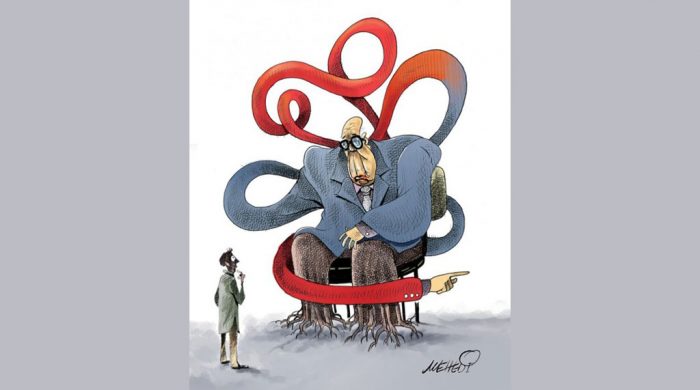
Employers have responded to this skills gap not by training new entrants, but by filtering them out. Experience requirements for entry-level roles have become standard practice. This functions as a wall for anyone attempting to enter the labour market for the first time. The graduate without experience cannot get the job. Without the job, they cannot get the experience. The logic is circular, and the exit is narrow.
Those who cannot find formal work do not disappear. They move into the informal economy. This includes street trading, piece-rate manufacturing, domestic labour and casual work of every kind. Informal employment is not nothing. It keeps families fed and households functioning. But it offers almost no pathway forward. There is little training, no social protection, and weak mobility into higher-productivity sectors. For many young Bangladeshis, informal work is not a stepping stone. It is where the story ends.
Women bear the worst of it. ILO data shows a NEET rate of nearly 50 per cent among young women, compared to around 11 per cent among young men. The gap reflects not just labour market failures but social ones. These include restricted mobility, family pressure to remain at home, and a shortage of formal opportunities in areas accessible to women outside major cities. Among young women who do find work, nearly all are in the informal sector, where low wages, absent social protection and limited advancement are the norm. The formal economy, for most young Bangladeshi women, remains effectively out of reach.
The official figures, troubling as they are, almost certainly understate the problem. Bangladesh’s statistics bureau has continued using a measurement standard from 1982 that critics say inflates employment figures and obscures the true scale of labour market exclusion. When the bureau began publishing data under updated international standards, unemployment figures rose sharply. The Centre for Policy Dialogue has been pointed in its assessment, describing official labour data as failing to reflect the real condition of the market. Policymakers, in other words, have been navigating with a flawed map.
The government has begun to respond. In 2023, Bangladesh and the World Bank signed a $300 million agreement to deliver skills training and alternative education to 9,00,000 rural NEET youth, with women making up the majority of intended beneficiaries. The EARN project is the largest intervention of its kind the country has attempted. Whether it is large enough, and whether it addresses the right problem, remains an open question. Training programmes can equip young people with skills. They cannot, on their own, fix an entry-level hiring market that systematically excludes first-time job seekers, or redesign a university curriculum built for an economy that no longer exists.
Bangladesh is not running out of young people. It is running out of time to employ them. The demographic dividend, the economic windfall that comes when a country’s working-age population peaks, is not permanent. It has a window. And that window, for Bangladesh, is closing.
The country is not short of potential. It is short of the infrastructure to convert potential into participation. Until those changes, the numbers will keep climbing, and a generation will keep waiting.