Authenticity of Our Artefacts and Culture

- Update Time : Wednesday, July 22, 2026
- 0 Time
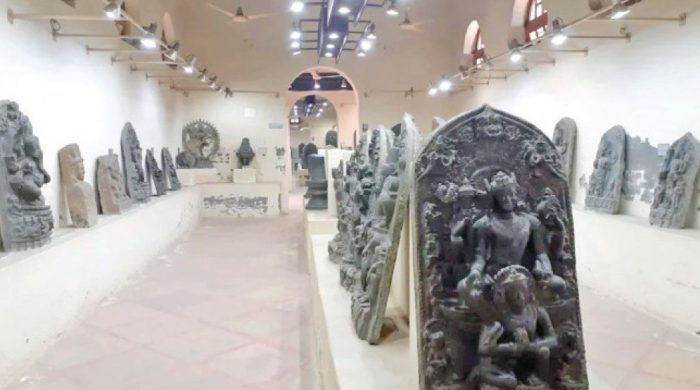
A brief report was published in a leading Bangladeshi newspaper on 12 May regarding Bangladesh’s archaeological artefacts. According to the report, 47 artefacts from the Mahasthangarh Museum in Bogura were sent to France in 2007 for an exhibition under a cultural agreement signed between Bangladesh and France. In addition, many other artefacts preserved in different museums across the country were also sent to France for the same exhibition. The report possibly did not receive much attention. But, surely, it focused on a matter of high significance which has far-reaching implications for our national history and culture.
Bangladesh has a rich cultural heritage. History tells us that this part of South Asia was ruled at different times by dynasties such as the Pala and Sena. The Palas were followers of Buddhism, while the Senas practised Sanatan Hinduism. Islam arrived later and eventually became the dominant religion in this land. However, the Buddhist and Sanatan traditions remained an integral part of our historical identity. Archaeological excavations in different parts of the country, particularly in northern Bangladesh and at Wari-Bateshwar, have revealed valuable evidence of our ancient civilisation and cultural heritage from time to time.
Bangladesh is largely an alluvial country, and river erosion has been a constant feature throughout its history. As a result, many ancient structures and archaeological sites have been destroyed or damaged over the centuries. For this reason, we have probably lost countless objects of historical and cultural significance. It is therefore our responsibility to preserve the artefacts and antiquities recovered through archaeological excavations. Most of these valuable objects are currently preserved in museums across the country.
Holding exhibitions of archaeological artefacts abroad to strengthen cultural relations with other countries is not unusual. However, ensuring the safety, authenticity and proper preservation of these artefacts must receive the highest priority. Otherwise, there will always remain a risk of loss and damage of these precious historical signs.
Bangladesh may not have a very large chunk of land, but it has a sizeable and culturally diverse population. Although the overwhelming majority are Bengalis, many ethnic communities with distinct languages, customs and lifestyles also live in the country’s hills and plains. The traditions and lifestyles of both the mainstream and indigenous communities together constitute the rich cultural mosaic of Bangladesh. Our culture is a harmonious blend of different faiths, traditions, lifestyles and social practices.
Archaeological discovery is a continuous process, and Bangladesh still has enormous potential for uncovering more historical objects. From time to time, media reports inform us that ancient coins and statues of Buddha, Shiva and Kali have been discovered during construction work in different parts of the country. These discoveries provide invaluable evidence of our ancient history. If systematic excavations are conducted at archaeological sites across the country, there is every possibility of recovering many more artefacts. Such discoveries would further enrich our understanding of Bangladesh’s history and civilisation.
According to the report mentioned above, a committee has been formed to verify the authenticity of the artefacts returned from France, which is surely a welcome move. But, given the national significance of the issue, the committee should have been a high-powered national committee rather than a local one. It should be headed by a nationally recognised archaeologist and include leading experts in archaeology and heritage conservation.
Bangladesh is predominantly inhabited by Bengalis, yet it has nurtured a centuries-old tradition of cultural and religious pluralism. For generations, the majority community has lived alongside people of different faiths and ethnic backgrounds. Preserving archaeological artefacts is therefore essential not only to protect our history but also to safeguard the country’s pluralistic cultural identity.
Throughout history, as people of different religions and cultures have lived in this land, one faith or another may have been dominant at different times, but our society has largely remained free from deep social divisions. This diversity is one of the most significant features of our culture.
Archaeological heritage can also make a significant contribution to tourism. Egypt provides an excellent example in this regard. Although much of the country is covered by desert and only a narrow strip along the Nile is suitable for cultivation, millions of tourists visit the country every year to see its pyramids, temples, statues and other artefacts from the age of the pharaohs. Tourism has become one of Egypt’s major sources of foreign exchange earnings.
Bangladesh can also promote tourism by preserving and properly displaying its archaeological sites, monuments and artefacts. Protecting our cultural heritage while making it accessible to visitors would not only strengthen national identity but also contribute to economic development. The authorities should therefore take timely and effective initiatives to preserve these invaluable treasures for future generations.
_______________________________
The writer is a former civil servant