Power crisis requires collective effort, not blame game

- Update Time : Sunday, September 13, 2026
- 35 Time
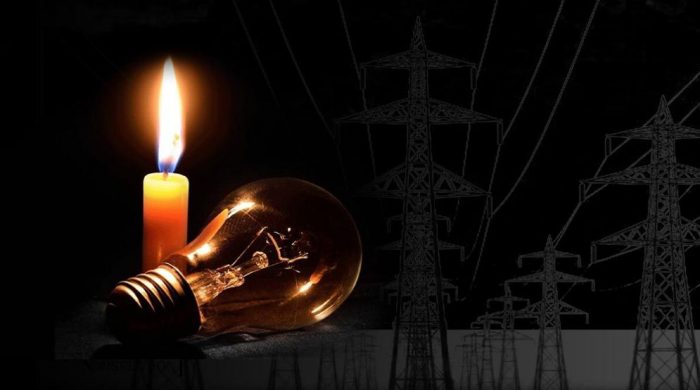
Prime Minister Tarique Rahman has increasingly distinguished himself from conventional politicians through his style of work and public conduct. Despite being the chief executive of the state, he has maintained a remarkably simple lifestyle. More importantly, he has sought to demonstrate that politics is ultimately about action rather than words.
His simplicity, openness and transparency are qualities worthy of emulation. His recent candid admission about the country’s electricity crisis has further underscored this approach. As head of government, he has acknowledged the reality of the crisis while simultaneously making efforts to address it.
However, while praising the Prime Minister for his openness, some recent remarks in Parliament targeting the Power Minister have raised concerns.
The Jatiya Sangsad is the centre of the people’s hopes and expectations. Elected representatives have a responsibility to discuss national problems constructively and help find solutions. Against this backdrop, a recent sarcastic remark directed at the Power Minister — suggesting that electricity goes out because he is tall — was unfortunate and unnecessary.
Criticism of government policy or ministerial performance is an integral part of parliamentary democracy. But criticism should be informed, constructive and respectful. Personal jibes do little to explain the causes of a complex national crisis and may instead undermine the dignity of Parliament itself.
There is another important point to consider. A minister is the head of a ministry, but he is also a member of a government led by the Prime Minister. The Power Minister does not operate in isolation. Decisions and public statements concerning the power sector are made on the basis of assessments and briefings from ministry officials, engineers, technical experts and other relevant stakeholders.
Therefore, holding one minister solely responsible for every problem in the electricity sector oversimplifies a highly complex issue.
There is no denying that the country is experiencing an electricity crisis. But the more important questions are: Why is the crisis occurring? How did the situation reach this point? And what structural and technical weaknesses are contributing to it?
The answers cannot be reduced to the performance of a single minister. Bangladesh is an emerging economy with rapidly expanding industrial, commercial and economic activities. Electricity demand has grown significantly, placing increasing pressure on existing infrastructure. At the same time, weaknesses in transmission and distribution systems, technical limitations, manpower shortages, equipment constraints and problems with national power generation and supply have created a complex set of challenges.
Many of these issues are technical and engineering-related and are not immediately visible to ordinary consumers. Yet they have a direct impact on the reliability of electricity supply.
This is particularly evident in rural areas, where frequent power outages have become a major concern. The problem is not necessarily limited to inadequate generation. Long-standing weaknesses in the distribution network also play an important role.
One of the biggest challenges in rural electricity distribution is the extensive length of overhead power lines. A single feeder may have to supply electricity over a considerable distance. Consequently, when a fault occurs somewhere along the line, locating the exact point of failure and restoring supply quickly can be difficult.
The longer the feeder, the more difficult this process becomes. A fault affecting a line extending for many kilometres cannot always be located and repaired immediately. Equipment overload and failures can further complicate the situation, particularly as electricity consumption in rural areas continues to rise.
These realities demonstrate why the electricity crisis needs to be viewed from a broader perspective.
Blaming the Power Minister for every outage without examining the underlying weaknesses of the entire power sector does little to solve the problem. It may generate attention on social media, but it risks shifting public discussion away from the real causes of the crisis.
The Power Minister is a senior member of Prime Minister Tarique Rahman’s Cabinet, an experienced parliamentarian and a freedom fighter. Constructive criticism of his ministry is both legitimate and necessary. Parliament should certainly debate the electricity crisis, question the government and demand better services.
But the objective should be to identify the causes and find solutions, not to demean an individual.
If the government is to overcome the present electricity challenges, it will require a coordinated effort. Strengthening the distribution network, improving fault-detection systems, upgrading ageing infrastructure, ensuring adequate manpower and maintaining sufficient stocks of transformers, insulators and other essential equipment are among the measures that need attention.
The country also needs to look seriously at renewable energy, smart-grid technology, automatic reclosers, fault locators and additional substations to make the power distribution system more resilient.
The electricity crisis is too complex to be reduced to a political punchline. It is the result of multiple interconnected factors, some of which have developed over many years.
The government must therefore be held accountable for improving the situation, but accountability should be accompanied by a clear understanding of the problem. Parliament, policymakers, technical experts, consumers and other stakeholders all have a role to play.
The Prime Minister’s candid acknowledgement of the crisis offers an opportunity for a more mature public discussion. Instead of searching for an individual to blame, the focus should be on understanding the weaknesses of the system and working collectively to fix them.
That would serve both the public interest and the cause of responsible parliamentary democracy.
According to an analysis of the available information, a large proportion of faults on long rural distribution lines are single line-to-ground faults. Around 75 percent of faults may fall into this category, often linked to environmental factors such as vegetation and insulator leakage.
Another major problem in rural electricity distribution is voltage drop. The farther the end of a feeder is from a substation, the greater the risk of voltage falling at the end of the line. This problem becomes more pronounced with long feeders. At times, efforts to maintain voltage levels may require load reduction or even tripping of the line.
The absence of modern automatic protection and reclosing systems on some feeders can make the situation worse. A fault affecting only a small section of a line can sometimes result in an entire feeder or substation being shut down. In this way, a local fault can turn into a power outage affecting a much larger area.
For long rural feeders, one of the biggest challenges after an outage is identifying the exact location of the fault. Some feeders may extend for 30, 60 or even 80–90 kilometres or more. If a tree falls on such a line, an insulator is punctured or another fault occurs, line workers may have to travel a considerable distance to locate the problem.
A typical rural power outage can begin when a short circuit, a tree branch coming into contact with the line or another fault causes the line to trip at a remote point. Line workers then have to patrol a long stretch of the network to identify the fault. Once located, they may need to cut away branches, replace damaged insulators or repair faulty equipment. Only after the fault has been fixed can the line be re-energised from the substation and power supply restored.
In other words, restoring electricity is not always as simple as flipping a switch.
Is the Power Minister solely responsible when the problem is structural?
This is precisely where the recent parliamentary debate over the electricity crisis needs to move beyond cheap and sensational political rhetoric and examine the deeper issues.
When an area experiences several hours of load-shedding, it is easy to immediately blame the ministry concerned or the political leadership. But if a tree falls on a long rural power line and it takes several hours to locate the fault, or if a transformer fails and replacement equipment takes time to arrive, explaining the problem simply as a failure of the minister or the administration obscures the actual picture.
The current electricity crisis is rooted in multiple factors, including long-standing infrastructural weaknesses, excessively long feeders, ageing distribution systems, manpower shortages, equipment limitations, fuel supply constraints and national generation capacity.
Many of these problems are indeed inherited from previous governments. Ignoring them and blaming the incumbent minister simply because he heads the ministry does nothing more than conceal the structural nature of the crisis.
These longstanding weaknesses must be addressed. At the same time, the country needs policy changes in renewable energy as part of a broader strategy to tackle its energy challenges.
What is the way forward?
The broad solution is clear: the government or the Power Minister alone should not be blamed for the electricity crisis. Tackling such a complex problem requires a collective effort.
Consumers, businesses and entrepreneurs, government and private organisations and all other stakeholders must stand alongside the government in addressing the problem.
The growing demand generated by the economy cannot be ignored. Nor can the existing weaknesses of the power system be overlooked. The solution must take all these factors into account.
For rural electricity, building new power plants alone will not be enough. Modernising the distribution system is equally important.
The introduction of smart grids, automatic reclosers and fault locators, for example, could enable operators to quickly identify where a fault has occurred. This would reduce the need for hours of manual patrolling along lengthy feeders.
New substations and additional substations are also needed to reduce the problems associated with excessively long feeders. The workforce should be expanded based on the number of consumers and the length of individual feeders so that faults can be detected and repaired more quickly.
Adequate stocks of transformers, insulators, fuses and other critical equipment must also be maintained in remote areas. Regional emergency reserves could be established to ensure that essential equipment can be delivered quickly when failures occur.
Ultimately, the electricity crisis cannot be solved by assigning blame to one individual. It is a complex, structural problem that requires investment, technological upgrading, better planning and coordinated action.
The Power Minister, like any other minister, must remain accountable for the performance of his ministry. But accountability should not become a substitute for understanding.
If Parliament is genuinely committed to resolving the electricity crisis, its discussions should focus on identifying the weaknesses of the system, holding the relevant institutions accountable and finding practical solutions.
The country needs electricity, but it also needs a serious conversation about why reliable electricity remains difficult to ensure in many areas. That conversation should be based on facts, technical realities and collective responsibility — not personal attacks.
Source: Desh Rupantor