Lessons from Japan, South Korea and India

- Update Time : Monday, September 7, 2026
- 52 Time
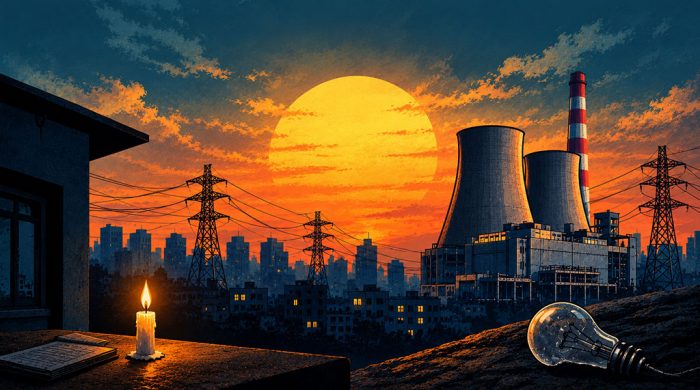
IRAN’S closure of the Strait of Hormuz on March 1, followed by QatarEnergy’s force majeure declaration and matching supply suspensions from Oman’s OQ Trading and Excelerate Energy, cut off roughly a third of Bangladesh’s contracted LNG cargoes for the year. Petrobangla covered the gap on the spot market at much higher prices, pushing the year’s LNG subsidy to nearly three times its budgeted level. This was not a one-off shock. It exposed a structural weakness that has been building for years.
The government has faced criticism, understandably. But the deeper problem goes beyond any single administration. Bangladesh has focused on securing energy supplies, but not enough on building the capacity to keep the economy running when those supplies are disrupted.
That raises a natural question: Japan, South Korea and India are also heavily dependent on energy imports. Why are they better able to absorb such shocks?
The answer is that import dependence, by itself, is not the decisive factor. Japan imports more than 90 per cent of its energy, including virtually all of its crude oil and LNG. South Korea imports nearly all of its oil, gas and coal. India imports about 88 per cent of its crude oil. Yet all three have built layers of protection through diversified suppliers, strategic reserves, alternative fuels, a broader generation mix, efficiency programmes and institutions capable of responding quickly. Bangladesh has some of these elements, but on a much smaller scale and with weaker execution.
Japan offers perhaps the clearest example of preparedness becoming part of energy policy. Its government-held stockpile alone covers roughly 90 days of net imports, while industry is separately required to hold about 70 additional days. Combined reserves have at times exceeded 200 days. LNG procurement is spread across Australia, Malaysia, Qatar, the United States and other suppliers, reducing the risk that a single chokepoint can cripple the country’s supply. Japan’s Strategic Energy Plan treats energy security as part of economic policy. The country plans for disruption rather than assuming that supply will remain uninterrupted.
South Korea has taken a different but complementary approach. It is similarly dependent on imports, but its electricity generation mix is more diversified. In 2024, nuclear power supplied about 32 per cent of electricity, coal 28 per cent and LNG 28 per cent. KOGAS operates multiple LNG terminals, with contracts spread across several supplier countries. Emergency protocols also allow for rapid demand reduction and fuel switching. The advantage is not simply the amount of fuel in storage, but the ability to respond quickly and systematically when one supply channel is threatened.
India’s experience is more complicated, but it also illustrates the value of diversification. The country has substantial domestic coal production, more than 258 million tonnes a year of refining capacity, and rapidly expanding renewable and nuclear capacity. Ethanol blending reached the 20 per cent target in 2025, five years ahead of schedule, reducing crude demand for petrol. India’s strategic reserves hold 5.33 million tonnes of crude, equivalent to about 9.5 days of imports at full capacity. Combined with commercial stocks, national storage covers roughly 74 days.
Yet India also shows the limits of reserves on paper. Amid the current Gulf crisis, its strategic caverns are only about 64 per cent full. That is a reminder that installed storage capacity is not the same as actual security if it is not consistently stocked.
For Bangladesh, this distinction is crucial. The problem is not dependence itself, but concentrated dependence without adequate buffers. Qatar supplied roughly 60 per cent of Bangladesh’s LNG in 2025 under a 15-year contract. When Iran closed the Strait of Hormuz, that supply, along with the two other major sources from Oman and the United States, was disrupted because all three relied on the same maritime chokepoint. Contracts with different sellers do not amount to genuine diversification if the cargoes all pass through the same chokepoint.
The country’s regasification capacity is also tight. Bangladesh’s two floating terminals, with capacities of 500 and 600 million cubic feet a day, operate close to their combined ceiling of about 1,100 mmcfd, leaving little room for disruption. In 2024, when both terminals went offline for maintenance, import capacity was cut in half. With gas supplying roughly half of Bangladesh’s electricity, the consequences spread quickly: an LNG shortfall leads to a gas shortage, which reduces power generation and disrupts industry.
This is where Bangladesh’s narrow energy mix becomes a particular vulnerability. Japan, South Korea and India have more room to absorb a disruption because their electricity systems rely on a broader combination of fuels and technologies. Bangladesh does not yet have the same cushion.
Renewable power should therefore be viewed not only as a climate or development issue, but as an energy-security asset. Bangladesh runs one of the world’s largest off-grid solar programmes, with more than six million home systems, yet utility-scale and rooftop solar remain marginal parts of the national grid. Every unit of electricity generated domestically is one less unit that requires foreign exchange and one less tanker that has to pass through a vulnerable shipping route.
Rooftop, industrial, utility-scale and floating solar, combined with battery storage, should be treated as energy-security infrastructure. The problem is not a lack of plans. Bangladesh already has several. The problem is turning those plans into investment and implementation.
The same principle applies to strategic reserves. The plan to reach roughly 90 days of strategic fuel storage by 2027 is welcome, but a day-count target by itself is not a strategy. Bangladesh needs detailed plans for 30-day, 90-day and six-month disruptions, with each scenario showing the required fuel volumes, foreign-exchange needs and priority sectors. India’s current reserve shortfall makes the point clearly: even a much larger reserve system can fall short if storage is not maintained and replenished consistently.
Energy security is also financial security. An energy supply shock does more than raise fuel costs. It increases the import bill, puts pressure on foreign-exchange reserves, weakens the currency and increases subsidy requirements, which can eventually feed inflation. Bangladesh’s 2025–26 LNG subsidy exceeded its budget by nearly three times, largely because of forced purchases on the expensive spot market.
That makes energy efficiency part of the security equation as well. The cheapest imported unit of energy is the one that does not have to be imported. Efficiency improvements in industrial boilers, motors, pumps, HVAC systems and transport are therefore energy-security measures as much as they are cost-saving measures.
Bangladesh also needs to look beyond contracts and consider the infrastructure and routes behind them. Suppliers and shipping routes should be diversified so that a disruption at one chokepoint does not affect a large share of the country’s supply at once. Strategic reserves of oil, LNG and LPG should be expanded according to specific disruption scenarios rather than a fixed number of days. Domestic gas production should be increased and system losses reduced. Rooftop, utility-scale and floating solar, along with battery storage, should be accelerated, while the electricity generation mix should be broadened so that a disruption in one fuel does not threaten the entire grid.
Perhaps most importantly, scenario planning needs to become a permanent part of energy policy. War, chokepoint closures, price spikes and currency shocks should be tested regularly, with responsibilities clearly coordinated among the energy, finance, planning and foreign-affairs ministries, Bangladesh Bank, Petrobangla and BPC. Mandatory efficiency standards for industry, buildings and transport should also be strengthened, while the energy and power subsidy system needs to be made more sustainable.
Dr Md Iqbal Hossain is a professor of chemical engineering at Bangladesh University of Engineering and Technology.