Teacher, infrastructure crises plague technical education

- Update Time : Thursday, July 16, 2026
- 0 Time
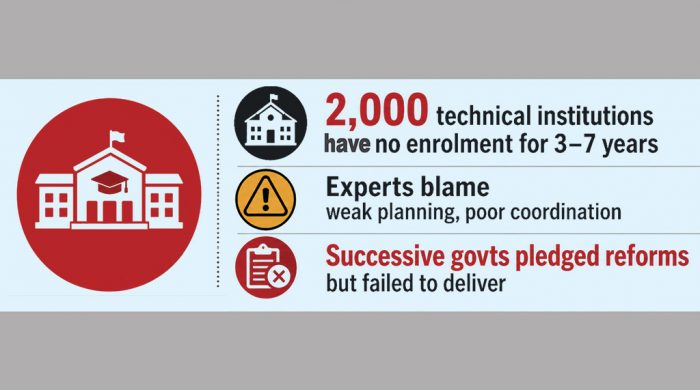
More than five decades after independence, the country’s technical and vocational education sector remains plagued by deep-rooted challenges that stifle its ability to produce skilled manpower, despite repeated reform pledges by successive governments.
Officials and educators said most technical institutions were struggling with enrolment, teachers, and infrastructure crises, as well as poor governance.
They also said negative public perceptions, outdated curricula, and weak industry links had widened the gap between the sector and labour market demands.
According to the Bangladesh Technical Education Board, around 2,000 technical and vocational institutions have not admitted any students for 3-7 years, highlighting the enrolment crisis. The board is now considering cancelling their teaching permits.
The government has taken some regulatory steps, including notices to inactive institutions and plans to cancel their permits, but no comprehensive reforms yet.
Rasheda K Choudhury, executive director of Campaign for Popular Education, a civil society and NGO coalition for education, said that all governments in Bangladesh had pledged to prioritise this stream but failed to do so.
‘This sector has weakened due to several factors: a lack of social trust, a massive gap with the market, outdated curricula and shortage of skilled teachers,’ said Professor Ahsan Habib, of Institute of Education and Research under the University of Dhaka, adding that the entire system is weak due to a lack of coordination and poor planning.
In 1954, a board titled ‘East Pakistan Board of Examination for Technical Education’ was established to oversee technical educational institutions, conduct examinations, and issue certificates in the then East Pakistan.
Later in 1967 the East Pakistan Technical Education Board was established and it was renamed with the current title of Bangladesh Technical Education Board after the independence of Bangladesh.
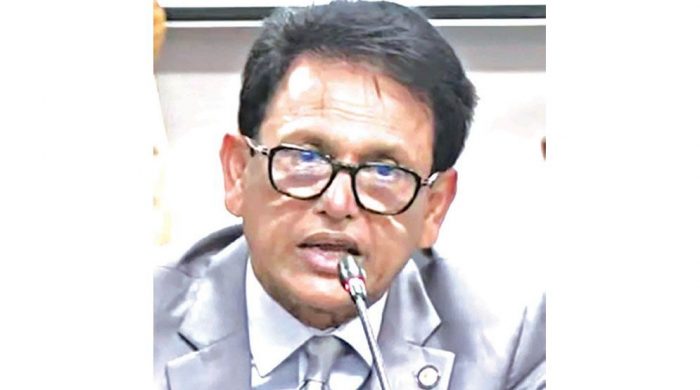
‘There is a massive gap between the number of available seats [in technical educational institutions] and the number of students,’ said Md Ruhul Amin, chairman of BTEB.
He mentioned that while the total capacity across secondary level general, madrassa, and technical education is roughly 32 lakh seats, the population of the students for the level is only about 17 lakh.
Currently, under the board, there are a total of 10,885 technical educational institutions including 219 run by the government, ranging from secondary level to four-year diploma engineering with the capacity is around 19 lakh, said the board chairman.
He mentioned that over the last five years, 16 to 18 lakh students pass the Secondary School Certificate examinations but the rate of admission in technical stream is poor.
In 2024, around 16.53 lakh students enrolled in Grade 11 out of whom only 3.17 lakh enrolled in technical education and in 2023, around 17.22 lakh students enrolled in Grade 11 out of whom only 3.16 lakh enrolled in technical education, he also said.
It left around 81 per cent of vacant seats in the technical stream in 2024.
Ruhul, however, said that a more realistic estimate of capacity of these institutions is between 12 and 14 lakh because many institutions are listed in the database and have affiliations but are no longer active or operational.
According to the Directorate of Technical Education, these technical and vocational educational institutions are facing a severe crisis of teachers as well.
Under the 161 government technical schools and colleges in Bangladesh, the sanctioned posts for teachers is 15,360 out of which only 3,916 are fulfilled, leaving around 75 per cent positions vacant.
According to statistics from the directorate, only 5,507 employees are currently serving against 10,319 sanctioned posts for direct recruitment in various positions from the 6th to the 10th grade. These posts are spread across the directorate, its eight regional director offices, the Technical Teachers Training College, four engineering colleges, 49 polytechnic institutes, government technical schools and colleges, the Vocational Teachers Training Institute, and the central store.
These grades include the positions of chief instructor, instructor, junior instructor and physical education instructor.
On July 6, the board issued a show-cause notice to 112 institutions conducting HSC-BMT curriculum under the board for not conducting student admission activities for the past five years.
Authorities of these institutions are being requested to give an explanation by July 16 as to why the admission activities of these institutions will not be suspended from the upcoming academic year 2027-28 and the teaching permit of these institutions will not be cancelled.
On July 1, the board issued two separate similar show-cause notices against 1,085 educational institutions conducting National Skills Standard Basic Course, 120 conducting Diploma in Engineering, 15 conducting Diploma in Textiles and 12 conducting Diploma in Agriculture for not admitting students for a long time.
The 1,085 educational institutions asked to provide explanations by July 10 while the rest of the institutions asked to give explanations by July 8.
Earlier the 1,085 institutions served the same show-cause notice on June 8 and the rest of the institutions on June 18 and 4.
On June 24, the board issued a similar show-cause notice against 443 educational institutions conducting SSC (vocational) and 178 Dakhil (vocational) courses for not admitting students for a long time and asked to provide an explanation by July 22.
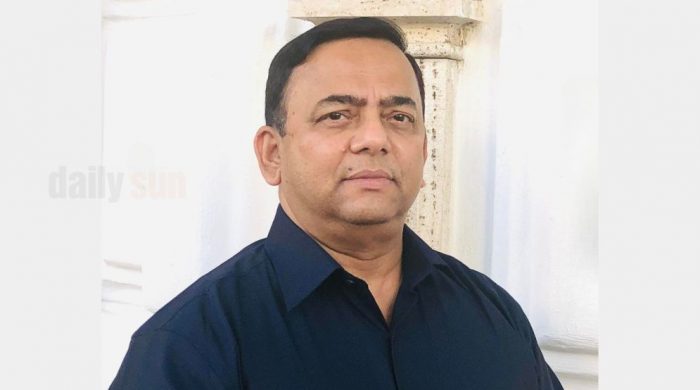
Md Mahfuzur Rahman, head teacher of Monshapur Bilateral High School in Dinajpur which also received a notice, said that the locals are not aware about technical education as it is a remote area.
‘They do not understand the importance of this stream,’ he added.
Shimla Akhter Banu, principal of Jonail Mohila College in Natore, said that besides lack of awareness among the people about the stream, local political influence also affects the admission.
No students got admitted to the college in the past three years, she added.
‘If these institutions do not reply in time then we will cancel their teaching permit,’ the board chairman Ruhul Amin said.
He also mentioned that some general education schools have massive infrastructure – such as a six-story building for only 23 students with 13 teachers and 60 laptops – but lack basic necessities like electricity.
Conversely, private technical institutions established since the 90s often lack buildings, machinery, or teacher training, he said and added that some private institutions even engage a single teacher to teach four subjects.
‘There have been no mappings on demands of people for these institutions,’ Campaign for Popular Education’s Rasheda K Choudhury said, adding that the demands should be made based on the areas/districts they live in.
She alleged that the authorities just constructed some technical institutions only to leave these in disarray without skilled instructors and other facilities like labs.
She also said that the situation is harder for females due to lack of residential facilities and female instructors.
DU Professor Ahsan Habib said that people in Bangladesh often think technical education is for the weakest students due to social perception.
Many of these institutions lack a proper educational environment as many were established on personal land just to secure the government’s monthly payment order status or provide jobs for relatives without providing even minimum academic facilities like teachers and teaching tools, he said.
‘Furthermore, unlike developed countries like Australia where many students choose technical paths and the institutions have direct links with different industries, our system has no alignment with the market,’ the professor said.
In the election manifesto 2026, the ruling Bangladesh Nationalist Party pledged to make technical education compulsory at the secondary level alongside general education and already announced to introduce a subject titled technical and vocational education from Class VI under the 2028’s new curriculum.
Before these, the previous interim government and Awami League government also pledged to emphasise the technical stream.