Temple born of violence, shaken by scandal

- Update Time : Monday, July 6, 2026
- 0 Time
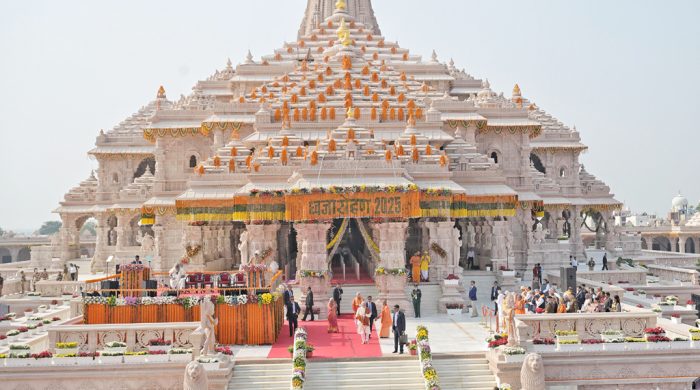
FEW religious sites in contemporary India carry the political, cultural and emotional weight of the Ram Mandir in Ayodhya. It stands on the ruins of the historic Babri Masjid, demolished in 1992 by Hindu nationalist groups, including affiliates of the Rashtriya Swayamsevak Sangh, the ideological parent of the Bharatiya Janata Party. That demolition triggered nationwide riots that claimed nearly 2,000 lives, most of them Muslim. The long and turbulent history behind the temple continues to shape its meaning today.
The Ram Mandir has long served as a potent symbol of Hindu majoritarian politics and the broader BJP ideological project of Hindutva. The supreme court’s 2019 verdict awarding the disputed land to Hindu litigants cleared the way for construction, ending decades of legal and political contention. When prime minister Narendra Modi inaugurated the temple in January 2024, the event was framed as the culmination of a civilisational struggle — a triumph of faith, cultural identity and national pride. Funded entirely through public donations estimated at roughly $240 million, it became one of the largest religious crowdfunding efforts in India’s history.
Yet, barely two years after its consecration by Modi, the Ram Mandir finds itself engulfed in a corruption scandal that has shaken public trust, triggered arrests, forced resignations and ignited a political storm. Allegations of theft, embezzlement, mismanagement and irregularities in donation handling have cast a long shadow over what was meant to be a sacred national monument. The significance of this corruption scandal is profound, operating simultaneously on administrative, political and moral levels.
Administratively, the Ram Mandir is not just a religious site. It is one of the richest and most visible religious institutions in India. The temple attracts nearly 50 million visitors annually, with 70,000–80,000 daily visitors — a number that triples at the weekends and during festivals. Offerings are placed in 35 donation boxes, generating an annual income of Rs 3.27 billion ($35 million) in 2024–25. This makes the Ram Mandir one of the wealthiest religious institutions in the country, yet it operates outside direct government oversight. It is managed, instead, by the Shri Ram Janmabhoomi Teerth Kshetra Trust, an independent body with deep political connections. The scale of donations demands robust financial governance. Any irregularity, therefore, signals serious systemic weaknesses.
Politically, the Ram Mandir has been central to the ideological project of the ruling establishment. For more than three decades, it has shaped electoral narratives, mobilised voters and served as a cornerstone of the Bharatiya Janata Party’s Hindutva agenda. It is not merely a temple but a powerful symbol of Hindu nationalism and political identity. Because of this deep political investment, any scandal associated with the temple inevitably carries political consequences. Allegations of mismanagement strike at the heart of a symbol that has been used to project moral authority and cultural triumph.
Morally, the impact is, perhaps, the most profound. Millions of ordinary devotees — farmers, street vendors and taxi drivers — contributed their hard-earned money believing they were participating in a sacred national cause. When allegations arise that donations may have been syphoned off, it is not just financial misconduct; it is a betrayal of devotion. Religious institutions depend fundamentally on trust. Once that trust is shaken, it affects not only the reputation of the Ram Mandir Trust but also the broader credibility of temple administration across India.
Corruption allegations
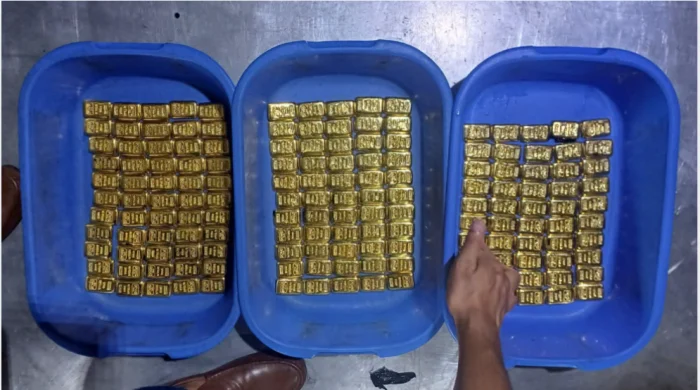
THE scandal broke when Mahipal Singh, a former supervisor in the trust’s accounting team, publicly alleged serious irregularities in the handling of donations. His claims prompted scrutiny of how cash, gold, silver and jewellery offerings were counted, stored and recorded. Police investigations escalated quickly. Eight individuals, including temple employees, were arrested for theft and misappropriation. An FIR named nine employees for systemic embezzlement of donation funds. The police recovered Rs 80 lakh from the houses of the accused.
Those arrested were directly involved in counting and managing offerings from devotees. The government has not disclosed the full scale of the losses. Estimates vary widely. Some opposition leaders and media outlets suggest more than $20 million may be missing; other reports point to Rs 7–7.5 crore (about $1 million); and one former legislator alleged Rs 70 million ($739,550) in unaccounted funds. The wide range reflects the opacity of the trust’s financial operations.
Two senior trust members resigned: general secretary Champat Rai and trustee Anil Mishra. Rai said he stepped down to ‘ensure a free and fair probe’ and ‘protect the sanctity of Lord Ram’ while denying any wrongdoing.
On June 14, 2026, the Uttar Pradesh government under chief minister Yogi Adityanath — often referred to as ‘bulldozer yogi’ for his administration’s use of demolition drives that critics say disproportionately targeted Muslim houses, shops and religious sites — formed a three-member special investigation team to probe the alleged scam. The team was instructed to submit a preliminary report within seven days and a final report within 15. It delivered its preliminary findings on June 23, flagging serious lapses in donation handling, weak CCTV surveillance, failures in employee verification, irregular fund transfers and the need for structural reforms, including appointing a chief executive officer. Following the report, police filed FIRs naming eight accused and arrests followed immediately.
Despite these actions, major questions remain: what is the actual value of missing donations? Were accounts properly audited? Is there CCTV or paper-trail evidence? And could lower-level employees have executed such a large-scale operation without higher-level complicity?
The absence of publicly available information has only deepened public suspicion.
Political fallout
OPPOSITION parties, including the Congress and the Samajwadi Party, have accused the Bharatiya Janata Party of politicising the Ram Mandir and enabling an environment in which corruption could flourish. Congress leader Jayvardhan Singh has called for temple management to be handed over to traditional Ayodhya saints, arguing that mismanagement is a direct consequence of political interference.
The Bharatiya Janata Party has, meanwhile, attempted to frame the scandal as a limited issue involving lower-level employees, insisting that the government is acting swiftly and professionally. Party leaders have also accused the opposition of exploiting the controversy to tarnish Hindu faith and undermine a national symbol. However, the resignations of senior trust members complicate this narrative and raise questions about oversight at the highest levels.
The scandal comes just months before crucial state elections in Uttar Pradesh, India’s most populous state. The Ram Mandir has been central to the Bharatiya Janata Party’s political messaging, symbolising Hindutva, cultural nationalism and Hindu pride. Allegations of theft from the temple’s donation boxes threaten to erode that carefully cultivated narrative and provide ammunition to political rivals.
The controversy also underscores the urgent need for modern, transparent governance systems in religious institutions. The goal is not to interfere with religious autonomy but to ensure that sacred spaces are protected by strong financial safeguards. Several reforms are essential.
First, independent audits should be mandatory. Many temples rely on informal accounting practices; annual audits by accredited external firms would create a clear financial trail and reduce opportunities for misappropriation.
Second, digital donation systems must be expanded. Heavy reliance on cash increases vulnerability. Online payments, QR-code donations and electronic receipts would significantly reduce leakage.
Third, secure counting rooms with CCTV monitoring and dual-control procedures should be standard. Cash and valuables should be counted in controlled environments with continuous video recording and at least two authorised individuals present — similar to banking protocols.
Fourth, governance structures need clearer separation of roles. Many religious trusts operate with overlapping responsibilities and informal hierarchies. Defining accountability, establishing ethics committees, and separating financial oversight from religious functions would strengthen integrity.
Finally, public reporting mechanisms — such as quarterly financial summaries posted on official web sites — would build trust. Devotees give out of faith; transparency reassures them that their offerings are being used responsibly.
These reforms are not about questioning devotion. They are about protecting it. Strong financial safeguards enhance both institutional credibility and the confidence of millions of devotees.
Scandal that strikes faith, politics
THE Ram Mandir corruption scandal is not simply about missing funds; it is about the breach of public trust, the politicisation of a sacred institution and the failure of systems meant to safeguard places of worship. A temple that was meant to embody righteousness, justice and national unity has instead become a case study in how unchecked power and opaque financial practices can corrode even the holiest of sites.
As the investigation unfolds, one principle stands out: faith requires transparency and devotion demands accountability. The millions who contributed in good faith deserve clear answers — not silence, not deflection, and, certainly, not political spin.
The scandal is a stark reminder that when religion and politics intertwine without oversight, corruption is not an anomaly; it becomes inevitable.
My hope is that this investigation delivers full clarity and helps restore public confidence. Devotees gave out of devotion and they deserve complete transparency. Protecting the sanctity of the Ram Mandir now requires strong systems, honest leadership, and an unwavering commitment to accountability.
Dr Habib Siddiqui is author of several books, including Us and Them: State Power and Minority Lives in India and Bangladesh: The Politics of Protection, Exclusion, and Belonging in South Asia (Amazon, 2026) and Modi-fied India: The Transformation of a Nation (Peter Lang, June 2026).