World Cup 2026: The Story of Two Ms, Two Cs, One I, and an E

- Update Time : Sunday, July 5, 2026
- 2 Time
Every World Cup writes its own language.
Some tournaments speak in numbers—goals, assists, possession statistics and expected goals. Others are narrated by legends who refuse to grow old, by underdogs who refuse to be intimidated, and by nations that discover themselves beneath the glare of football’s brightest lights.
Six stories. Six journeys. One reminder that football has never merely been about winning matches. It is about stretching the limits of what is considered possible.
No story, however, burns brighter than that of Lionel Messi.
M for Messi
At 39, Lionel Messi no longer glides past defenders with the youthful burst that once left entire backlines frozen in disbelief. The dazzling dribbles are fewer now, but they have been replaced by something even more profound: complete command of the game. He bends matches to his rhythm, orchestrating attacks with the calm authority of a conductor who knows precisely when every instrument must play. His legs may have slowed, but his footballing mind seems quicker than ever. Watching Messi today is like watching an old master painter—each brushstroke deliberate, every pass purposeful, every touch capable of altering the landscape of a match.
Against Cape Verde, he again demonstrated why greatness is measured not by isolated moments of brilliance but by extraordinary consistency. Argentina survived one of the tournament’s sternest tests, eventually overcoming the spirited debutants after extra time, with Messi once more at the heart of the story. There will always be debate over football’s greatest player, but one argument grows stronger with every World Cup he plays: no player has sustained such excellence across so many editions while continually reinventing himself.
History now beckons. Should Argentina defend their title, they would join only Italy and Brazil as back-to-back FIFA World Cup champions, while Uruguay’s unique four stars remain a tribute to its two World Cups and two FIFA-recognized Olympic titles. Football history is filled with monuments. Messi is striving to become one.
M for Morocco
Four years ago, Morocco’s run to the semifinals in Qatar felt miraculous. Today, miracles no longer describe them. Consistency does.
The Atlas Lions have crossed an invisible bridge that very few so-called underdogs ever manage to cross. They are no longer celebrated merely for upsetting giants. They are expected to challenge them.
That subtle difference changes everything. Morocco now plays with the confidence of a nation that has learned success is not borrowed—it can be built.
Every tackle carries conviction. Every transition carries purpose. Every victory further dismantles decades of assumptions about African football.
They have become more than Morocco. They have become proof. Proof that excellence from Africa is not episodic. It is sustainable. Proof that the continent’s finest teams need not arrive as guests invited to football’s grandest banquet. They belong at the head of the table.
C for Cape Verde
And then there is Cape Verde.
Perhaps no nation has captured the imagination of the footballing world quite like the tiny Atlantic archipelago. Home to little more than half a million people, Cape Verde arrived at the 2026 FIFA World Cup as one of its smallest participants, expected merely to savour the occasion. Instead, they transformed their debut into one of the tournament’s most compelling stories.
They held their own against established footballing nations, advanced beyond the group stage, and then stood toe-to-toe with defending champions Argentina in a match that instantly entered World Cup folklore. Argentina eventually prevailed, but only after Cape Verde pushed Lionel Messi’s side to their limits, refusing to surrender until the final whistle. The scoreboard will forever remember Argentina’s victory; football, however, will remember Cape Verde’s courage.
Every World Cup produces a revelation, and Cape Verde became this generation’s reminder that geography does not determine destiny. Lacking the resources, history and reputation of football’s traditional powers, they relied instead on belief, discipline and fearless ambition. They played without apology and without the burden of expectation, reminding millions why the World Cup remains the greatest theatre in sport. Sometimes the most enduring victories are not measured in medals, but in the respect earned from the entire footballing world.
E for Egypt
For generations, Egyptian football has lived in the long shadow of its own greatness. Seven Africa Cup of Nations titles established the Pharaohs as continental royalty, yet the FIFA World Cup remained an unfinished chapter. They were pioneers, becoming Africa’s first representatives at the tournament in 1934, but every subsequent campaign ended before it could truly flourish. This year, however, that story changed.
Egypt’s dramatic victory over Australia delivered something the nation had waited more than nine decades to witness: a place in the Round of 16 for the very first time. From Alexandria to Aswan, celebrations erupted as a football-loving nation finally crossed a threshold that had eluded generations. Yet perhaps the tournament’s defining Egyptian moment came not from a decisive penalty or jubilant embrace, but after the final whistle.
As celebrations unfolded, head coach dedicated the victory not only to the Egyptian people but also to the Palestinian people, raising the Palestinian flag in a gesture that resonated far beyond football. Across much of the Arab world, the image became a symbol of solidarity, illustrating how the World’s Game can sometimes become a language through which people express shared hope, identity and humanity.
Whatever one’s view on political expression in sport, the emotional significance of that moment was undeniable. The World Cup has always been about more than ninety minutes on a pitch. It is where nations introduce themselves, cultures celebrate themselves, and humanity occasionally finds a common language. That is why Egypt’s achievement deserves to be remembered not only for its historic football, but also for the conversation it inspired.
I for Iran
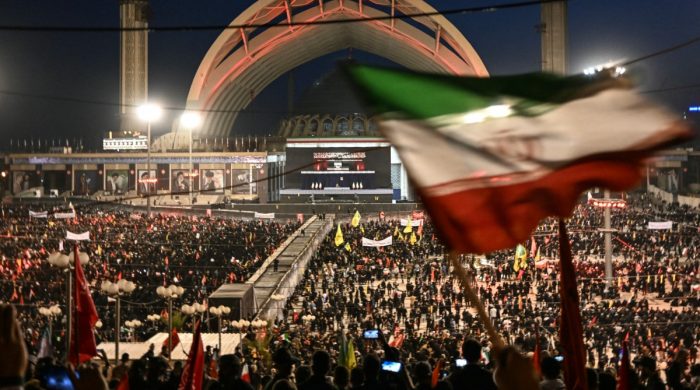
Iran never reached the knockout rounds, yet few teams left the tournament having earned greater admiration for what they endured away from the pitch. Before a ball had even been kicked, Team Melli found themselves navigating a maze of geopolitics no footballer should have to confront. Visa complications disrupted preparations, members of the delegation were denied entry, and the squad was forced to base itself in Tijuana, Mexico, making tightly controlled trips into the United States for matches before quickly returning across the border.
Still, they competed. They did not protest with excuses; they answered adversity with football. Iran exited the tournament unbeaten, denied not by poor performances but by the cruel arithmetic of the group stage and the finest of margins. Their dream of reaching the knockout rounds disappeared elsewhere, a reminder that football can be as merciless as it is magnificent.
Yet perhaps Iran’s greatest victory came after elimination. Instead of leaving with bitterness, the players thanked the people of Tijuana and Mexico for their warmth and hospitality. It was an act of grace that transcended politics, proving that dignity is measured not by how one celebrates victory, but by how one bears disappointment. Some teams leave the World Cup with medals. Iran departed with something equally enduring: respect.
Football has often been cruel to its greatest icons. George Best, Johan Cruyff, Paolo Maldini and Luís Figo all retired without lifting the World Cup. Greatness, football reminds us, is not always measured by one trophy—and Cristiano Ronaldo understands that better than anyone.
C for Cristiano
This tournament may represent Cristiano Ronaldo’s final opportunity to complete a career that has already redefined sporting longevity. Every appearance carries the quiet awareness that there may never be another World Cup, another chance to pursue the one honour that has eluded him despite a career overflowing with records and triumphs.
There is something profoundly human about that pursuit. It is not merely a chase for another medal, but a search for closure—the final stone atop a monument that has already stood for decades. Whether Portugal succeeds or falls short, Ronaldo’s legacy has long transcended trophies. He has become the embodiment of discipline, resilience and relentless self-improvement, proving that talent reaches greatness only when matched by unwavering commitment. And yet, one cannot help but hope that football, which has so often celebrated his extraordinary devotion to the game, might offer him one final embrace.
And that brings us back to where this story began.
Messi is chasing immortality, attempting to lead Argentina toward a feat achieved only by Italy and Brazil in the FIFA World Cup era, while Uruguay’s four stars remain a unique tribute to its two World Cup triumphs and two FIFA-recognised Olympic titles. Morocco continues to prove that African excellence is no longer an exception but an expectation. Cape Verde has shown that courage can overcome geography, Iran has embodied dignity through adversity, Egypt has demonstrated football’s capacity to unite humanity, and Cristiano Ronaldo reminds us that some dreams are worth pursuing until the very last whistle.
This, ultimately, is why the World Cup captivates billions.
It is not simply because goals are scored or trophies are lifted. It is because every four years, football becomes a mirror. It reflects greatness and vulnerability. It rewards giants while celebrating dreamers. It immortalizes champions while ensuring that even those who fall are never forgotten.