Govt pry students cannot even read Bangla properly

- Update Time : Sunday, July 5, 2026
- 0 Time
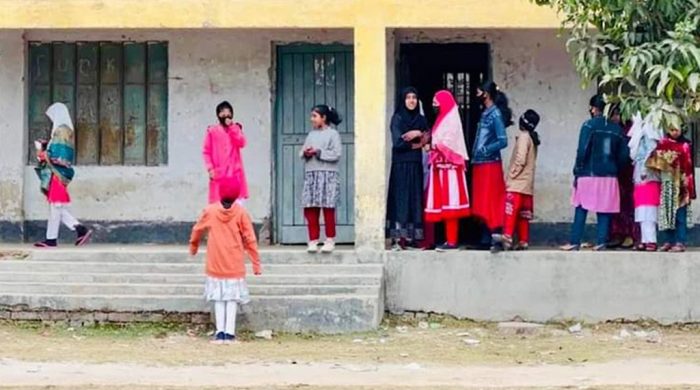
A recent government report has found that many Grade 5 students in government primary schools in Dhaka and some other districts cannot correctly pronounce all Bangla letters or read many English words.
Grade 5 is the final year of primary education.
Lack of quality teachers, monitoring, incorrect method blamed
Grade 2 students struggle to solve subtraction problems in which the unit digit of the minuend is smaller than the unit digit of the subtrahend, as schools continue to teach an incorrect method for the subtraction, reveals the report, which is not yet published.
The report titled ‘Foundational Literacy and Numeracy of All Primary School Students in Dhaka and Narayanganj Districts’ is prepared by the Compulsory Primary Education Implementation Monitoring Unit under the primary and mass education ministry.
In June, the Compulsory Primary Education Implementation Monitoring Unit inspected a total of 2,267 government primary schools for the report.
Senior educationists said that lack of quality teachers, monitoring of the authorities concerned, and infrastructure are the major reasons behind the poor foundational literacy and numeracy skills.
BRAC University professor emeritus Manzoor Ahmed said that these findings were not new as many other findings revealed same scenario.
‘Although we are continuously discussing about lack of quality teachers, monitoring and infrastructure with huge gap in teacher-students at primary levels, these have not yet improved,’ he told New Age on Saturday.
This report is not the only example of poor skills of the government primary school students as studies by different international and national organisations also revealed same scenario countrywide in recent years.
Out of these schools that came under the inspection, 950 were in Dhaka metropolitan city and Dhaka district, 547 in Narayanganj district, 613 in Munshiganj district, 51 in Magura district, 25 in Sherpur district, 38 in Khulna district, and 43 in Dinajpur district.
The inspection covered all government primary schools in these districts.
As per the inspection, among Dhaka metropolitan city, Dhaka and Narayanganj districts, the lowest skill levels in Bangla, English and mathematics subjects are in Narayanganj district out of these three areas.
In Narayanganj, 38 per cent students are unskilled in Bangla, 41 per cent in mathematics and 43 per cent in English.
In case of Dhaka metropolitan city, 29 per cent students are unskilled in Bangla, 37 per cent in mathematics and 38 per cent in English.
In Dhaka district, 33 per cent students are unskilled in Bangla, 38 per cent in mathematics and 40 per cent in English.
Professor Manzoor, who also served as the head of the two consultation committees formed by the previous interim government to submit recommendations on improving the quality of primary and secondary education, called for integrated efforts for all stakeholders concerned to improve the quality of primary education.
In November 2025 the preliminary findings of the Multiple Indicator Cluster Survey 2025, implemented by the Bangladesh Bureau of Statistics in collaboration with United Nation’s Children Fund, showed that only 50.1 per cent of the children aged 7-14 could complete foundational reading tasks in 2025 in place of 48.8 per cent in 2019.
Among the same age group, 39.2 per cent of the children could carry out foundational numeracy tasks in 2025 while the rate was 27.9 per cent in 2019, with the net intake rate in primary education declining to 59.8 per cent in 2025 from 61.4 per cent in 2019.
According to the World Bank’s Human Capital Indicator, the learning poverty rate in Bangladesh stands at 51.2 per cent which means over half of the children in Bangladesh cannot read and understand a simple text by age 10 in 2022.
The latest report has found a total of 19 faults in the teaching system.
In one of the faults, it was found that students in Grade 1 to 5 cannot pronounce seven Bangla letters correctly.
In the case of English in Grade 5, students cannot read the instructions in English books and students cannot read familiar words either.
The Grade 5 students are also unable to read English words with multiple syllables while fluent readers are few.
In mathematics, most students from Grade 2-4 have a low understanding of local standards in case of mathematics.
The faults also include – although students in Grade 1-2 can pronounce letters consistently, some students have difficulty distinguishing letters from words, male students are lagging behind female students, student attendance is very low in Dhaka city while in some schools, there are only two or one student per class, all schools that have classes up to 8th grade have a teacher coaching business, irregular students cannot take any readings, teachers are more likely to take casual leave and many school classrooms do not have adequate lighting.
Shahina Ferdousi, director general of Directorate of Primary Education, said that the situation described in the statistics was from a previous practice.
The ministry had taken some new approaches to improve the teaching- learning issue, she continued.
‘We are working on this issue,’ she said, ‘by next October, Insha’Allah, we will reach a satisfactory level. We will be satisfied with this fundamental numeracy and literacy.’
The director general also said that the directorate had already taken various measures including motivating the teachers, strengthening the monitoring and meeting with the stakeholders at local level.
According to the report, the average skills of students in the three subjects – Bangla, English and mathematics – were lowest at Kotowali, 55 per cent, in Dhaka metropolitan city followed by 56 per cent at Gulshan.
In Dhaka district, the average skills of students in these subjects were lowest at Dohar, 59 per cent followed by 60 per cent at Keraniganj.
In Narayanganj district, the average skills of students in these subjects were lowest at Araihazar, 54 per cent followed by 56 per cent at Sonargaon, the report added.
For improvement the report gives 26 recommendations including in the case of teaching-learning activities, supplementary reading materials can be taught in both Bangla and English, mathematics and English classes are taken in the 1st period and two or three teachers from each school can be trained in Mathematics Olympiad and have them conduct class activities in mathematics.
Teachers should increase their sincerity with proper preparation, employing computer operators in schools, assess homework properly, merging schools with low student numbers, adjustments are needed in schools where the number of teachers is low and all stakeholders must play a role in increasing student attendance.
The National Assessment of Secondary Students–2023, conducted by the Directorate of Secondary and Higher Education on 60,000 students of Class VIII and X in 999 secondary schools and madrassahs showed that many students remained weak in Bangla and English languages.
Although both Bangla and English languages are taught from Class I to Class XII, the students remain weak in these languages and many of them failed in these subjects in university admission tests.