Bangladesh among 10 countries with two-thirds of acute hunger

- Update Time : Saturday, April 25, 2026
- 16 Time
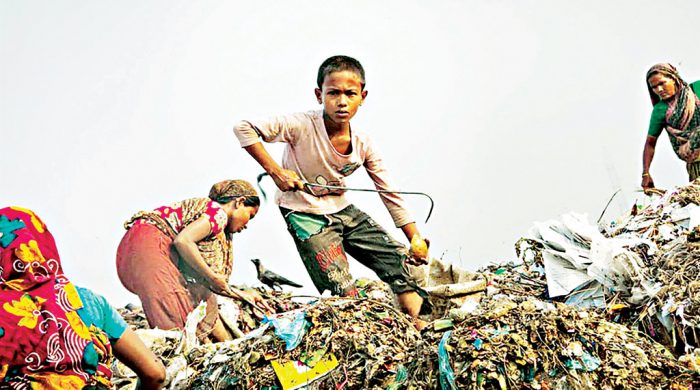
Ten countries, including Bangladesh, accounted for two-thirds of all people facing high levels of acute hunger, said a global report released on Friday.
The nine other countries are Afghanistan, the Democratic Republic of the Congo, Myanmar, Nigeria, Pakistan, South Sudan, Sudan, Syrian Arab Republic, and Yemen.
Afghanistan, South Sudan, Sudan, and Yemen experienced the largest food crises both in terms of the share and absolute number of people facing high levels of acute food insecurity.
Acute food insecurity and malnutrition levels remain alarmingly high and deeply entrenched, with crises increasingly concentrated in a core group of countries, according to the Global Report on Food Crises 2026, released by an international alliance.
In its tenth edition, the GRFC shows that acute hunger has doubled over the past decade, with two famines declared last year for the first time in the report’s history.
The report from the Global Network against Food Crises reveals that acute food insecurity remains highly concentrated.
In total, 266 million people across 47 countries and territories experienced high levels of acute food insecurity in 2025, representing about 23 per cent of the analysed population. The severity level was the second highest on record, while catastrophic hunger, IPC Phase 5, is now nine times higher than in 2016.
The report also highlighted a worsening nutrition crisis, saying 35.5 million children were acutely malnourished in 2025, including nearly 10 million with severe acute malnutrition. Forced displacement of more than 85 million people further deepened food insecurity worldwide.
Famine conditions were identified in Gaza Governorate and parts of Sudan in 2025, marking the first time two separate famine cases were confirmed in a single year since the GRFC began reporting.
Looking ahead, the report warned that ongoing conflicts, climate shocks and global economic uncertainty are likely to worsen food insecurity in 2026. It also flagged declining humanitarian funding and major data gaps as serious challenges to global response efforts.
The GRFC called for urgent international action, including increased investment in resilient food systems, climate adaptation, rural livelihoods and early warning systems, alongside stronger efforts to address conflict-driven hunger and prevent famine.