Strategic Restraint: Why Saudi Arabia Is Unlikely to Join Abraham Accords Now

- Update Time : Sunday, July 26, 2026
- 0 Time

The prospect of diplomatic normalisation between Saudi Arabia and Israel has become one of the most consequential questions in contemporary Middle Eastern geopolitics. Since the signing of the Abraham Accords in 2020, the United States has sought to expand the framework by encouraging additional Arab states to establish formal diplomatic relations with Israel. Given Saudi Arabia’s political influence, economic weight and religious leadership within the Islamic world, its accession would represent the most significant expansion of the accords to date. Consequently, successive US administrations have regarded Saudi-Israeli normalisation as a strategic objective capable of reshaping the regional security architecture, strengthening the US-led alliance system and counterbalancing Iran’s regional influence.
Recently, the issue has gained renewed prominence following the reported agreement between the United States and Saudi Arabia to cooperate on the Kingdom’s civilian nuclear energy programme. According to publicly available information, the proposed thirty-year agreement would enable American companies to participate in constructing Saudi nuclear power plants and could eventually permit a US-operated uranium-enrichment facility in the Kingdom.
Unlike the 2009 US–United Arab Emirates (UAE) Section 123 Agreement, however, the reported Saudi arrangement appears to impose fewer non-proliferation restrictions, particularly regarding Saudi Arabia’s ability to enrich uranium and its commitment to adopt the International Atomic Energy Agency’s (IAEA) Additional Protocol for enhanced inspections. The agreement therefore links three strategically interconnected issues: civilian nuclear cooperation, regional nuclear proliferation and Arab Israeli normalisation.
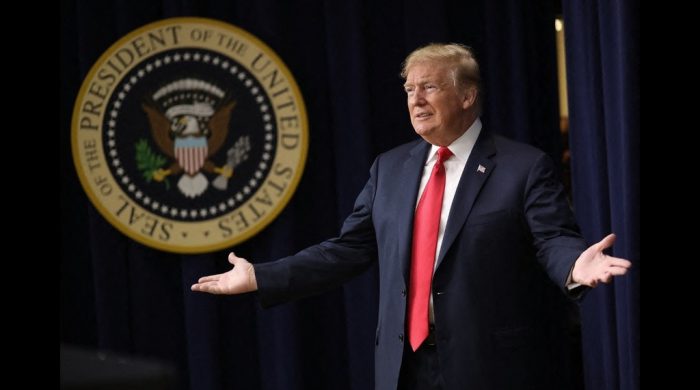
Although the Trump administration has reportedly sought to connect congressional approval of the civilian nuclear agreement with Saudi Arabia’s participation in the Abraham Accords, Riyadh has consistently maintained that normalisation with Israel remains contingent upon the establishment of a credible, irreversible and time-bound pathway towards an independent Palestinian state. Since the outbreak of the Gaza war in October 2023, Saudi leaders have repeatedly reaffirmed that normalisation cannot proceed in the absence of meaningful progress towards Palestinian statehood.
Meanwhile, Israeli Prime Minister Benjamin Netanyahu and much of Israel’s governing coalition continue to reject Palestinian statehood on security grounds, creating a fundamental diplomatic impasse between the two sides.
Hence, Saudi Arabia is unlikely to join the Abraham Accords soon not because it fundamentally opposes normalisation with Israel, but because the current regional and domestic political environment substantially increases the strategic costs of such recognition.
Riyadh continues to recognise the potential economic, technological and security benefits of eventual normalisation, including closer cooperation with the United States and access to Israeli technological innovation. Nevertheless, these prospective gains are presently outweighed by a combination of geopolitical constraints, domestic legitimacy concerns, nuclear-security calculations and Saudi Arabia’s aspiration to maintain leadership within both the Arab and Islamic worlds.
This move is also supported by analysis draws primarily upon four complementary theoretical perspectives within international relations. First, structural realism emphasises that states operate in an anarchic international system in which survival and security remain the primary objectives of foreign policy.
From this perspective, Saudi Arabia’s interest in civilian nuclear technology, closer defence cooperation with the United States and cautious engagement with Israel reflects efforts to balance against perceived threats, particularly Iran’s expanding regional influence and advancing nuclear capabilities.
Second, the concept of strategic hedging provides a useful framework for understanding Riyadh’s increasingly diversified foreign policy. Rather than aligning exclusively with a single great power, Saudi Arabia has simultaneously strengthened security cooperation with the United States while expanding economic and technological partnerships with China, coordinating energy policy with Russia through OPEC+, improving relations with Iran following the Chinese-mediated rapprochement of 2023, and broadening engagement with emerging powers through organisations such as BRICS.
As scholars argue, hedging enables middle powers to maximise strategic flexibility while avoiding excessive dependence on any single external actor. Saudi foreign policy increasingly reflects this approach.
Third, the theory of omni-balancing, developed by Steven David in 1991, suggests that leaders in developing states often balance not only against external threats but also against domestic political pressures that could undermine regime legitimacy.
Although Saudi Arabia is an absolute monarchy with highly centralised decision-making, domestic public opinion cannot be entirely disregarded. The Kingdom’s leadership derives significant legitimacy from its role as Custodian of the Two Holy Mosques, making the Palestinian issue not merely a foreign policy concern but also a matter of religious symbolism and political credibility. Following the Gaza war, public support for normalisation has declined considerably across much of the Arab world, including Saudi Arabia, thereby increasing the domestic political costs associated with immediate diplomatic recognition of Israel.
Finally, nuclear proliferation theory, particularly the concepts of latent nuclear capability and nuclear hedging also support Saudi Arabia’s strategic move. Scholars such as Matthew Bunn and Vipin Narang argue that civilian nuclear infrastructure can generate strategic ambiguity because technologies associated with uranium enrichment and spent-fuel reprocessing may shorten the timeline for acquiring nuclear weapons should a government later decide to pursue them.
This distinction between civilian nuclear energy and latent weapons capability lies at the heart of Israeli concerns regarding the proposed US-Saudi nuclear agreement. Although the Kingdom insists that its nuclear programme is intended exclusively for peaceful purposes, critics argue that permitting domestic enrichment without adopting the full range of IAEA verification mechanisms could increase long-term regional proliferation risks.
Against this theoretical backdrop, that Saudi Arabia’s reluctance to join the Abraham Accords should not be interpreted as a rejection of normalisation itself. Rather, it reflects a rational strategy of conditional engagement, in which Riyadh seeks to maximise security, preserve domestic and regional legitimacy, maintain strategic autonomy, and secure favourable terms from Washington without sacrificing its longstanding commitment to Palestinian statehood.
The Kingdom’s current position is therefore best understood as an exercise in strategic restraint rather than diplomatic refusal. Until the regional political environment changes, particularly with respect to the Palestinian issue and Israel’s willingness to accept a viable two-state solution, Saudi Arabia is unlikely to conclude that the benefits of immediate normalisation outweigh its political, strategic and security costs.
_____________________________________
The writer is a 2026 Legislative Policy Fellow of US Congress