Football politics, world cup of politics

- Update Time : Wednesday, July 8, 2026
- 0 Time

For football fans around the world, Tuesday morning’s Round of 16 knockout match between the United States and Belgium wasn’t originally the center of attention. However, it suddenly turned into a high-stakes encounter. Not just sports enthusiasts, but politicians, diplomats, and policymakers worldwide acknowledged it as a “must-watch” game. Everyone wanted to see who would ultimately win—football or power?
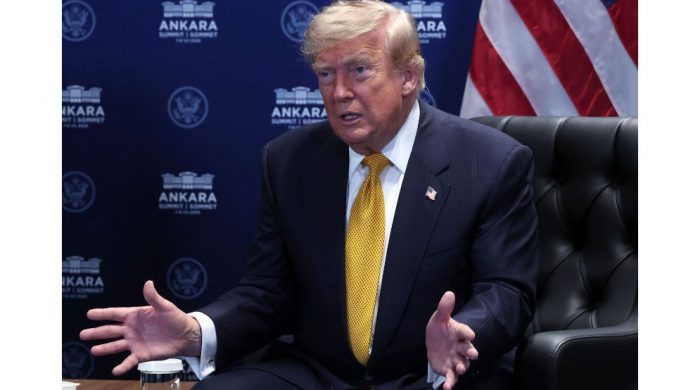
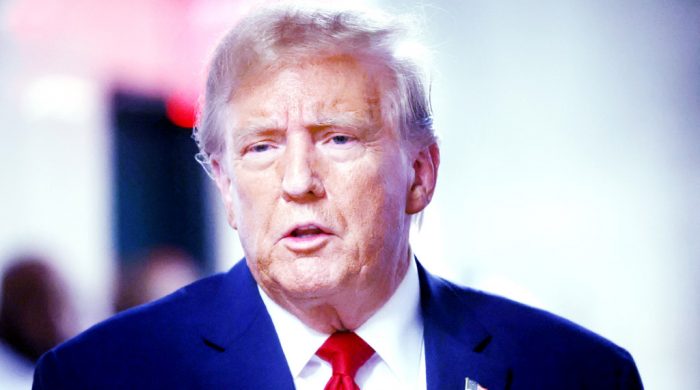
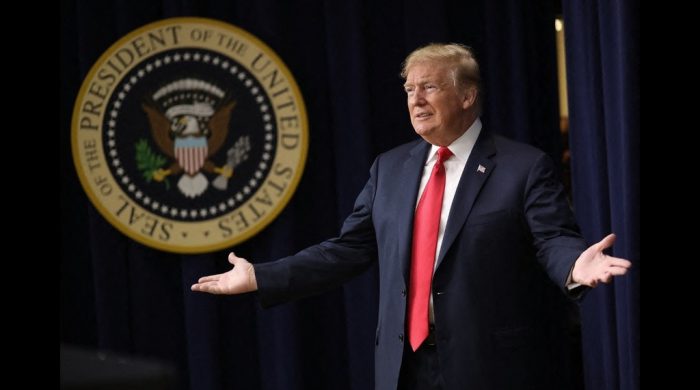
The controversy began surrounding the knockout match between the US and Bosnia. Balogun scored his third World Cup goal in a 2-0 victory against Bosnia. However, in the second half, he was shown a red card following a VAR review for stomping on Tarik Muharemović’s ankle. But since he is a US player, things took a different turn. The US President himself expressed furious reactions over the red card incident. Rumors circulated that US President Donald Trump had requested FIFA to reconsider the suspension. Later, the FIFA President himself revealed that he had received a phone call from the American President.
Subsequently, Trump openly admitted that he had requested FIFA to reconsider Balogun’s one-match ban, asking them to rethink the red card decision. Whether Trump requested or intimidated the FIFA President remains unknown, but upon receiving this phone call, FIFA President Gianni Infantino committed the most controversial act of this World Cup. Disregarding FIFA’s principles of neutrality and non-interference in refereeing independence, he made an unprecedented decision to suspend Balogun’s one-match ban. Following this unsolicited incident, questions have arisen regarding FIFA’s neutrality and its ability to remain free from political influence. In a statement, FIFA explained that under Article 27 of the Disciplinary Code, Balogun’s suspension was deferred subject to a one-year probationary period. If a similar offense is repeated, the suspended ban will take effect. However, FIFA offered no explanation as to why this decision was deferred.
Belgium fiercely protested the decision. Not only Belgium, but the entire world vented its outrage. This was neither the first nor the only controversy of this World Cup. From the very beginning, FIFA has been plagued by various criticisms. Football pundits allege that politics has tarnished the atmosphere of this World Cup. Many argue that unprecedented bias and FIFA’s excessive commercial mindset have ruined the beauty of football.
The roots of this controversy trace back to last year. During the World Cup draw ceremony held in December, FIFA introduced the first-ever “FIFA Peace Prize,” citing the “unifying power” of football. The award was presented there to US President Donald Trump. This was entirely unprecedented—there was no prior announcement, rules, procedures, or clear criteria for the award. Even several members of the FIFA Council claimed they were completely unaware of the award’s creation until the event began. Immediately after the incident, a storm of criticism erupted on social media and in international circles. Many described the award as a “political drama,” an “insult to the concept of peace,” and an attempt at “whitewashing.” Many comments suggested that FIFA had “concocted an award out of thin air” just to please Trump and secure political advantages in the United States. FIFA has previously been criticised for allegations of corruption, influence-peddling, and political bias. Analysts believe that creating a “Peace Prize” without prior notice and awarding it to Trump has further damaged the organisation’s credibility. Many now argue that FIFA’s claim of “staying away from politics” is nothing more than a promotional slogan.
Even before the World Cup matches began, it was evident that some teams were treated with gross unfairness—with Iran being the foremost example. Despite not losing a single match in the group stage, Iran had to exit the World Cup. However, rather than their performance on the field, the stories of extreme discrimination, visa complications, and political vendettas off the field have become the center of global discussion. Following their final match in Seattle, Iran’s captain Mehdi Taremi pulled no punches. He explicitly stated that the United States did not want Iran to advance to the knockout stage: “We are having to fight against everything here. I don’t know if others will agree, but if you look at it from our perspective, I would say—yes, this is exactly what happened to us.”
There are also allegations of match-fixing in the World Cup to ensure Iran did not advance to the knockout stage. Although FIFA denied the allegations, most people around the world believe that the Austria-Algeria match was fixed to stop Iran. Though Iran exited the World Cup, they won the hearts of football lovers worldwide, while FIFA faced heavy criticism. The entire tournament has been riddled with allegations of bias. The lenient behavior of referees toward specific players did not escape the notice of football fans. Granted, such allegations arise in almost every World Cup to some extent. However, the red card controversy surrounding US footballer Folarin Balogun has brought the integrity of this World Cup into question more than anything else.
Following this incident, many delved into history, drawing comparisons to the 1934 World Cup. Since the inaugural World Cup was held in Latin America, FIFA decided to host the second edition in Europe, choosing Italy as the host nation. It was not merely a football tournament; it was a golden stage for Italian dictator Benito Mussolini to showcase his fascist power to the world. To strengthen the national team, Mussolini himself initiated the trend of granting overnight citizenship to foreign players. Allegations arose that Italy violated rules by playing Luis Monti, Enrique Guaita, and Attilio Demaría (Anfilogino Guarisi). They had previously represented Argentina and Brazil and had not resided in Italy for the required duration to represent the country. Yet, FIFA mysteriously turned a blind eye to everything.
The referee for the semifinal and final matches of the 1934 Italy World Cup was a young Swedish national. There have long been rumors that he had a secret dinner with the Italian dictator Benito Mussolini on the eve of the crucial match. Allegations persist that the referee was influenced to ensure host Italy’s victory. It is even said that during halftime, Mussolini entered the dressing room and told the players that while the referee was being “cooperative,” they should avoid excessive fouling. Ultimately, with a 2-1 victory, Italy won the Jules Rimet Trophy (now the World Cup) for the first time. Along with it, the team was presented with the massive “Coppa del Duce” trophy, created by Mussolini’s special decree. It was as if the triumph of fascism was being proclaimed alongside the world championship.
When FIFA altered a referee’s decision this time following a single phone call from Trump, many were reminded of 1934. Would the United States become champions this time, or would they be made champions? These discussions overshadowed the sheer excitement of football. But fortunately, that did not happen. Ultimately, football triumphed. The United States—FIFA’s “special team”—was blown away by Belgium’s golden generation. It proved that football is still far more powerful than politics.
Nevertheless, this World Cup has cast a dark shadow of doubt over the sporting world. Will hyper-politicisation corrupt the world’s most popular sport? This has emerged as the biggest question this time. Football and sports do not merely entertain people; they unite them. They bind humanity in a single thread. Sports foster connections, forging an extraordinary bond of harmony that bridges geographical distances. Sports uproot the barriers of rich and poor, black and white, making us one. Neymar’s tearful eyes make us cry. We exult in Messi’s success. Ronaldo’s departure leaves us emotional. Football, or any preferred sport, does not just bring us joy or drench us in sorrow; it teaches us to love. Sports make us humane and sensitive. When a player works for the welfare of humanity, we are inspired.
Therefore, sports are not just a competition to win; they are a platform for building a world of humane values. Ensuring that blind fanaticism does not destroy the spirit of sportsmanship is the primary duty of governing bodies like FIFA. In this World Cup, FIFA has strayed somewhat from that goal. Yet, in the end, football won. That is the inherent power of football. Who takes home the trophy in this World Cup is a secondary matter, but the ultimate hope remains that the true essence of the game triumphs. The collective expectation is that football, and all sports, must never become tools of global politics.
Audite Karim is a writer and playwright. Email: [email protected]