Arrest over sharing distorted image of Prime Minister: Freedom of expression or digital crime?

- Update Time : Tuesday, April 7, 2026
- 37 Time

Police in Muktagacha upazila of Mymensingh have arrested a Jamaat-e-Islami activist, Azizul Haque, on allegations of spreading defamatory content on social media by superimposing an image of Prime Minister Tarique Rahman onto an inappropriate image of an unidentified woman.
The arrest was made early Friday (27 March) in the Jhonka Bazar area of the upazila, and a court later ordered that the accused be sent to jail. The incident has since triggered nationwide debate over the limits of freedom of expression and the legal boundaries of digital content.
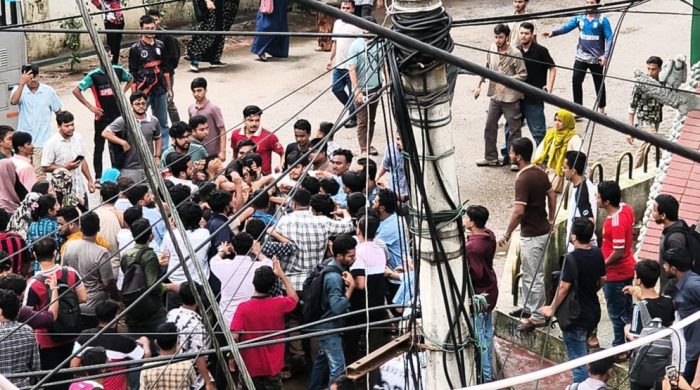
According to local sources, the controversial post was originally shared from a Facebook page, where the manipulated image was captioned, “Meeting my girlfriend after a long time.” Azizul Haque later shared the post from his personal account. The content drew strong reactions from local BNP activists and residents, leading to heightened tensions in the area.
Police said Azizul Haque, son of Ibrahim from Boro Tengar village under Kashimpur Union, is involved in local Jamaat politics and allegedly operated the Facebook page in question, which regularly published offensive and misleading posts.
Officer-in-Charge of Muktagacha Police Station, Md Lutfur Rahman, confirmed that a case has been filed against the accused, with a local political activist, Md Fazlu, listed as the complainant.
He added that there were also suspicions regarding late-night meetings involving unidentified individuals at a nursery run by the accused. The investigation remains ongoing.
Experts say the incident highlights growing concerns over the misuse of digital platforms, particularly the manipulation of images using artificial intelligence to target political figures, teachers, and women. Such actions can damage reputations and mislead the public, as many users often believe such content.
Professor Dr Farhana Zaman, Head of the Department of Sociology at Jagannath University, said that while freedom of expression is a fundamental right, it is not unlimited. Actions such as defamation, spreading hatred, or creating social instability fall outside its scope.
She stressed the need for stronger implementation of existing laws and proposed the introduction of a national digital ethical guideline to define acceptable online behaviour.
Professor Dr Md Touhidul Haque of the Institute of Social Welfare and Research at the University of Dhaka also noted that personal attacks and smear campaigns on social media are becoming increasingly common.
He emphasised that freedom of expression does not justify harming others’ dignity or professional standing.
He suggested increasing public awareness, ensuring accountability in social media use, and enforcing stricter legal measures to curb such offences. According to him, better regulation and identification of users could significantly reduce the misuse of digital platforms.
The incident has renewed concerns over the ethical use of digital platforms and underscored the need for a balanced approach to safeguarding both freedom of expression and individual dignity in Bangladesh’s evolving digital landscape.