New law to allow ex-owners reclaim 5 crisis-hit banks

- Update Time : Sunday, April 12, 2026
- 34 Time
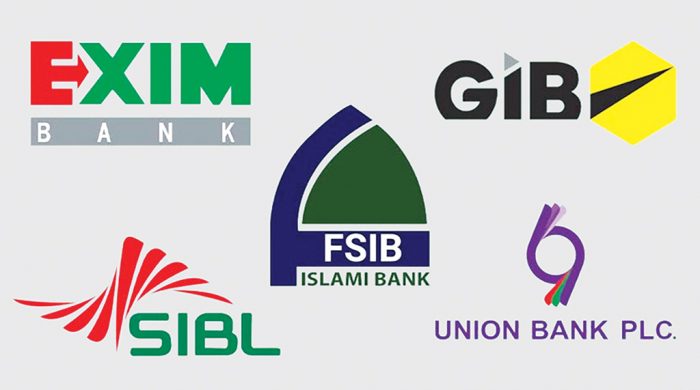
The government has passed the Bank Resolution Act that creates a scope for previous owners of five crisis-hit banks, including the controversial S Alam Group, to get back their ownership after providing a very small amount of money compared with what they have taken away from banks.
The Jatiya Sangsad approved the Bank Resolution Act 2026 on Friday by amending the earlier ordinance issued in 2025.
The law also created uncertainty about the merger of the five banks— Social Islami Bank, First Security Islami Bank, Union Bank, Global Islami Bank and EXIM Bank .
EXIM Bank was controlled by NASSA Group and other fours were previously controlled by the S Alam Group.
Zahid Hussain, former lead economist of World Bank Dhaka office, said that the new act effectively rewards those responsible for the banks’ collapse by allowing them to regain control without first recovering the funds they had taken out.
‘The main actors behind the deterioration of these banks are now being given a legal path to return, instead of facing accountability,’ he said.
He has pointed out that the law does not require prior recovery of misappropriated loans, raising concerns over moral hazard.
‘After a year of merger efforts, asset quality reviews and substantial public fund injections, this move risks undoing the entire restructuring process,’ he said.
The economist also warned that they might borrow again from the banking system to finance their comeback, which would deepen existing vulnerabilities.
The most critical addition, Section 18(Ka), allows former shareholders or individuals deemed eligible by Bangladesh Bank to apply for re-acquiring shares, assets and liabilities of banks under resolution.
The provision also supersede any other laws by saying ‘notwithstanding anything contained in any other law for the time being in force or in any other provision of this act’, the previous or current shareholders can reclaim assets or ownership.
Zahid said that the provision sent a negative signal that financial misconduct might go unpunished and weakens reform momentum.
According to him, the law introduces fresh uncertainty into the merger process, as former owners can now seek to reclaim control at any stage.
Under the law, applicants must submit a formal undertaking committing to repay all financial support provided by the government and the central bank, inject fresh capital to restore solvency, settle all depositor and creditor claims, clear tax liabilities and compensate affected parties.
They must also ensure stronger governance, risk management and compliance frameworks and accept restrictions on share transfers if imposed by the regulator.
The payment structure, , however, has drawn the sharpest criticism.
The law requires applicants to deposit only 7.5 per cent of the total public funds injected into the bank within three months of approval.
The remaining 92.5 per cent can be repaid within two years with a simple interest rate of 10pc.
In practice, if around Tk 20,000 crore was injected, an upfront payment of about Tk 1,500 crore would be enough to regain control of several banks.
Bangladesh Bank officials said that the conditions listed in the undertaking are extensive, but the law allowed ownership transfer based primarily on commitment rather than actual repayment.
If ownership is returned after full compliance, it will be justified. Allowing it on a small upfront payment and promises is risky, a central bank official said.
A report by the Bangladesh Financial Intelligence Unit estimated that the group alone took Tk 2.25 lakh crore from 11 banks and financial institutions, contributing to a surge in the sector’s total non-performing loans, which reached Tk 6.44 lakh crore in September 2025.
The act includes a monitoring mechanism under which Bangladesh Bank will supervise restored banks for two years and conduct a compliance review through a special committee. Failure to meet conditions may lead to cancellation of approval.
It also provides compensation to shareholders and creditors if they incur higher losses under resolution than they will have faced under liquidation, based on independent valuation.
Economists have said that the law risks undermining ongoing banking reforms.
Weak enforcement, political influence and past governance failures could allow misuse of the provisions.
The development comes against the backdrop of extensive state support to troubled banks.
The government injected about Tk 20,000 crore into the merged entity, while the central bank provided around Tk 47,000 crore in liquidity support.
Experts have said that the new law can weaken depositor confidence, delay restructuring efforts and complicate efforts to stabilise a banking sector already strained by high default loans, capital erosion and liquidity shortages.