Are We to Die from Mosquito Bites?

- Update Time : Saturday, July 11, 2026
- 47 Time
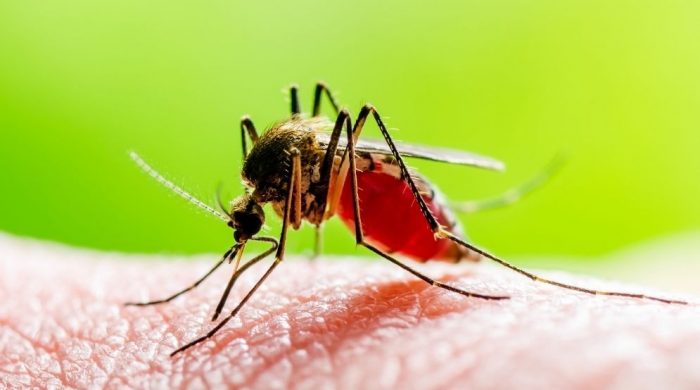
The Aedes mosquito, the carrier of dengue, was once regarded as a mosquito of affluent neighbourhoods. It bred in upscale urban areas, bit residents there, and dengue was largely confined to those communities.
It was also widely believed that only infected female Aedes mosquitoes transmitted the disease, while males did not. The mosquito was known to bite during the day rather than at night. Its breeding grounds were places where clean water remained stagnant for four or five days — refrigerator drip trays, water collected beneath air conditioners, flower pots with unchanged water, bottles used for money plants, discarded coconut shells, old vehicle tyres and construction water tanks.
Wherever clean water remained undisturbed for several days, the mosquito found an ideal place to breed. A single bite from an infected mosquito could transmit dengue.
Dhaka experienced its first major dengue outbreak in 2000, when several thousand people were infected and many lost their lives. Another serious outbreak occurred in 2019. In 2023, around 100,000 people contracted the disease and nearly 1,000 died, making it the worst dengue epidemic in the country’s history.
Dengue was first identified in what is now Bangladesh in 1964, when it was referred to as “Dhaka Fever”. The disease first appeared in the Indian subcontinent in Kolkata in 1824 and became epidemic there in 1836, 1872 and 1906. It is believed to have originated in Africa before spreading to this region.
During the severe outbreak in Kolkata in 1872, the renowned Tagore family of Jorasanko fled the city for a garden house in Panihati out of fear of the disease. Rabindranath Tagore, then only 11 years old, later mentioned the incident in his memoir Jibansmriti.
When dengue emerged in Dhaka in 2000, the city authorities focused their mosquito control efforts primarily on affluent areas such as Dhanmondi, Banani and Gulshan. Bashundhara Residential Area also implemented strict mosquito control measures and has maintained an impressive record in preventing dengue transmission.
Over time, however, the Aedes mosquito adapted. It spread beyond elite neighbourhoods into every corner of the capital, then to district towns, upazilas and even rural villages. It no longer bites only during the day; it is now active at night as well. Scientific understanding has also evolved, with evidence showing that male mosquitoes can carry the virus under certain circumstances, challenging earlier assumptions.
Although Aedes mosquitoes account for less than 1% of the country’s mosquito population, a single infected bite is enough to transmit the disease.
Dengue was once considered a seasonal illness associated with the monsoon. Today, it has become a year-round public health challenge, although the risk rises sharply during the rainy season.
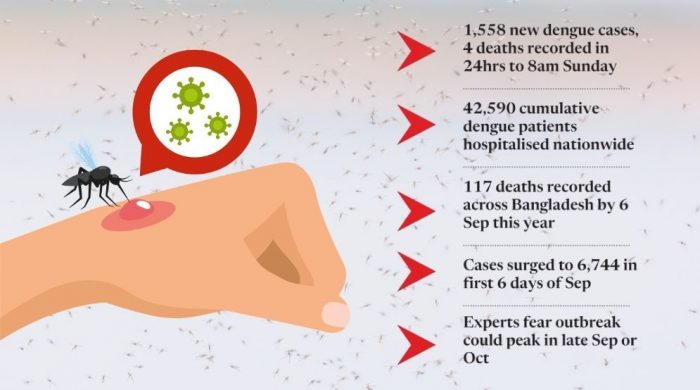
This year, nearly 7,000 people have already been infected across the country and 19 have died. Dengue specialists, analysing mosquito density, infection rates, rainfall, temperature and humidity, warn that the situation could become far more severe in August and September. They also point out that fogging alone is insufficient, with around 70% of mosquitoes surviving conventional spraying.
So how can this crisis be addressed?
Experts at a recent roundtable proposed eight key measures. The foremost recommendation was to prioritise the destruction of mosquito breeding sites rather than relying solely on fogging. They also called for better coordination of data between public and private hospitals, year-round surveillance, stronger treatment capacity at the upazila level, sustained public awareness campaigns that encourage behavioural change, rapid response teams in affected areas, wider availability of NS1 diagnostic tests, improved hospital preparedness, coordinated action by government, local authorities and citizens, and prompt testing and medical consultation whenever fever develops.
Among these recommendations, eliminating breeding grounds and changing public behaviour are the most important. I firmly believe that if people become aware of the risks and act responsibly, dengue can be brought under control.
The media can play a crucial role in this effort. Television channels, newspapers, online platforms and social media should continuously educate the public about preventive measures. Simple habits can make a significant difference: sleeping under mosquito nets, wearing long-sleeved clothing, preventing clean water from stagnating anywhere and regularly destroying mosquito breeding sites.
We cannot expect the government alone to solve this problem. Every citizen has a responsibility. Experts can provide guidance, but implementation depends on all of us.
In the early years of this century, when dengue first spread widely in Dhaka, Professor Abdullah Abu Sayeed, founder of the World Literature Centre, launched a public awareness campaign by mobilising students. Small volunteer groups visited educational institutions, distributed leaflets and urged people to take preventive measures. Their campaign proved remarkably effective.
Bangladesh has thousands of social organisations involving millions of young people and volunteers. I appeal to every one of them to raise awareness about dengue, eliminate mosquito breeding sites in their own communities and ensure that no container is left holding stagnant clean water at homes, offices or educational institutions. Protect yourselves and help protect others.
Bashundhara Shuvosangho began its dengue awareness campaign several months ago. Across the country, including in remote areas, its volunteers have been organising meetings, visiting households, explaining preventive measures in simple language, cleaning neighbourhoods and destroying mosquito breeding sites. The results have been encouraging.
Awareness is our greatest weapon. An informed and responsible public can overcome this challenge. We should not accept deaths caused by mosquito bites as inevitable. Let us stand together against dengue, protect ourselves and protect one another. We must remember that when people are safe, the nation is stronger.