Hydrogen Trains: Can Bangladesh Ride the Next Railway Revolution?

- Update Time : Tuesday, July 21, 2026
- 0 Time

A New Chapter in Railway History
Few inventions have transformed civilization as profoundly as the railway. Railways have connected cities, expanded commerce, accelerated industrialization, and shaped the economic geography of nations. Every significant technological shift in railway history has reflected a broader transformation in society itself. Steam locomotives powered the Industrial Revolution. Diesel engines brought greater operational flexibility and wider network expansion. Electrified railways introduced higher speeds, lower operating costs, and cleaner urban transport.
Hydrogen-powered trains have emerged as one of the most promising innovations in this transition. Although still at an early stage of global deployment, they are increasingly attracting attention from policymakers, engineers, and investors.
For Bangladesh, the question is not whether hydrogen trains should replace every diesel locomotive tomorrow. The more important question is whether the country should begin preparing today for a technology that may become commercially and strategically important over the coming decades.
Why the World Is Looking Beyond Diesel
Transport remains one of the largest contributors to global greenhouse gas emissions. While railways are already among the most energy-efficient modes of transportation, many national railway systems continue to rely heavily on diesel locomotives, particularly on regional and non electrified routes.
Diesel technology has served railways well for generations. It is reliable, well understood, and supported by established maintenance systems. Yet diesel also presents growing challenges. Fuel price volatility, dependence on imported petroleum, tightening environmental regulations, and the global commitment to achieve net-zero emissions are encouraging governments to explore cleaner alternatives.
Hydrogen has become part of that conversation.
Unlike conventional locomotives, hydrogen trains do not burn fuel in an internal combustion engine. Instead, hydrogen stored in onboard tanks is supplied to a fuel cell, where it reacts electrochemically with oxygen from the atmosphere. This process generates electricity that powers electric traction motors. At the point of operation, the only direct by-products are water vapor and heat.
The technology combines the operational advantages of electric traction with the flexibility of trains that do not require continuous overhead electrical infrastructure. For many railway operators, particularly those managing non-electrified regional networks, this represents an attractive possibility.
From Experimental Technology to Commercial Reality
Hydrogen trains are no longer confined to research laboratories.
Germany became the first country to introduce hydrogen-powered passenger trains into regular commercial service with the Alstom Coradia iLint. Operating on regional lines, these trains demonstrated that hydrogen technology could deliver reliable passenger services under everyday operating conditions.
Following Germany’s experience, several countries have expanded their own hydrogen rail initiatives. France has incorporated hydrogen trains into regional transport planning. Italy is developing hydrogen railway projects linked to regional decarbonization strategies. Austria and the Netherlands have conducted operational trials. The United Kingdom continues testing hydrogen conversion technologies for existing rolling stock. Japan and South Korea are investing heavily in hydrogen mobility across multiple transport sectors, including rail. China has developed hydrogen-powered rail vehicles as part of its broader clean transportation strategy, while North American railway operators continue exploring fuel-cell applications for both passenger and freight services.
These developments illustrate an important point. Hydrogen rail is no longer a speculative concept. It has entered the early stages of commercial deployment, although its adoption remains selective and highly dependent on local economic and operational conditions.
Hydrogen and Electrification Are Partners, Not Rivals
Public discussions sometimes present hydrogen and railway electrification as competing technologies. In reality, they are more accurately viewed as complementary solutions.
Electrification remains the preferred option for high-density railway corridors where frequent passenger and freight services justify the significant investment required for overhead catenary systems, substations, and associated electrical infrastructure. Once installed, electrified railways generally offer excellent energy efficiency and lower operating costs on busy routes.
Hydrogen trains become more attractive under different circumstances. On regional lines with lower traffic volumes, extending overhead electrical infrastructure may not always be economically justified. In such cases, hydrogen-powered trains can provide many of the operational benefits of electric traction without requiring continuous electrification of the entire route.
Battery-electric trains also have an important role, particularly on shorter routes where charging infrastructure is practical. Rather than seeking a single universal solution, future railway systems are likely to employ a combination of electrified rail, battery-electric technology, hydrogen propulsion, and increasingly efficient conventional systems according to local operational requirements.
This diversified approach reduces technological risk while allowing each corridor to adopt the most appropriate solution.
Bangladesh at a Strategic Crossroads
Bangladesh is experiencing one of the most significant periods of railway modernization in its history. New bridges, upgraded corridors, improved signaling systems, enhanced passenger facilities, and expanding regional connectivity demonstrate a renewed national commitment to rail transport.
Railways are becoming increasingly important not only for passenger mobility but also for freight logistics, regional trade, and sustainable urban development.
Despite these encouraging developments, much of Bangladesh Railway continues to depend on imported diesel fuel. This dependence exposes the country to fluctuations in international energy markets and contributes to higher operating costs and pressure on foreign exchange reserves.
At the same time, Bangladesh has committed itself to sustainable development, climate resilience, and gradual decarbonization of its economy. These national priorities naturally invite consideration of cleaner transport technologies for the future.
Hydrogen deserves careful evaluation within this broader strategic context.
That does not mean Bangladesh should rush to procure hydrogen locomotives. On the contrary, prudence suggests exactly the opposite. Major infrastructure decisions should always be guided by rigorous technical analysis rather than technological enthusiasm.
However, ignoring hydrogen altogether would also be unwise. Railway assets typically remain in service for several decades. Decisions taken today will influence transport systems well into the middle of this century. Preparing for emerging technologies before they become widespread is often more economical than attempting to catch up later.
Bangladesh’s future railway network is unlikely to rely on any single propulsion technology. High-density corridors may increasingly favor electrification where economically justified. Existing diesel fleets can continue serving important operational needs while becoming progressively more efficient. Battery-electric systems may prove suitable for selected short-distance services. Hydrogen, if future economics and technology become favorable, could eventually provide an additional option for regional routes where full electrification is not the optimal solution.
Such technological diversity should not be viewed as uncertainty. Rather, it represents resilience. The strongest transport systems are those capable of adapting to changing technologies, evolving energy markets, and future environmental requirements.
For Bangladesh, the most valuable investment today may not be in hydrogen trains themselves, but in knowledge, technical capacity, institutional preparedness, and evidence-based policy development. Those investments will enable informed decisions when the technology reaches greater commercial maturity.
The Economics Behind the Technology
Every transformative technology faces the same question before it gains widespread acceptance. Is it economically viable?
Hydrogen trains are no exception.
At present, hydrogen-powered rolling stock generally requires a higher initial investment than conventional diesel locomotives. The additional cost arises not only from the trains themselves but also from the supporting ecosystem. Hydrogen production facilities, compression systems, storage tanks, refueling stations, maintenance equipment, safety infrastructure, and workforce training all contribute to higher upfront capital expenditure.
Yet infrastructure decisions should never be judged solely by their purchase price.
Railway assets often remain in operation for thirty to forty years. Consequently, policymakers must evaluate the total cost of ownership rather than the initial investment alone. Fuel expenditure, maintenance requirements, operational efficiency, environmental costs, asset longevity, and resilience against future energy price shocks all influence long-term economic performance.
Fuel-cell systems contain fewer moving mechanical components than traditional diesel engines, which may reduce certain maintenance requirements over time. As the technology matures, manufacturing scales up, and global hydrogen supply chains become more competitive, production costs are expected to decline. However, the pace and magnitude of future cost reductions remain uncertain and will depend on technological advances, energy prices, policy incentives, and market demand.
For Bangladesh, the economic case for hydrogen trains would therefore need to be assessed through comprehensive life-cycle cost analysis rather than short-term procurement comparisons.
Can Bangladesh Produce Green Hydrogen?
One of the most important questions is whether Bangladesh could eventually produce hydrogen in a sustainable and economically competitive manner.
Hydrogen is not a primary source of energy. It is an energy carrier. Producing hydrogen requires energy, and the environmental benefits depend largely on how that energy is generated.
When hydrogen is produced through electrolysis powered by renewable electricity, it is commonly referred to as green hydrogen. This process separates water into hydrogen and oxygen without direct carbon emissions from the production process, provided the electricity itself comes from low-carbon sources.
Bangladesh’s renewable energy sector remains relatively modest compared with many developed economies. Nevertheless, the country has steadily expanded solar power generation, while coastal areas offer potential for wind energy development. Future improvements in renewable energy capacity, energy storage, and grid management could create opportunities for green hydrogen production during periods of surplus electricity generation.
Hydrogen should not be viewed solely through the lens of railway transport. It has potential applications in fertilizer production, steel manufacturing, heavy industry, maritime transport, backup power systems, and long-duration energy storage. A future hydrogen economy, if developed prudently, could therefore support multiple sectors simultaneously.
Whether Bangladesh ultimately becomes a producer, importer, or a combination of both will depend on technological progress, comparative production costs, international energy markets, and national energy policy.
Hydrogen as an Industrial Opportunity
The global hydrogen transition is not simply about replacing one fuel with another. It is also about creating new industries.
Countries investing in hydrogen research are developing expertise in fuel-cell engineering, advanced manufacturing, storage technologies, digital monitoring systems, safety engineering, and renewable energy integration. These capabilities generate skilled employment, strengthen research institutions, and promote industrial innovation.
For Bangladesh, investment in hydrogen-related research could produce benefits that extend well beyond the railway sector. Universities could establish specialized research programs. Engineering graduates could acquire expertise in emerging technologies. Local industries could participate in component manufacturing, equipment servicing, and engineering support. International technology partnerships could facilitate knowledge transfer and enhance industrial competitiveness.
Even if large-scale railway deployment remains years away, developing human capital today would position Bangladesh more favorably for future technological change.
Safety Must Come Before Speed
Hydrogen’s flammability understandably attracts public attention. However, risk should be evaluated through evidence rather than perception.
Modern hydrogen technologies incorporate multiple layers of engineering protection, including high-strength storage cylinders, pressure management systems, continuous leak detection, automatic isolation mechanisms, ventilation standards, and internationally recognized operational protocols.
Hydrogen has long been used safely in chemical industries, petroleum refining, food processing, scientific research, and aerospace applications. These sectors demonstrate that hydrogen can be handled responsibly when supported by rigorous engineering, disciplined operational procedures, and comprehensive regulatory oversight.
For railway applications, safety must remain the highest priority. Any future hydrogen operations in Bangladesh would require internationally recognized technical standards, specialized training for railway personnel, emergency response planning, independent regulatory supervision, and regular safety audits.
Public confidence is built not through technological promises but through transparent governance and demonstrable operational excellence.
A Practical Roadmap for Bangladesh
If Bangladesh wishes to explore hydrogen rail technology responsibly, the journey should begin with preparation rather than procurement.
The first step should be a comprehensive national feasibility study examining technical, financial, environmental, and operational considerations.
The second step should involve developing a National Hydrogen Strategy that identifies priority sectors, establishes regulatory frameworks, and coordinates policy across transport, energy, industry, finance, education, and environmental institutions.
The third step should focus on research partnerships involving Bangladesh Railway, universities, engineering institutions, research organizations, and private industry.
Only after these foundations have been established should policymakers consider a carefully selected demonstration project. A limited pilot corridor would enable engineers, operators, regulators, and policymakers to gain practical experience before evaluating broader deployment.
This gradual approach minimizes financial risk while maximizing institutional learning.
Financing the Future
One of the greatest challenges facing any emerging transport technology is financing.
Fortunately, the international landscape is evolving.
Multilateral development institutions increasingly support investments that contribute to climate mitigation and sustainable infrastructure. Organizations such as the World Bank, the Asian Development Bank, the Asian Infrastructure Investment Bank, the Japan International Cooperation Agency, and the Green Climate Fund have demonstrated growing interest in financing low-carbon transport initiatives where projects are supported by credible technical analysis and sound governance.
Bangladesh could potentially benefit from these financing opportunities if hydrogen railway proposals form part of a broader national strategy grounded in rigorous feasibility studies and transparent implementation frameworks.
International partnerships would also facilitate technology transfer, workforce development, and institutional capacity building.
Innovation Requires Patience
History reminds us that transformative technologies rarely become commercially successful overnight.
The first steam railways faced skepticism.
Diesel locomotives were once viewed as expensive alternatives to steam.
Renewable energy technologies were long criticized for their high costs before becoming increasingly competitive.
Hydrogen may follow a similar path, although no outcome should be assumed. Its future competitiveness will depend on technological innovation, renewable electricity costs, industrial scale, policy support, and market evolution.
Sound policymaking requires neither blind optimism nor unnecessary pessimism. It requires continuous evaluation as evidence develops.
Looking Beyond the Locomotive
The conversation about hydrogen trains is ultimately not about locomotives alone.
It is about how Bangladesh prepares for a future shaped by technological change, climate responsibility, and evolving patterns of global energy.
Railway modernization should be viewed as part of a broader national strategy encompassing industrial competitiveness, energy diversification, environmental sustainability, scientific research, workforce development, and economic resilience.
Countries that invest early in knowledge, institutional capability, and research often find themselves better prepared when emerging technologies reach commercial maturity.
Preparation does not require immediate adoption. It requires informed decision-making.
The Journey Begins with Vision
Hydrogen powered trains are unlikely to dominate Bangladesh’s railway system in the immediate future. They should not be viewed as a universal solution, nor should they be considered a replacement for every other low-emission railway technology. Electrification, battery electric systems, improved diesel efficiency, and hydrogen propulsion each have strengths and limitations that vary according to operational requirements.
What deserves attention today is not the certainty of hydrogen’s future but the importance of being prepared for multiple possible futures.
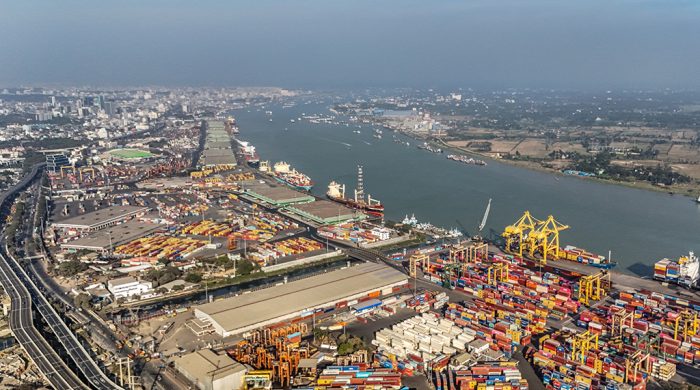
Bangladesh has repeatedly demonstrated its ability to transform ambitious infrastructure visions into reality. The modernization of bridges, ports, airports, and railways illustrates the country’s growing engineering capability and development aspirations. The next phase of progress will increasingly depend not only on building infrastructure but also on choosing technologies that remain economically, environmentally, and strategically relevant for decades to come.
Hydrogen trains may eventually become part of that future, or they may remain a specialized solution for selected railway corridors. Either outcome should be determined through evidence rather than expectation.
The most valuable investment Bangladesh can make today is therefore not necessarily in hydrogen locomotives themselves, but in scientific research, technical education, institutional capacity, and long-term strategic planning. Those investments will strengthen national decision-making regardless of which propulsion technologies ultimately prevail.
Every generation inherits an opportunity to redefine progress. For today’s policymakers, engineers, researchers, and industry leaders, that opportunity lies in building a railway system that is efficient, resilient, environmentally responsible, and adaptable to technological change.
The destination is not merely a hydrogen powered train.
The destination is a smarter transport system, a stronger economy, a cleaner environment, and a more sustainable future for Bangladesh.
Author’s Disclaimer
This article presents a forward looking policy perspective on the potential role of hydrogen powered railways in Bangladesh. It does not advocate the immediate deployment of hydrogen trains, nor does it suggest that hydrogen technology is inherently superior to railway electrification, battery electric systems, or other low-emission transport solutions. The suitability of hydrogen rail depends on route characteristics, traffic density, energy availability, technological maturity, safety requirements, financing, and long term economic viability.
The analysis offered here is intended to encourage informed public discussion, evidence based policymaking, comprehensive feasibility studies, and strategic planning. Any future investment in hydrogen rail should be supported by rigorous engineering assessments, environmental and social impact evaluations, financial analyses, and compliance with applicable national laws and internationally recognized safety standards.