Goodbye, my almost lover

- Update Time : Tuesday, July 21, 2026
- 1 Time
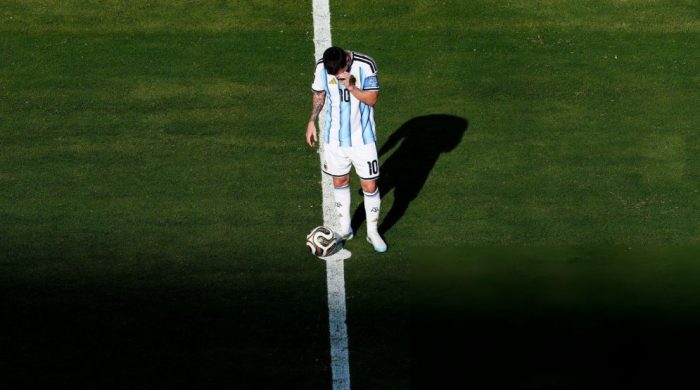
I never gave Lionel Messi my everything as a football fan or a watcher. That is the confession I keep on returning to, the one thing that sits in behind of my mind quietly at the back of every argument that I had or won about him.
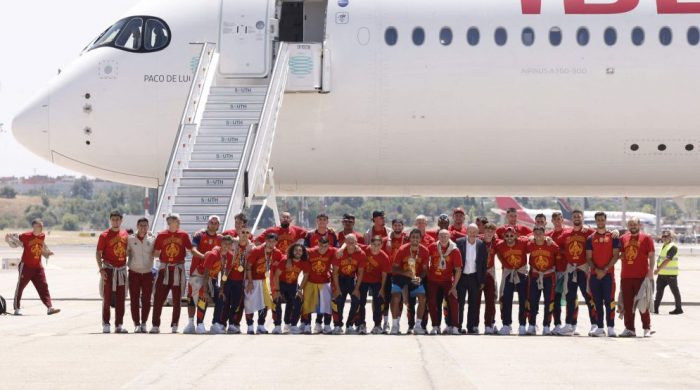
This has been the feeling that is reiterating in my mind after Sunday night’s final in New York where Messi lost in a very uncharacteristic fashion against the extremely well-knit Spaniards.
The reason was never so convincing, but convincing enough for me.
I told myself it was because of what he was. A mythology built so tall it over-shadowed the band of logic, a beacon of irrational fandom. I told myself I was being rational.
But you know what a person does when they are being rational? They stop watching him crying his heart out on the pitch. They change the channel. They do not memorise the way he drags his left foot back before he accelerates, the particular geometry of how the way the ball seems to slow for him and only him, as if time itself is extending him a courtesy that it refuses everyone else.
Well, I did not do that. I watched him play. Almost everytime.
There is a song I keep thinking about.
”Goodbye, my almost lover
Goodbye, my hopeless dream
I’m trying not to think about you
Can’t you just let me be?”
A song by Alison Sudol, about incompleteness, about a thing that was almost everything and ended up being nothing. Except: not nothing. Never nothing. The almost is the point.
The almost is where I stand on the Messi discourse.
I could not give him the unconditional faith like the people who draped their entire identity in the number on the back of his shirt. People said that Ronaldo was faster, fitter and stronger. I let myself almost believe it and repeated it.
For years I was the person at the table listing his limitations and even as I listed them, I knew I was doing something uncanny. Like a critic who tears down a painting because the alternative is to admit it moved him.
The truth is simpler. The truth is this: I have seen no one do what Messi does. Not the way he does it.
I have seen him carry a ball from the halfway line through a geometry that should be impossible and score at the end of it with the composure a man uses to place a cup on a table. I have seen him thread passes through spaces that did not exist until he imagined them. I have seen him, in the 90th minute of a World Cup final, take a penalty and I want the reader to understand what I mean when I say take. Not strike. Not blast. Take. As though he were collecting something he had left there earlier.
I never gave him the flowers as his fans do. But I gave him this: I never pretended I did not see it.
The song ends with an admission.
“Should’ve known you’d bring me heartache
Almost lovers always do”.
But he is not ending. He is still here, after the loss against Spain.
Maybe he is a little slower at the edges, but still impossible at the centre, still making the world watch even when the world has been watching for 20 years and should by now have learned how to look away.
And I being his almost lover, his witness from the wrong side of the fence, I am still here too.
Watching. Still watching.
That is what he does to people who could not quite love him. He makes the withholding feel like its own kind of devotion. He makes the almost feel like enough. He makes it feel, on the right evening, in the right light, when the ball lands at his feet in the way it only ever lands at his.
Like more than enough. Like everything.