From Shipyards to Classrooms: Building Bangladesh’s Maritime Future

- Update Time : Wednesday, July 15, 2026
- 0 Time

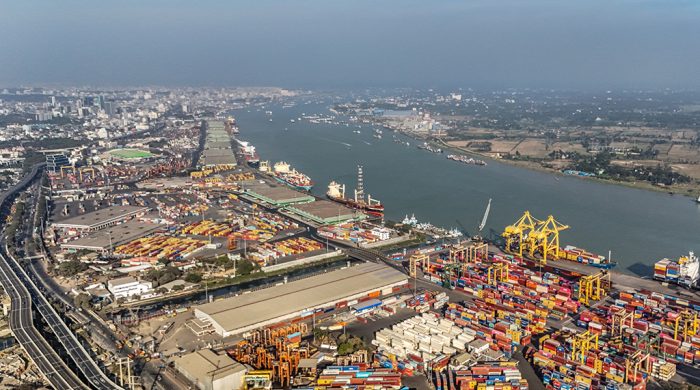
Bangladesh’s aspiration to build a strong indigenous maritime industry under the “Made in Bangladesh” initiative is not merely an industrial ambition but also a strategic necessity. As the country embraces the Blue Economy as a driver of sustainable growth, the long-term success of maritime industrialisation will depend as much on education, research, innovation and skilled human resources as on physical infrastructure. History shows that no nation has built a globally competitive maritime industry without investing amply in knowledge and technology. South Korea, Singapore, the Netherlands, Norway, Japan and Türkiye transformed their maritime sectors through sustained investment in specialised universities and research institutions and close collaboration between academia and industry. If Bangladesh seeks to become a regional maritime hub, it must also tread the same path.

The opportunity is substantial. Bangladesh enjoys sovereign rights over approximately 118,813 square kilometres of maritime area in the Bay of Bengal, creating enormous potential in shipping, shipbuilding, fisheries, offshore energy, marine resources, marine biotechnology, coastal tourism and maritime logistics. According to the World Bank, the global ocean economy is projected to reach USD 3 trillion annually by 2030. Harnessing these opportunities, however, requires a highly skilled workforce capable of driving technological advancement and innovation.
Modern maritime industries are knowledge-intensive. Shipbuilding, offshore engineering, smart ports, autonomous vessels, marine electronics and green shipping all rely on specialised expertise. Without a continuous supply of qualified engineers, naval architects, marine scientists, maritime administrators and skilled technicians, industrial growth cannot be sustained.
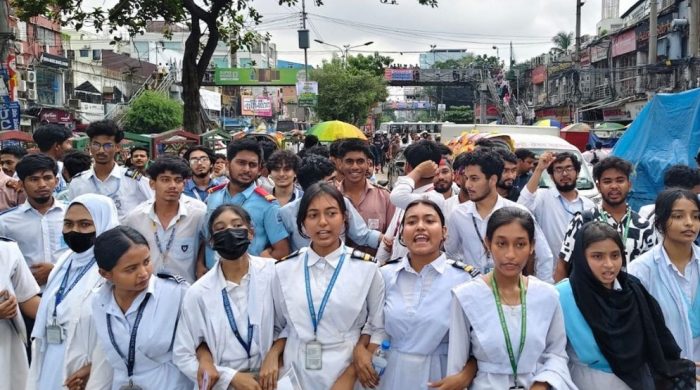
Bangladesh has made encouraging progress in maritime education. Bangladesh Maritime University, the University of Dhaka, the Institute of Marine Sciences and Fisheries of the University of Chittagong, Shahjalal University of Science and Technology, Noakhali Science and Technology University, Patuakhali Science and Technology University, Bangladesh Fisheries Academy, and Marine Academies are producing graduates and conducting research in oceanography, marine science, fisheries, naval architecture and related disciplines. Complementing these efforts, the Bangladesh Oceanographic Research Institute (BORI) serves as the country’s premier national institution for oceanographic research, while the Bangladesh Institute of Maritime Research and Development (BIMRAD) contributes to maritime policy, technology and strategic research.
The Bangladesh Navy has also made a significant contribution to national maritime capability. Through decades of experience in shipbuilding, ship repair, hydrography, logistics, navigation, quality assurance and maritime administration, it has developed a highly skilled pool of professionals whose expertise extends well beyond military applications.
Despite these advances, major challenges remain. Bangladesh still faces shortages of technically qualified manpower, limited maritime research infrastructure and weak collaboration between universities and industry. Research efforts remain fragmented, while many industries continue to depend on imported technologies and foreign expertise, limiting innovation and competitiveness.
The solution is to build an integrated maritime knowledge ecosystem where universities, research institutions, industries and government agencies work together. Academic curricula should be regularly updated to reflect emerging technologies, including artificial intelligence, autonomous shipping, digital ports, marine robotics, offshore renewable energy, cybersecurity and environmentally sustainable shipbuilding and ship recycling.
Investment in research must also become a national priority. Bangladesh should strengthen oceanographic surveys, marine resource mapping, offshore engineering, climate resilience and marine biotechnology research. More importantly, research should generate practical, industry-orientated solutions that support policymaking and industrial development.
Equally important is stronger collaboration between academia and industry. Universities should establish joint research programmes with shipyards, ports, shipping companies and logistics providers. Students should receive greater exposure to industrial training, while researchers should be encouraged to solve real-world engineering and operational challenges. Such partnerships will accelerate innovation and ensure graduates possess industry-ready skills.
One of Bangladesh’s most underutilised national assets is the vast expertise of retired Bangladesh Navy personnel. Throughout their careers, they acquire extensive knowledge in maritime administration, shipbuilding, ship repair, hydrography, logistics, engineering, procurement, project management, navigation and maritime safety. Yet, much of this valuable institutional knowledge remains untapped after retirement.
Bangladesh should establish a structured national framework to integrate retired naval professionals into maritime universities, technical institutes, research organisations, shipyards, ports and private industries as faculty members, mentors, technical advisers and researchers. Their participation would narrow the gap between academic education and industrial practice while preserving decades of accumulated national expertise for future generations.
At the policy level, Bangladesh should establish national maritime centres of excellence dedicated to shipbuilding technology, offshore engineering, maritime logistics, smart ports, ocean technology and marine environmental research. These centres could become hubs for innovation, technology transfer and collaboration among academia, industry and government. A National Maritime Innovation Fund should also be created to support applied research, prototype development and commercialisation of indigenous technologies through public-private partnerships.
Ultimately, ships are built in shipyards, but maritime power is built in classrooms, laboratories and research centres. Bangladesh’s maritime competitiveness will depend not only on infrastructure and investment but also on its ability to generate knowledge, develop skilled professionals and transform research into industrial capability.
Bangladesh has already embarked on its maritime journey. The next challenge is to ensure that education, research and innovation become equal partners in industrial development. By bringing together government, academia, industry and the Bangladesh Navy – and by effectively harnessing the expertise of retired naval professionals– the country can build a resilient indigenous maritime ecosystem that strengthens national security, drives economic prosperity and sustains the Blue Economy for generations to come.
______________________________________
The writer is a former naval officer and maritime security analyst