Not geopolitical realignment

- Update Time : Saturday, July 4, 2026
- 0 Time
Kausar Mumin writes on the China-Myanmar-Bangladesh Economic Corridor
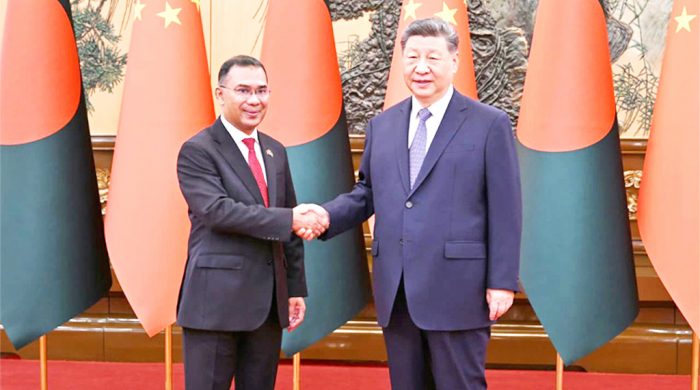
SPEARHEADED by Beijing, the proposed China-Myanmar-Bangladesh Economic Corridor is a multilateral infrastructure and trade initiative designed to link China’s landlocked south-western Yunnan province directly to the Bay of Bengal. Formally introduced during talks between China’s president Xi Jinping and Bangladesh’s prime minister Tarique Rahman, the corridor seeks to represents a major strategic shift in South Asian geopolitics. Rather than building a network from scratch, China intends to use Bangladesh as a natural extension of the China-Myanmar Economic Corridor, creating a multimodal transit system of roads, railways, and maritime upgrades.
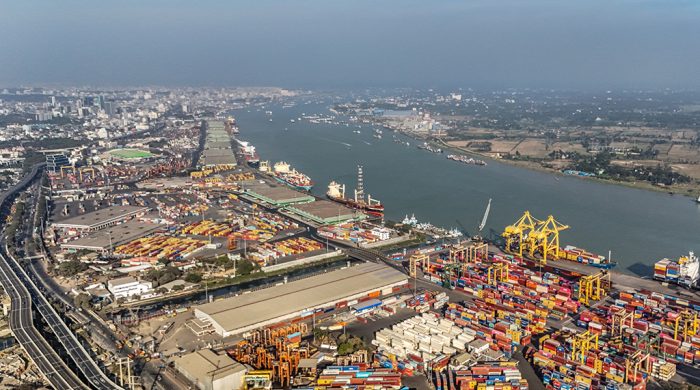
The blueprint places a heavy focus on Bangladesh’s coastline, with China pledging to modernise the Chittagong and Mongla ports to transform the region into a massive business hub. This integration also includes establishing a 150-acre Chinese industrial park adjacent to the Mongla port project. This new framework effectively re-engineers the stalled 1990s Bangladesh-China-India-Myanmar concept by explicitly excluding India. After a deterioration in Sino-Indian relations and New Delhi’s opposition to Belt and Road projects near its borders, routing strictly through Myanmar and Bangladesh allows China to bypass the Indian territory entirely while still securing vital access to the Indian Ocean.
Economically, the proposal is significant for Bangladesh’s export-led economy, especially apparel and light manufacturing, as high transport costs remain a major structural constraint before the LDC graduation. Studies show that even modest reductions in logistics costs can substantially improve trade competitiveness and regional value-chain integration.
Geopolitical challenges
THE first and most immediate challenge is Myanmar’s prolonged civil conflict. Large parts of Rakhine State, through which the Kyaukpyu corridor passes, remain contested between the military and the Arakan Army. Since the 2021 coup, fragmented state authorities have undermined border management, customs administration, infrastructure security and transport reliability. Scholarship consistently identifies political instability and armed conflict as the principal obstacles to connectivity projects in Myanmar, making the corridor’s commercial viability contingent on improved security.
A second challenge concerns Bangladesh’s relations with India. New Delhi has for long viewed Chinese infrastructure projects in South Asia through a strategic lens, a concern reinforced by the 2020 Sino-Indian border clashes and India’s withdrawal from the BCIM initiative. A China-Myanmar-Bangladesh corridor excluding India could, therefore, reinforce perceptions of Bangladesh moving closer to China’s strategic orbit. As India remains Bangladesh’s largest neighbour, an important transit partner and a key security interlocutor, Dhaka’s long-term interest lies in ensuring that CMBC complements, not replaces, existing cooperation in trade, energy, railway and inland waterways while maintaining strategic balance amid growing China-India-US competition in the Bay of Bengal.
Relations with the United States also require careful management. Although Washington supports regional connectivity, it has consistently expressed concerns about aspects of China’s Belt and Road Initiative, particularly infrastructure with potential dual-use applications. The recent US-Bangladesh Agreement on Reciprocal Trade does not preclude Bangladesh’s participation in the CMBC, but it validates cooperation on economic security, supply-chain resilience, investment screening and export controls. Consequently, Bangladesh should ensure that the corridor remains a commercially driven initiative rather than an instrument of exclusive geopolitical alignment.
Connectivity has become a source of geopolitical influence. Recent research demonstrates that transport corridors, ports, railways and logistics infrastructure create patterns of economic dependence and political influence that frequently outlast military deployment. Consequently, Bangladesh’s long-term objective should not be to avoid connectivity initiatives but to ensure that no single corridor acquires monopoly status within the country’s external economic relations. Diversification of connectivity, financing and investment, therefore, becomes a strategy for preserving national autonomy rather than limiting economic engagement.
Strategic equilibrium
RECENT scholarship shows that transport infrastructure has become an enduring instrument of geopolitical influence, as ports, railways and logistics corridors shape long-term patterns of trade and regional integration. This underscores the need to embed the CMBC within a diversified connectivity architecture rather than allowing it to become an exclusive corridor dominated by any single external power.
In a quest to preserve strategic equilibrium, Bangladesh should frame the CMBC as an instrument of national development rather than geopolitical alignment. Recent scholarship on middle-power diplomacy characterises this approach as strategic hedging, maintaining productive relations with competing major powers while avoiding exclusive security or economic dependence on any one of them. For Bangladesh, strategic diversification offers greater resilience than strategic alignment.
First, the CMBC should be embedded within Bangladesh’s broader connectivity strategy by complementing the BBIN, BIMSTEC, India-linked transport networks, Japan’s BIG-B initiative, ASEAN connectivity and partnerships with the United States, the European Union, Gulf states and multilateral institutions.
Second, the corridor must remain strictly commercial, excluding military, intelligence, or other dual-use functions. Third, financing should be diversified through multilateral development banks, private investors and China to enhance transparency, reduce geopolitical risks and strengthen project viability. Fourth, Dhaka should maintain close consultations with India to underscore that CMBC should complement, rather than replace, bilateral cooperation. Finally, implementation should proceed only when Myanmar’s security situation permits reliable commercial operations as infrastructure in conflict zones rarely delivers sustained economic returns.
The China-Myanmar-Bangladesh Economic Corridor should be understood neither as a geopolitical alignment with China nor as a challenge to Bangladesh’s partnerships with India, the United States, Japan or other development partners. Rather, it represents one component of Bangladesh’s broader strategy of geostrategic diversification, expanding connectivity, reducing logistical constraints and strengthening the country’s role as the principal commercial bridge between South Asia, Southeast Asia and the Bay of Bengal. It is not a geopolitical realignment.
For Bangladesh, the central policy objective is not choosing among competing powers but diversifying partnerships. If implemented through transparent financing, commercially viable projects, diversified investment, strong institutional safeguards and complementary engagement with India, Japan, the United States, multilateral development banks, ASEAN and the Gulf states, the CMBC can intensify Bangladesh’s economic resilience while preserving its strategic autonomy. The corridor’s success should, therefore, be measured not by which major power benefits most, but by whether it advances Bangladesh’s long-term national development and its journey towards becoming a trillion-dollar economy.
Kausar Mumin is a 2026 legislative policy fellow in the US Congress.