Is Bangladesh Entering China’s Sphere of Influence?

- Update Time : Thursday, July 2, 2026
- 49 Time
Bangladesh Prime Minister Tarique Rahman has returned from his first official visit to Malaysia and China. The media have been fond of discussing all such activities of the government lately. As a result, enthusiastic people, both at home and abroad, took substantial interest in opining why the new prime minister went to China. Many have said that China visit has indicated a change in the trend of Bangladesh’s foreign policy. The visits of the three different heads of government of Bangladesh to China in the last three years give a clear signal that Bangladesh greatly values its relations with China. The general perception is that Bangladesh-China relations are primarily based on economic factors.
When World Bank turned its back on financing the construction of Padma Bridge, China came forward with its financing and saved the face of the-then Prime Minister Sheikh Hasina. Out of gratitude, the Awami League government, although not generally a China-oriented party, did not hesitate to declare China as its main economic partner when she visited China in 2024.
Bangladesh has always supported the One-China policy. During the visit of Sheikh Hasina in 2024, the joint declaration went a step further by unequivocally stating that Taiwan is an integral part of China. The political landscape in Bangladesh changed in a year. The head of the interim government also visited China. The joint declaration then went another step ahead and stated that Bangladesh does not support Taiwan’s independence. Another year passed. In 2026, an elected government assumed power in Bangladesh. It had five years in its hand, but China could not wait any longer. The cat has to be killed on the first night. As a result, a more explicit declaration was added to the joint declaration during the visit of Tarique Rahman to China. It was said that if China takes any initiative to reunify it, Bangladesh will support it. What does it signify? If China invades Taiwan or takes the decision to forcibly occupy it, Bangladesh will support it! Do we understand that we are gradually digesting the words that China likes to put in our mouths?
China’s global ambitions are not a fairy tale. In 2013, the Belt and Road Initiative (BRI), widely known as an infrastructure development-focused initiative, debuted. In 2021, China brought the Global Development Initiative (GDI) as the normative framework for the BRI. This initiative was said to help meet the United Nations’ Sustainable Development Goals. At that time, no one knew that China would gradually bring three more global initiatives. The Global Governance Initiative was brought in to talk about the reform of the United Nations, the Security Council, the World Trade Organisation, etc. The Global Civilization Initiative was brought in to prevent the West from unilaterally imposing its will on the developing world in the name of human rights, democracy, freedom of speech, and the rule of law. Finally, the Global Security Initiative was brought in in 2025.
The 2024 joint declaration said that the prime ministers of the two countries had discussed the GDI. The 2025 declaration said that Bangladesh had appreciated the Chinese Initiative. This time, during the 2026 visit, we appreciated the Global Initiatives (plural, for the first time), and we have become a member of the GDI.
That is why the public is curious about the foreign policy trends of Bangladesh. During the Awami regime, many people thought that Bangladesh had entered India’s sphere of influence. That is why anti-India slogans were frequently raised in the anti-government movement in 2024. This time, the new premier visited China first. The enthusiasts are saying that the new government has moved out of India’s sphere of influence and is leaning towards China.
What do you think? Aren’t we gradually entering China’s sphere of influence? Isn’t our foreign policy being influenced by Chinese policy?
China has been interested in the Teesta River project for a long time. India has also shown interest. In 2024, Sheikh Hasina, after taking the oath, first went to India. There, she signed a preliminary memorandum of understanding with India on the Teesta project. There was a strong speculation that China might not take it lightly. There was no mention of Teesta in the joint declaration of the China visit. Despite signing the MoU with India, when the interim head of government visited China in 2025, the joint declaration stated that Bangladesh was inviting Chinese experts for the Teesta project. And this time, in 2026, the government signed an MoU with China on the feasibility study of the project. The most striking part of this joint declaration is the agreement to organise a 2+2 meeting between the two countries, combining foreign and defence. This is the first time Bangladesh has brought the issue of defence to the discussion table. Bangladesh has a defence agreement with China, but that is mainly related to arms procurement and training. 70% of Bangladesh’s weapons are imported from China. But this time, the 2+2 arrangement seems a little different. It seems that Bangladesh is gradually entering China’s sphere of influence, either unknowingly or consciously.
The question arises, in such a situation, will other superpowers or regional powers, mainly the United States and India, not frown? If Bangladesh consciously leans towards China, will other countries concerned take Bangladesh’s inclination easily?
We may take a breath before thinking so far. In 55 years of independence, Bangladesh has been following a fairly non-aligned policy. However, in times of need, Bangladesh did not hesitate to engage itself with any particular country, alliance or region to protect national interests.
The new government of Bangladesh has only been in power for four months. The road ahead is still very long. I hope that the government will now strive to develop foreign relations globally. A country that dreams of being promoted to a developing country must also be more active in developing foreign relations. At this stage of development, Bangladesh must pursue a balanced foreign policy. But at the same time, it must remain ambitious and bravely face the risks that emanate from geopolitics and global complexities.
_____________________________________
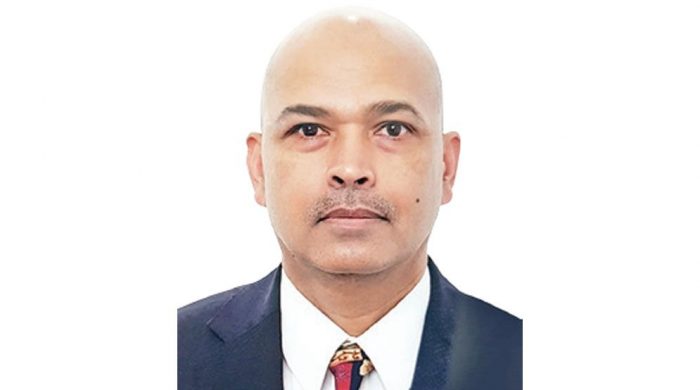
The writer is a former Bangladeshi Ambassador