The Police Force Must Be Trusted

- Update Time : Sunday, September 27, 2026
- 4 Time

Last Saturday, Home Minister Salahuddin Ahmed said, “Some members of the police force are still maintaining contact with the fascists. They are leaking various types of information. If discipline is breached, departmental action as well as action under treason laws will be taken against the accused police personnel.”
This statement by the Home Minister is extremely significant. The police force is a vital institution of the state. It is responsible for maintaining law and order under the government’s direction. If the Home Minister himself makes such accusations against the very force responsible for maintaining law and order, it is reasonable to assume that he has sufficient evidence to support his claims. This is alarming for the country and its citizens.
The police force is responsible for protecting the security of a nation’s citizens. Safeguarding the life and property of the public, and ensuring their safe and peaceful existence, is the primary duty of the police. While we all have various grievances against the police force, ensuring civic security without them is impossible. For a few days after August 5, 2024, Bangladesh was virtually without a police force. We all know what a terrifying situation arose in the country during that time. Had the armed forces not stepped into the field to protect the public, the severity of the situation would be beyond imagination.
A week later, the police force gradually began returning to work. However, many police personnel fled, and many were arrested. These events impacted the entire force, causing their morale to shatter. Panic and anxiety gripped the majority of police members. At that juncture, one of the main responsibilities of the government led by Dr. Yunus was to restore the morale of the police force and ensure they could work normally. Instead of restructuring the police, however, the Yunus government fostered mob forces. Under the patronage of the Yunus government, these mob forces initiated terrorism, extortion, and looting across the country. When returning police officers took the initiative to act against these terrorists, they faced state-level obstacles. Many police members who stood against the mobs were harassed, and the government took disciplinary measures against several of them. In practice, mob terrorists rose above the law under the shelter of the Yunus government, becoming unstoppable.
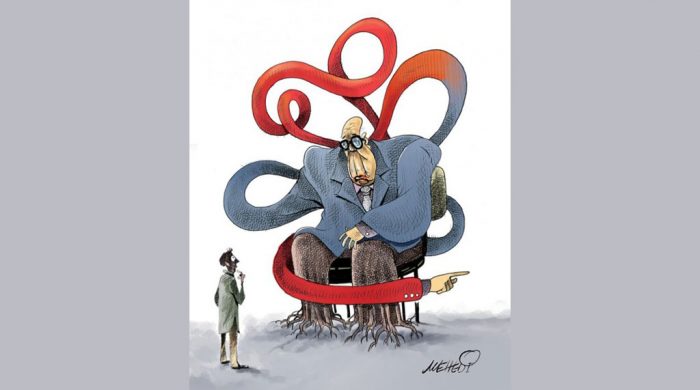
By holding blockades, sieges, and similar programs at the slightest pretext, the mob forces rendered the country’s law enforcement agencies dysfunctional and ineffective. The Yunus government began treating police personnel stepmotherly. A narrative was spread across society, driven by the government, that “police means accomplice, police means criminal.”
As a result, the police became directionless. Confused in a maze of what to do and what not to do, they sat idle with their hands tied. During sieges or blockade programs, they stood by as mere spectators. Whenever a mob situation arose, the police waited for orders from above before acting. In this manner, over the past year and a half, the police force became entirely inactive. Yunus destroyed a state institution. While some members of the police may have been beneficiaries of the former regime, not all members were. Yet Yunus indiscriminately branded the entire force as criminals.
Consequently, a widespread perception formed among a large section of the police that the July ’24 movement took place to humiliate and demean their dignity. Frustration crept into a large segment of the force due to the lack of justice for the killing of police personnel and the looting of police stations. The Yunus government turned the police force into an adversary of the July movement, blaming the entire force for the crimes of a few individual officers. The anti-July movement sentiment that developed within the police was a direct result of Yunus’s flawed policies. As a consequence, many police personnel are now working against the government.
After coming to power, the BNP government announced that the police would no longer act as political cadres. Instead, they would perform their law-and-order duties as servants of the public. However, the degradation that took place within the police over the past 17 years cannot be eradicated overnight. Upon taking responsibility, the government did not undertake extensive police reforms immediately and delayed taking action against controversial and corrupt officers within the force. The government hoped that those who had committed wrongs merely for the sake of their jobs would return to the right path under the changed circumstances—working in the interest of the state rather than out of partisan loyalty. However, many police members mistook this leniency for weakness, leading to these current incidents.
Therefore, the government must now initiate sweeping reforms of the police force. The faster this is done, the sooner discipline can be restored within the force. The police force must be kept free from politics at all costs. It must swiftly be transformed into a servant of the people rather than a partisan heavy-handed force. Only then will it be possible to build a modern and people-friendly police force.
Audite Karim: Author and Playwright