Notice ::
Plan needed to revive the economy

Reporter Name
- Update Time : Wednesday, March 18, 2026
- 70 Time

Bangladesh now needs a clear economic roadmap and renewed focus on economic and energy diplomacy as the economy faces mounting pressure, slowing industrial activity and rising investor uncertainty.
Nearly two years after the political transition under the Yunus administration and following the formation of the current government led by Prime Minister Tareq Rahman, a credible and coherent strategy for economic recovery remains absent.
Political actors still appear preoccupied with positioning and power dynamics, while the urgent task of economic revival has yet to receive the strategic priority it demands.
Over the past decades, Bangladesh built its economic success on industrial expansion, export growth and regional cooperation.
However, that foundation has come under strain. Reports indicate that many factories across sectors have shut down or significantly reduced operations over the past two years, leaving thousands of workers unemployed.
This trend has weakened not only industrial output but also domestic demand. At the same time, export earnings—one of the economy’s key strengths—face challenges amid changing global economic conditions. In the absence of a comprehensive national recovery roadmap, uncertainty among both domestic and foreign investors has increased.
A major gap in current policymaking lies in the lack of economic diplomacy. In today’s globalised economy, countries actively use diplomacy to attract foreign investment, expand market access and strengthen their positions in global supply chains. Many nations in Asia and the Middle East have intensified such efforts to build strategic economic partnerships.
In Bangladesh, however, economic diplomacy appears to have lost priority at a time when it is most needed. No clear diplomatic initiatives have emerged to attract large-scale foreign investment, expand trade or integrate the country more deeply into global production networks. This comes as many multinational companies seek to restructure supply chains and identify new production hubs.
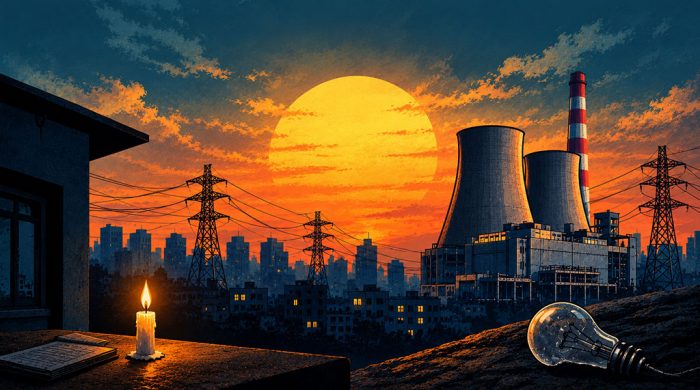
Closely linked to economic diplomacy is energy diplomacy. Energy security remains a cornerstone of industrial growth and economic stability. Amid geopolitical competition, volatile energy markets and rising demand, many countries have taken proactive diplomatic steps to secure long-term energy partnerships.
For Bangladesh, strengthening regional energy cooperation and ensuring stable and affordable energy supplies remain critical. Without a clear energy diplomacy strategy, efforts to revive industry and sustain long-term growth may struggle to gain momentum.
The closure of thousands of factories and job losses affecting millions of workers—around 86 per cent of them women—has raised serious concern. Factory shutdowns not only reduce production but also weaken the overall investment climate. Job losses lower consumer spending and slow down small and medium-sized business activities, creating ripple effects across the economy.
Short-term administrative measures alone cannot resolve these challenges. A targeted industrial recovery programme must reopen viable factories, support affected workers and encourage new investment.
Regional trade and connectivity also play a crucial role in the current economic context. Tensions over trade routes and transit arrangements with neighbouring India during the previous administration disrupted regional trade, according to analysts. Restrictions or closures of certain land ports and transshipment facilities have reportedly caused significant economic losses, with some estimates suggesting monthly losses amounting to thousands of crores of taka.
At a time when regional connectivity drives economic growth, Bangladesh must revitalise regional cooperation to unlock trade potential.
Questions have also emerged over certain trade arrangements signed with the United States under the previous administration. Critics argue that some provisions may affect Bangladesh’s economic autonomy and could result in annual revenue losses of about Tk1,327 crore.
As the global trade landscape evolves, experts have advised the government to review these agreements. A recent US Supreme Court ruling on tariff policies under the Trump administration has created an opportunity for reassessment. The key question now is whether the current government will act on it.
Investor confidence remains another critical issue. Although law and order has improved to some extent, confidence has yet to fully recover. Investors seek policy stability, credible economic leadership and a clear reform agenda.
Forming a capable and dynamic economic management team could play a key role in restoring confidence. Without new investment and the reopening of closed factories, job creation will remain limited.
Bangladesh now stands at a crucial economic crossroads. The country has demonstrated remarkable resilience in the past, building a strong export sector and achieving notable development progress. However, sustaining that progress now requires a renewed strategic vision and decisive policy action.
A comprehensive economic recovery strategy—integrating industrial revival, investment growth, trade expansion and energy security—has become essential. Strong economic diplomacy must serve as a central pillar of that strategy.
The government led by Prime Minister Tareq Rahman now has an opportunity to present a clear and forward-looking economic roadmap that can restore investor confidence and inject new momentum into the economy.
For many observers, one question still remains: when will that plan be unveiled?
More News of This Category