‘No one will give you space—you have to create it’: Ripon Mondol on transformation

- Update Time : Sunday, April 26, 2026
- 29 Time
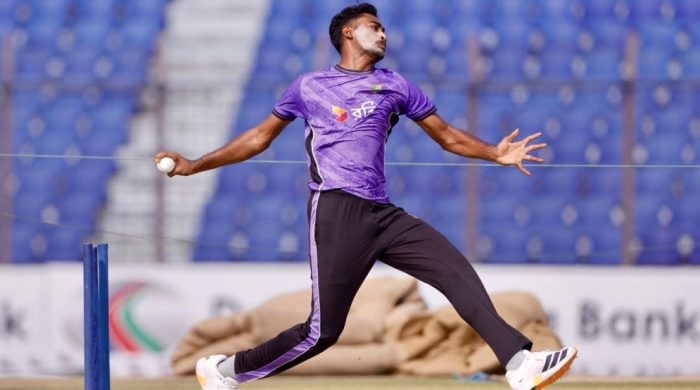
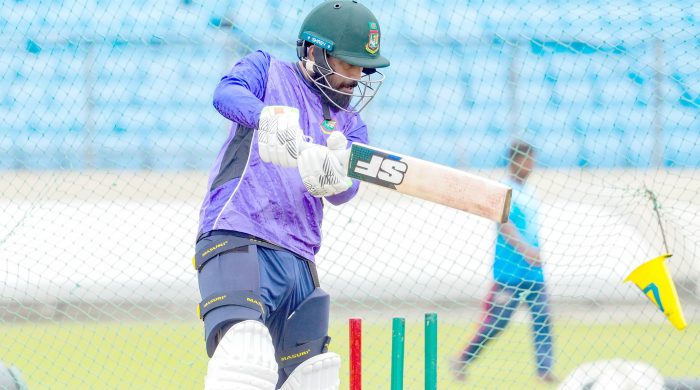
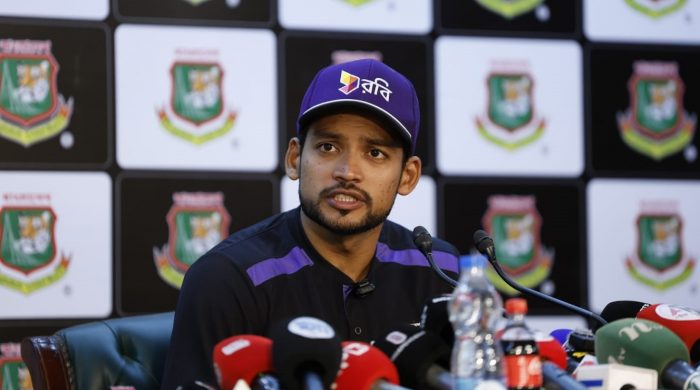
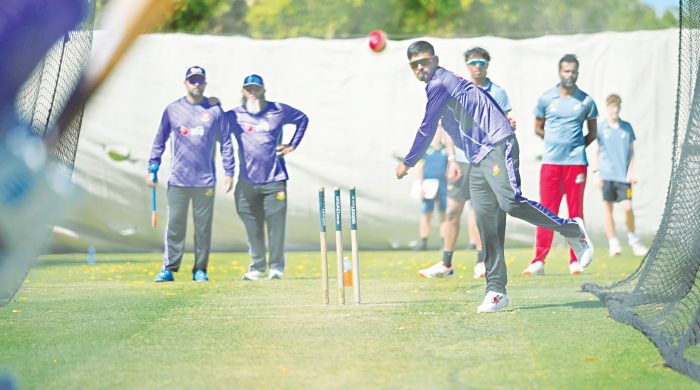
Pacer Ripon Mondol has already experienced what it feels like to be on the fringes of international cricket. Part of Bangladesh’s touring squad to the West Indies in late 2024 after the Under-19 World Cup, he returned without a debut, but with a clearer understanding of what it takes to survive at the highest level. The 23-year-old went back to the High Performance Unit and gradually reshaped himself, almost on his own and got into the T20 side which will take on New Zealand from Monday. Now preparing himself for the next step in his career, Ripon spoke to Daily Sun in detail about self-planning, calculated risks, and how taking responsibility for his own progression has shaped his transformation in recent years. Below are the excerpts:
Daily Sun: You were part of the touring party back in 2024 in the West Indies. What’s the difference between then and now?
Ripon: The main difference is that I’ve become more mature now. Compared to before, by the grace of Allah, I understand the game sense much better. I feel like, Alhamdulillah, compared to how I was earlier—even two years ago—I’m now more prepared. I feel ready. Insha’Allah, if I play international cricket, I believe I can succeed there.
Daily Sun: Did you consciously plan this change, or did it come naturally with age and circumstances?
Ripon: It’s mostly because of circumstances, you could say. Yes, situations played a role, but also my effort to change myself. When I started thinking deeply about what it takes to become an international player, what qualities I need, then I began working on those areas. I thought about what changes I need to make to dominate or succeed in international cricket. From then on, I started planning in that way. I also observed some great players, what they do, what suits me, what fits our culture. I reflected on those things. But I’ve still stayed within my basic plan. The main change has been in my mentality, my way of thinking. The way I used to think before, I’ve now adjusted that approach.
Daily Sun: You mentioned picking up traits from great players. Which specific aspects felt most relevant to you?
Ripon: Not any specific similarity, but I observed their attitude on the field. Everyone has their own style. Earlier, when I played matches, if one or two overs went badly, I used to dwell on it too much. That reduced my chances of making a comeback. But now, I think differently. In an ODI, for example, I bowl a 10-over spell. Out of those, one or two overs can go wrong for any reason. If I can forget those and focus on the remaining eight overs, stick to my rhythm and plan, I can still help the team or even turn the match in that spell.
So instead of thinking about what’s already gone, I focus on what I still have—the balls and overs in hand. In modern cricket, anything can happen at any time. So rather than worrying about the past, I focus on how I can make a comeback. I believe the comeback is very important. That’s where I’ve changed my mentality.

Daily Sun: When you entered the system post the Under-19 World Cup, there were already many top-level pacers ahead of you in the pecking order, and even now there are. So how has competition helped you, and how are you minimising that gap?
Ripon: When I was playing Under-19, we were playing within our age group, almost everyone was of a similar age across the teams. But at that moment, my mentality was that I have to perform well here. Since I’m playing at this level, I have to do well here. Then, when my Under-19 phase ended and I started playing in the Premier League, Bangladesh Cricket League, or National Cricket League, I gradually began to realise that if I continue the way I am now, I might reach the national team, but my career won’t be long. So if I don’t change myself, I won’t be able to survive in world cricket.
My plan was to improve my bowling, work on my action and see what I can do better. I had a focus on increasing my pace, which, Alhamdulillah, has improved. I was also working on my accuracy. One thing in my plan was that during HP, I’m very thankful to the BCB for giving me opportunities in every camp. From then on, I planned what I need to do to succeed in world cricket. So I prepared myself accordingly.
Daily Sun: How?
Ripon: I realised this on my own. Because in this era, no one is going to give you space, you have to take your own space. I always thought that the players I’m playing with, if I stop working hard, they will reach the national team, but I will fade away. But I always had that determination within me, if they can do it, why can’t I? They work hard, and I do the same.
So I changed my pattern of hard work—my practice methods. I felt that if I stay the same, I won’t be able to survive at that level. From after Under-19, my plan was always to dominate international cricket. So whatever was required for that, I kept practising.
The coaches there, Corey Collymore, Tarek Aziz bhai, and later Dollar (Mahmud) bhai, they helped me a lot. I used to speak with them about how to survive and succeed. They were especially very supportive. Whenever I needed anything, they helped me, guided me well, and always gave me positive vibes. If they hadn’t supported me like that at the time, maybe I wouldn’t have improved the way I have today. I’m very thankful to them, they always responded positively to me. Whatever kind of practice I wanted to do, however I wanted to do it, they really helped me. I’m very grateful to them for that.
Another thing is, in terms of inspiration for fast bowling, I didn’t really speak to anyone in particular. But there was a moment, when Taskin (Ahmed) bhai made his comeback after the 2019 World Cup—that really motivated me. As a Bangladeshi fast bowler, seeing that if he can do it through hard work, then I can too. He’s human, I’m human. So I followed the same training methods he followed. That really inspired me, and from there I gained a lot of motivation.

Daily Sun: Most of the ideas, especially the technical aspects, seem to have come from you, not directly from the coaches.
Ripon: To be honest, when I first got picked in the BPL, by Rangpur Riders, that was a big moment. But at that time, my colleagues were all playing regularly, while in that season I only played two matches. I was supposed to play more, being in a big team, but somehow it didn’t happen due to team combinations.
When others were playing regularly and I wasn’t, it was tough. In Under-19, by the grace of Allah, I never experienced that phase of sitting out matches. I had always dominated and played regularly. But when I first felt what it’s like to sit out and watch, it hit me. I’m not saying others were worse or better, but when I saw many players playing, even those I felt I could compete with, it was hard to accept that I wasn’t getting games. Everyone around my age was making their debut, and I was just sitting on the bench.
After that, I took it as a personal challenge. I told myself that if I play, Insha’Allah, I will play as a main bowler in the team. In any team, if there’s a pace bowler playing, that will be me. And for that, I will do whatever is necessary. You could say those two BPL years completely changed my motivation, my plans, and my thinking.
Daily Sun: Usually, we see this more in senior players. How did you understand that this particular change would help you go to the next level? What are some of the things you added on your own?
Ripon: From my side, especially in the last camp before the Emerging Asia Cup, I planned everything on my own. I structured my training around the phases I bowl in. Since I play ODIs, I focused on which phases I bowl in, and similarly for T20s. I worked more on those specific phases because I had a lot of matches coming up.
I knew those matches were very important for me—there was the Emerging Asia Cup, the South Africa series, then NCL. So when I went into the camp, Corey Collymore and Tarek bhai were there. I had a very good bond with Corey Collymore in particular. I discussed with them about the toughest moments in a match, because I usually bowl in those moments, and what I need to do to succeed there.
So I asked for very specific types of practice. In our camps, which last three to four months, there are challenges, rain interruptions, lots of players (30-35 in a group), and limited time. So it’s not always possible to get everything you want. But I told them clearly what I needed, that these are the phases I bowl in, these are the moments I face, and I want to practice accordingly. I requested them to speak to the head coach and help arrange those sessions.

They responded very positively. In that camp, I basically trained the way I wanted, and they supported me fully. From the start, they were very positive, that if I can continue this for two to three months, Insha’Allah, I will see the results. And that work started from the gym and continued on the field.
Personally, I would say I did most of the practice on my own terms, and by the grace of Allah, I’ve been able to see the results from that.
Daily Sun: Usually what happens is, in a camp, early on they might just tell you to do spot bowling…
Ripon: Yes, I increased the amount of spot bowling. But in matches, I used to give the coach a clear plan, like I will try this specific thing today. And I would tell them not to worry even if it doesn’t go well, because I’m trying it as part of my process. When something becomes a habit gradually, I can adjust it better. If I try something new, I will practice it properly.
I also told them—and the head coach and others gave very good input—they even spoke with selectors that Ripon is working on this, so if it affects results in matches, don’t worry about it. They were very supportive and discussed it properly.
Alhamdulillah, it didn’t take me long. Allah helped me. I feel some of the decisions I took, and the fact that I was able to execute them with their support, made a big difference. I think the biggest reason for my change was that I was able to take those brave decisions, and Allah made it possible for me to improve.
Daily Sun: So you took ownership of your own path…
Ripon: Yes, I also understood that if I failed, I might go a step back. But if I succeeded, I would move forward. In world cricket, you have to take risks, you need to make decisions at any moment. So I planned that since I’ve been in HP for three to four years, I already have a good understanding with the coaches. I told them directly, and they responded very positively. That really helped me.
If I hadn’t done these things, maybe I wouldn’t have improved this much, I would have stayed at the same average level where I was before. But now I feel much more confident doing these things than I did earlier.