Law and order: Government failure or a planned conspiracy?

- Update Time : Monday, August 31, 2026
- 0 Time
Public concern and anxiety over the country’s law and order situation have suddenly intensified. Rather than the overall situation alone, several murders and other criminal incidents have left people across the country shocked.
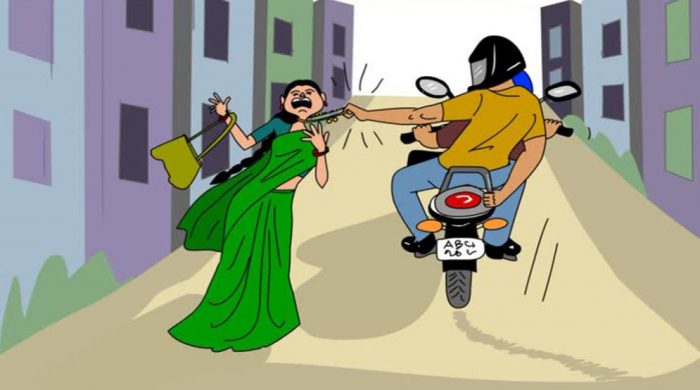
Last Saturday, 29 August, a headmistress named Ranjina Parvin, 55, died after falling from a rickshaw when muggers allegedly pulled at her bag in front of the South Plaza of the National Parliament Building. The incident took place at around 6:30am while she was travelling to a hospital in Farmgate after arriving in Dhaka from Bogura.
The muggers reportedly approached on a motorcycle and pulled at her bag, causing her to fall from the rickshaw and suffer serious injuries. She was later taken to Shaheed Suhrawardy Medical College and Hospital, where the doctor on duty declared her dead.
At a time when a parliamentary session was underway, was such an incident in front of the Parliament Building merely an act of mugging, or was it intended to make headlines? Mugging is not new in Bangladesh, and similar incidents have occurred at different times. But this particular incident took place in front of the Parliament Building, seemingly sending a clear message.
The question raised after the incident is this: if someone cannot remain safe in a supposedly secure place such as the Parliament Building, how safe are ordinary citizens? Was the mugging deliberately carried out to raise precisely this question?
The previous week, on the night of Saturday, 22 August, police recovered the bodies of retired district school teacher Ganapati Chakraborty and four members of his family from the Daspara Machhuapara area of Rangpur.
Before a case was even filed over the incident, police detained two local men, Mugdha Das and Siddhartha Das, claiming that the two had killed Ganapati Chakraborty, his wife, daughter and son one after another. Later, Gopinath Chakraborty, the brother of the deceased Ganapati Chakraborty, filed a murder case with the police station.
Since the shocking incident came to light, numerous questions have been raised in the media and on social media. Questions continue to circulate over whether the electricity connection to the house where the murders took place had been disconnected, whether one of the female victims had been raped, whether two drug addicts could have killed four people, why a murder suspect and a police officer appeared to be wearing similar shirts, and whether the murders were committed because the victims had prevented the suspects from taking drugs or whether the incident was actually a robbery.
Questions have also been raised as to why the accused allegedly remained at the scene after the killings and whether the suspects’ DNA or fingerprints were found on the victims’ bodies, their clothing or at the crime scene.
At the same time, some have pointed to apparent inconsistencies between statements by police and the post-mortem doctor over whether the jaw of Ganapati Chakraborty’s daughter was broken. This has further fuelled questions and suspicions. The question, however, is why there is so much doubt and distrust surrounding this incident.
This is not the first time that public distrust or suspicion has emerged over police investigations into sensational crimes, particularly unresolved murders. Police investigations have faced questions on numerous occasions in the past.
Among the cases that have at different times drawn scrutiny are the murders of journalist couple Sagar and Runi, the killing of Tanu in Cumilla, the murder of Major Sinha, the murder of Nusrat in Feni, and the killing of Dhaka University student Abu Bakar Siddique, among others.
In many cases, statements based on assumptions by members of law enforcement agencies, made before a thorough analysis of an incident, create confusion among the public.
In sensitive cases, different officers and agency heads sometimes make different statements in their haste to respond. As a result, considerable uncertainty develops among the public. The Rangpur incident is the latest example.
It should be investigated whether the police narrative surrounding the murders of four people in Rangpur is simply the result of a lack of experience or whether there is a political motive behind it. The argument is that Rangpur is now under the influence of a particular political party. Although the BNP was entrusted with running the country after the 12 February election, the opposition holds considerable influence in Rangpur. It is alleged that, from the administration to law enforcement agencies, opposition party leaders now exercise significant influence there.
For that reason, it would be wrong to consider the Rangpur incident merely as an ordinary crime. Whether there was a deeper political motive behind it should also be examined.
The country’s overall law and order situation remains worrying. Murders, targeted killings and gun attacks have increased alarmingly across the country amid political rivalries, battles for dominance in the underworld and clashes between armed groups. This has generated renewed concern over public security.
According to Police Headquarters data, 915 murder cases were recorded across the country over the past three months—an average of more than 10 killings a day.
Analysts say the spread of illegal firearms, weaknesses within law enforcement agencies and the release and return of leading criminals following the political change of 2024 are among the main reasons behind the increase in violence. Political rivalry and internal conflict have now spilled onto the streets. Criminal groups are being used in struggles for power, resulting in targeted attacks and killings across the country.
The fragile state of law and order is an inheritance of the present government. After assuming responsibility in August 2024, the interim government led by Dr Muhammad Yunus, according to the argument presented here, failed to take effective measures to maintain law and order. Instead, mob violence, land grabbing, extortion and looting were allegedly allowed to flourish.
The current situation, it is argued, can be attributed to five major failures of the Yunus government.
First, it is alleged that after coming to power, the Yunus administration released identified and convicted criminals from prison. Many of them were reportedly leading criminals, while others were leaders of militant organisations. Their widespread release allegedly allowed them to reorganise, contributing to the deterioration of the country’s law and order situation.
Second, the article argues that Dr Yunus’s administration presided over the rise of mob violence in Bangladesh. During his tenure, it claims, mob violence reached epidemic proportions. Groups allegedly formed mobs and, with state backing, attacked the homes of political opponents. Business establishments were attacked and set on fire, sometimes openly in front of the government. These incidents, the argument continues, contributed to the emergence of organised groups that remain active and are partly responsible for the deterioration in law and order.
Third, the article argues that a culture of impunity became institutionalised during the Yunus administration. It alleges that people were beaten to death in public without justice being delivered. It also refers to incidents in which freedom fighters were humiliated and statues and structures associated with the Liberation War were vandalised across the country, claiming that those responsible were not brought to justice. This culture of impunity, it argues, is one of the major reasons for the deterioration of law and order.
Fourth, the Yunus government is accused of leaving the police force inactive during its one-and-a-half years in office. The morale of police personnel had already fallen sharply after 5 August 2024, and, according to the article, certain measures taken during the Yunus administration further weakened that morale. The repeated humiliation of police personnel allegedly left the force largely inactive, a situation from which it has yet to fully recover.
Fifth, the article argues that disregard for the rule of law was one of the defining characteristics of the Yunus government. After 5 August, some young people allegedly began acting as though they were the owners of the country, doing whatever they wished and placing themselves above the law and the justice system. According to the argument, this represented a serious disregard for the rule of law and justice.
It is difficult to significantly improve the law and order situation within only six months after inheriting such circumstances.
Since the current government assumed office, some incidents have allegedly been deliberately engineered to create public opinion against it. Allegations have also been made that a particular quarter was behind efforts to create electricity and fuel crises. Many believe that there may likewise be a planned conspiracy behind attempts to worsen the law and order situation.
The government, therefore, must remain vigilant and work with its eyes and ears open. It must not fall into the trap of any provocation. Those who speak on behalf of the government must use measured and restrained language. Above all, the government must work hard and take effective action to improve the situation.