Is Bangladesh Jamaat-e-Islami in a hurry to capture power?

- Update Time : Thursday, June 25, 2026
- 52 Time
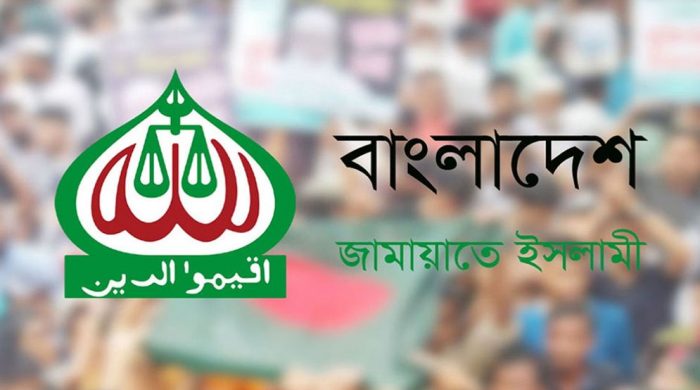
The political landscape of Bangladesh is witnessing a growing debate over the role and ambitions of Bangladesh Jamaat-e-Islami. Critics increasingly argue that the party’s recent actions suggest not merely a desire to participate in democratic politics but an eagerness to accelerate its path to power, even at the cost of political stability and national consensus.
These concerns gained momentum following recent remarks by Jamaat Ameer Dr Shafiqur Rahman, who reportedly warned of launching a political movement against a BNP-led government if commitments relating to reforms and the implementation of the July Charter were not fulfilled.
For many observers, such statements appear less like constructive political pressure and more like an attempt to weaken a government that would still be in the early stages of consolidating authority after a prolonged period of political upheaval.
Critics argue that the contradiction lies in Jamaat’s simultaneous demand for political stability and its readiness to mobilize agitation against a government before it has had sufficient time to implement reforms. Instead of contributing to national reconciliation and institutional strengthening, opponents contend that such threats risk creating a cycle of perpetual confrontation that benefits only those seeking rapid political gains.
Questions have also been raised regarding Jamaat’s silence on issues that directly affect Bangladesh’s sovereignty and economic independence. One example frequently cited by critics is the proposed reciprocal trade arrangements between Bangladesh and the United States.
While Jamaat often presents itself as a defender of national interests and Islamic solidarity, critics note that the party has been relatively muted on concerns that certain trade provisions could limit Bangladesh’s policy autonomy or place additional pressure on domestic industries. This perceived selectivity, they argue, reveals a gap between rhetoric and action.
Another criticism directed at Jamaat concerns its relationship with newer political actors and activist networks. Opponents allege that Jamaat has benefited from a political environment in which dissenting voices are frequently branded as “fascist” or enemies of reform.
Such labeling, they argue, has contributed to a shrinking space for legitimate debate, where criticism of particular political forces is often dismissed rather than engaged with substantively. In this view, the weaponization of political labels has become a convenient tool for silencing alternative perspectives.
Critics further contend that Jamaat’s influence extends beyond its formal party structure through a network of affiliated and sympathetic organizations operating in social, educational, religious, and civic spheres. While every political movement seeks to expand its reach, opponents argue that the cumulative effect has been the creation of multiple pressure points aimed at influencing government policy and targeting socio-cultural groups perceived as obstacles to Jamaat’s ideological objectives.
The current political environment has also contributed to these dynamics. Bangladesh’s governing institutions continue to grapple with the legacy of mob politics, street intimidation, and the phenomenon often described as “Tawhidi Janata” activism that emerged with greater visibility during the period of the Yunus-led interim administration. Critics argue that successive governments have struggled to establish firm control over these tendencies. As a result, law and order challenges persist, creating an opportunity for Jamaat to portray political opponents as ineffective while distancing itself from the broader culture of street pressure and extra-institutional mobilization that has become increasingly normalized.
Perhaps the most striking contradiction identified by critics concerns Jamaat’s foreign policy posture. The party frequently positions itself as a champion of the Muslim world and a defender of Muslim causes globally. Yet opponents question why its criticism of the United States has been comparatively restrained despite Washington’s close alliance with Israel and its involvement in regional conflicts that have contributed to instability across the Middle East. The consequences of these conflicts extend far beyond geopolitics. They have affected energy prices, disrupted regional economies, and imposed additional burdens on countries such as Bangladesh. Bangladeshi expatriate workers in the Middle East have often found themselves caught in the crossfire of regional tensions, facing insecurity, displacement, and, in some cases, loss of life. Critics argue that a movement genuinely committed to defending Muslim interests should be more vocal and consistent in addressing these issues.
Underlying these debates is a larger historical question. For many Bangladeshis, Jamaat’s ideological roots remain inseparable from memories of the country’s struggle for independence. Critics maintain that Jamaat has never fully reconciled itself with the secular and nationalist foundations upon which Bangladesh was established. They argue that beneath the language of reform and morality lies an enduring political project that seeks to reshape the country in a direction fundamentally different from the vision that emerged in 1971. For to many of its critics, Jamaat represents an attempt to revive political ideas that Bangladesh rejected through its struggle for independence in 1971.
Whether these criticisms are entirely justified remains a matter of political debate. Nevertheless, they reflect a growing concern among sections of Bangladeshi society that Jamaat’s current strategy is driven less by democratic patience than by an urgency to acquire power. In a fragile political environment, the challenge for all parties is not merely to seek authority but to demonstrate a commitment to pluralism, constitutionalism, and national stability. Any movement perceived as prioritizing partisan advancement over these broader objectives will inevitably face scrutiny from those who fear that Bangladesh’s hard-won democratic space could once again come under pressure.