Sayeed Bhai: A Lifetime of Friendship, Literature and Unfinished Conversations

- Update Time : Saturday, July 25, 2026
- 0 Time
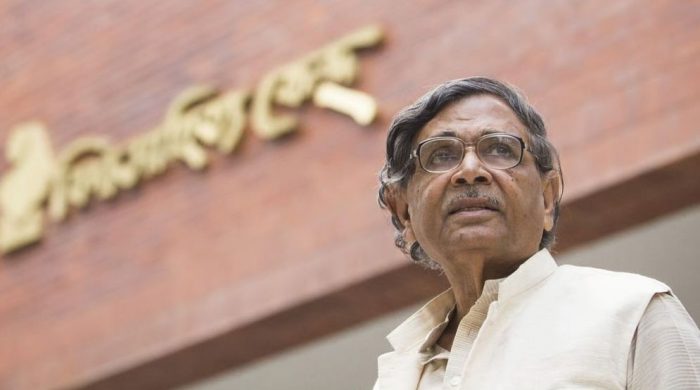
“The path along which the art, literature, and politics of Bangladesh (then East Pakistan) had been moving was indeed the right one for the Bengalis and for the Bengali language. But with the increasing intimacy with India, or West Bengal in particular, it is difficult to say how far that will remain self-governing, because under the shadow of such a vast country, a small Bangladesh will naturally come under the influence of that larger country’s politics and literary-artistic thought, especially since the language of West Bengal and Bangladesh is the same.”
These words were spoken to us by Buddhadeva Bose with a political implication—to us, that is, to Abdullah Abu Sayeed and myself. Of course, although I quote it here as a statement, the words were not exactly uttered in this literal form, though in substance this was precisely what he meant.
Our meeting with Buddhadeva Bose and his wife Protiva Bose probably took place in 1972 at their house in Kolkata. We—Abdullah Abu Sayeed of the Bishow Shahitto Kendro and I—had gone to meet them. The country had only just become independent, and Bangladeshi passports had not yet been introduced. The two of us travelled to India carrying only a one-page travel permit, which contained our photographs and registered identities, with something of a mission: to meet as many gifted literary figures of West Bengal as possible.
Although there was some limited literary discussion with them—Buddhadeva Bose and his wife Protiva Bose—the main topic of conversation kept returning to the situation of the newly independent Bangladesh. It was in that context that Buddhadeva Bose made the politically suggestive remark. Neither of us found it pleasing. Both of us, at the time, received the matter evasively, or rather as something better avoided.
Be that as it may, the place we had chosen to stay in Kolkata was by no means convenient. It was a sort of communal lodging. Our room was on the fourth floor. There was no bathroom or toilet there, so we had to climb up and down the stairs several times a day. At that age it was not much of a problem for me, but for Sayeed Bhai (I was used to addressing him that way) it was somewhat troublesome, and besides, this extra inconvenience for natural necessities is not pleasant for anyone. Added to this was the fact that since there was no floor above the fourth, the room became terribly hot, and Kolkata’s heat is known to almost everyone.
Though somewhat irrelevant, I mention these things because before coming to Kolkata I had confidently told Sayeed Bhai that there would be a comfortable place to stay there free of cost. At that time saving money was important for all of us. But after two days, compelled by circumstances, we left that place and moved into a cheap hotel within our means.
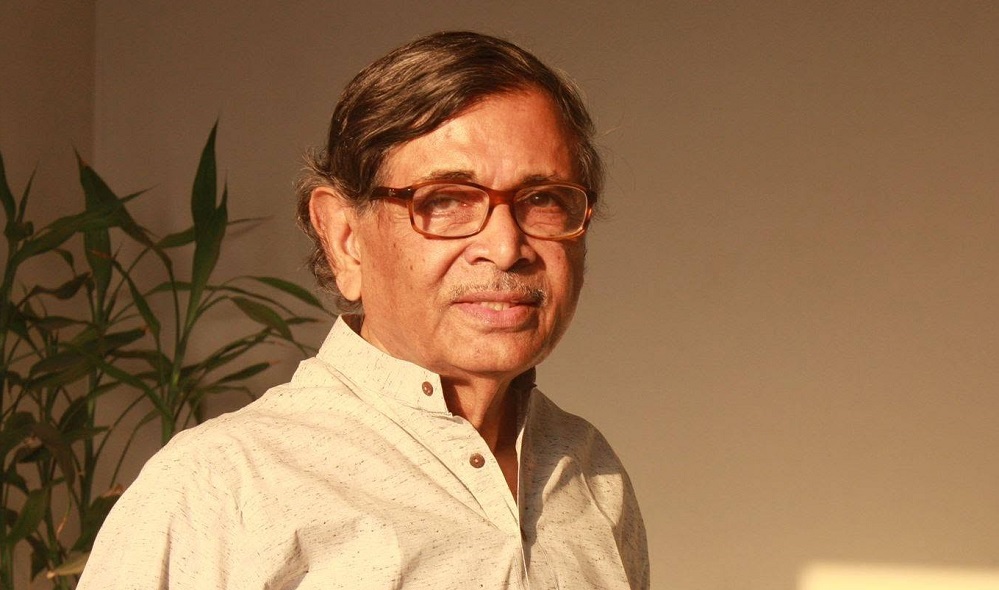
It is with this incident—perhaps the most intimate period of my time with Sayeed Bhai—that I have long felt a strong urge to begin this piece. My acquaintance with him began in the latter part of 1969 through my close friend Abdul Mannan Syed. I had known the magazine Kanthaswar since its first publication, which was indispensable for literature-loving young men of the sixties. But to know its editor personally, to grow close to him, and to publish in that magazine—those were beyond imagination for me.
By coincidence, I found Mannan as my colleague at Sylhet Murari Chand Government College in 1969. There began our first acquaintance and closeness. Later, when both of us came to Dhaka on leave (Dhaka being our permanent home), I met Kanthaswar editor Abdullah Abu Sayeed. Mannan Syed was immensely dear to Sayeed Bhai—one might say that in later years this excess of affection (at least in my judgment) caused me some discomfort.
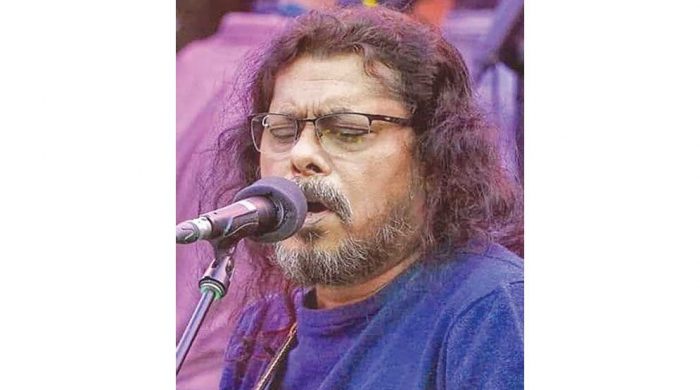
We would all unanimously admit, without doubt, that Abdullah Abu Sayeed, in physical bearing and in speech, was an extraordinarily attractive personality. Whenever I saw him, I was reminded of the men of mythology—whether from the Mahabharata or Greek mythology.
Once Mannan bought a tape recorder as the price of one of his peculiar obsessions (Mannan often suffered from such obsessions). It had suddenly entered his mind that he would record his future literary plans on audio so that they would not be forgotten and could be used later. After buying the machine, sitting at their medicine shop at 50 Green Road, he recorded Sayeed Bhai’s recitation of Rabindranath Tagore’s poem HothatDekha to test the machine’s effectiveness. I can still hear Sayeed Bhai’s voice: “আমাদের গেছে যে দিন/একেবারেই কি গেছে-/কিছুই কি নেই বাকি?”
“Have the days that are gone,
Gone completely?
Is there nothing at all left behind?”
He recited the whole poem from memory, which still astonishes me because I myself have no talent for memorization, and because it was then that I discovered the extraordinary quality of Sayeed Bhai’s reciting voice.
Since the topic of the tape-recorder has come up, it should also be said that Sayeed Bhai himself once suffered from this tape-recorder obsession. I had just returned from England after finishing my studies there from 1975–1977 on a British Council scholarship. I too had brought home a Japanese Akai tape recorder. One day, passing through Segunbagicha, I suddenly ran into Sayeed Bhai. He caught hold of me—an old habit of his—and took me straight to his Green Road house. There he kept me the whole day, making me listen to songs on his newly brought TEAC tape-recorder from Australia, and repeatedly asking me whether his recorder was undoubtedly better than mine. There was a beautiful photograph of that day taken by him. He had just returned from Australia after completing a course on television there (at that time he regularly hosted a program on BTV, which had taken him to Australia), and on his return he had bought that tape recorder and camera. I can no longer find the picture.
I began writing in Kanthaswar after that year, 1969. It was undoubtedly a turning point in my life. I had studied English literature at University of Dhaka and wanted to become a teacher, but I had never thought of involving myself in writing in that way.
At Mannan’s encouragement, I became involved with him in jointly editing an arts-and-literature journal called Shilpakala. This too was another of Mannan’s obsessions. His principal intention was to publish a journal devoted only to essays, in opposition to Sayeed Bhai’s Kanthaswar—something like a rivalry. But the amusing thing was that we would even force Sayeed Bhai to write essays for us. I remember four of them:
ObositChhanda, Sandhyasangiter Rabindranath, Natok O Shahittto, and Prabhatsangit-er Rabindranath.
We had to struggle considerably to make him write these essays. Sayeed Bhai’s activities were not limited only to publishing Kanthaswar and teaching at Dhaka College. As we all know, he was then passing through the embryonic phase of establishing the Bishow Shahitto Kendro. I remember that for at least two of those essays, Mannan and I literally dragged Sayeed Bhai from his Green Road residence one afternoon and walked him all the way to Gulistan Stadium, making him write along the way, until the essay was finally completed there.
I wrote several stories in Kanthaswar. Then I wrote a long essay on poetry. After that, becoming bold, and seeing Sayeed Bhai’s excessive partiality toward Mannan—especially his great enthusiasm for Mannan’s poetry—I drifted into the jealous thought that “I too can write poetry,” and gave him a poem for publication. When that poem was not published in the next three issues (and Kanthaswar appeared fairly regularly), I once asked Sayeed Bhai whether he had lost my poem. He informed me that he had not lost it at all; it simply had not been worthy of publication, and that I would do better to continue writing short stories or essays. In that instant I realized two things: Sayeed Bhai’s editorial wisdom and clarity, and my own limitations.
Mannan and I were transferred from Sylhet to Jagannath College in February (Mannan) and early March (myself) of 1971. At this college I came into close contact with Akhtaruzzaman Elias, Shawkat Ali, Shamsuzzaman Khan and others. At one point Sayeed Bhai too, upon promotion, was transferred from Dhaka College to Jagannath for a brief period. It was from this time onward that he regularly conducted programs on world literature, especially at the National Academy of Education and Management (NAEM), located behind Dhaka College. Mannan and I attended these programs fairly regularly.
Gradually the activities of world literature took on an institutional form. At this time, I took up the responsibility of Secretary of the Bangladesh UNESCO National Commission, and as a result became somewhat distant from Sayeed Bhai, though not entirely. I remember that Sayeed Bhai’s Ramon Magsaysay Award in 2004 was much discussed in the ministry while I was serving there. Besides, on my own initiative I arranged for Sayeed Bhai to go abroad on an academic tour and also helped approve a small UNESCO grant for the Bishow Shahitto Kendro. At that time Ahmed Mazhar, now living in the United States, liaised with me on behalf of the Centre. I also remember that Sayeed Bhai had proposed that I spend some time in the evenings at the Bishow Shahitto Kendro—a proposal I could not accept despite wishing to.
I do not remember exactly, but before joining UNESCO, when I was in the English Department of Government Harganga College in Munshiganj, Sayeed Bhai wanted to buy a second-hand car for the convenience of his active work and asked me to look into it. Through a garage-owner acquaintance of mine, Akkas Mia, I arranged a two-door Datsun Bluebird for him. He himself drove this car to many places in Bangladesh. I rode in it. At Harganga College I had to act as the contact person for organizing a Bishow Shahitto Kendro event too.
I wish now to return to the point from which this essay began—our Kolkata trip.
After Buddhadeva Bose,we went to the residence of Bishnu Dey. Bishnu Dey was a slim, tall, fair-complexioned man, holding a thick cigar in his mouth, who welcomed us warmly into his drawing room. The whole ambiance felt pleasant, especially as it was clear that he kept track of Bangladesh’s Shamsur Rahman and his poetry, though not in great detail.
But at one point the atmosphere grew heavy when Bishnu Dey said: after gaining independence, the next foremost priority of your poets and writers should be the purification of the Bengali language in Bangladesh. For example, replacing Persian or Arabic words like abba, amma, pani in East Bengal’s Bengali with baba, ma, and jal. (The words are not exact, as this was fifty-four years ago, but that was the essence.) Sayeed Bhai and I were initially somewhat stunned. We could neither immediately respond nor decide whether it was proper to do so, because the person saying this was someone we deeply revered, whose poetry had enchanted us for years. After a while Abdullah Abu Sayeed replied: this task is not particularly urgent for us, because in the life we are accustomed to living, these words have become our companions. We do not feel any need to purify them. However, if someone uses baba, ma, or jal as alternatives or equivalents, we have no problem with that. (This too is the essence of his reply.) I too was shocked, thinking that language is always in motion, and the more a language can receive from other languages, the richer it becomes. Besides, language is an important part of the culture and life of a particular people. Something felt slightly amiss—was this what Buddhadeva Bose had been hinting at?
Our trip to Kolkata had been preceded by two intriguing prologue-like episodes which are deeply nostalgic for me. Firstly, having Sayeed Bhai with me certainly made it easier to obtain our travel pass and the so-called government approval. But there was a complication regarding Kanthaswar. Sayeed Bhai had decided to carry several issues of the magazine with him. But since there were so many copies, customs permission was required even though it was for non-commercial purposes. Later, however, I discovered that the father of my engineer friend’s fiancée was a high-ranking customs officer. He immediately arranged the permission for us.
Secondly, we had booked tickets on Bangladesh Biman. The Dhaka–Kolkata Fokker F27 flight had begun in April 1972. These aircraft were rather small, and flights were often cancelled with even slight storms or rain. Ours too was cancelled due to bad weather. So we had to return from the airport. We were told the next flight would be two days later. Sayeed Bhai said there was no one at his house because, since he was supposed to leave for Kolkata, his wife and daughters (he had two daughters, though I cannot recall whether the younger one had yet been born) had gone to her father’s house in Narayanganj. There were no smartphones then as there are now.I immediately invited him to stay at my house, and for two days and two nights we stayed at our Malibagh home, immersed in endless conversation, arguments, and reflections on his romantic life-story—things that remain guarded even today in the privacy of the two of us alone.
For a special reason I had to leave Kolkata alone before completing my plans. Thus my journey of 1972 ended there, though Sayeed Bhai remained in Kolkata, and later I heard from him that he had also gone to Darjeeling in pursuit of some past romance.
In truth, many memories with Sayeed Bhai remain unfinished. For instance, he came to my house on the evening of my wedding day (towards the end of 1972—because of law-and-order concerns such ceremonies were held in daylight at the time). He stayed for quite some time and asked whether Mannan had come. I said he had not. Sayeed Bhai remarked, “Mannan is an unsocial creature.” Though Mannan was extremely close to me, for some reason Sayeed Bhai’s remark felt like a spring breeze.
Just a few days ago I met him again. He said, “You have become seasoned; you will not leave this world easily.” Then, in his old habit, he twisted the right side of my moustache. I replied, “You are no less. Six years older than me, and yet still moving about so vigorously.” He gifted me one of his generous loud laughters.
To Abdullah Abu Sayeed of the Bishow Shahitto Kendro—Sayeed Bhai—on the threshold of his eighty-sixth year, my heartfelt greetings, full of incomplete but cherished memories.
The writer is an academic and translator. He can be reached at [email protected]