Notice ::
China’s Strong Economic Resilience Injects Powerful Momentum into Bangladesh Ties

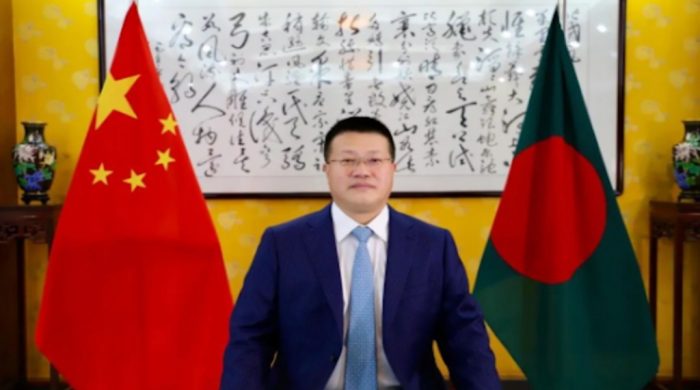
Yao Wen
- Update Time : Sunday, July 12, 2026
- 0 Time

On 1 July 2026, the Communist Party of China (CPC) celebrated the 105th anniversary of its founding. General Secretary of the CPC Central Committee and Chinese President Xi Jinping has profoundly pointed out that through 105 years of unremitting endeavour, the CPC has led the Chinese people in advancing Chinese modernisation, created a new form of human advancement, and expanded the pathways for developing countries to achieve modernisation. Socialist China under the leadership of the CPC is widely recognised as a builder of world peace, a contributor to global development, and a defender of the international order.
Not long ago, Tarique Rahman, Prime Minister of Bangladesh, paid an official visit to China and attended the 17th Annual Meeting of the New Champions, also known as the Summer Davos Forum. The leaders of the two countries jointly announced the building of a China-Bangladesh community with a shared future in the new era. Against the backdrop of a sluggish global economic recovery, the steady progress of China’s economic ship and the upgrading of China-Bangladesh cooperation together provide a solid foundation for bilateral relations to ride the waves and move forward.
A Century of Endeavour Has Forged China’s Strength, Bringing Certainty to the World
Looking back on its century-long journey of struggle, the CPC has led the Chinese people in creating the twin miracles of rapid economic development and long-term social stability. During the 14th Five-Year Plan period, China’s GDP crossed successive thresholds, topping RMB 110 trillion, 120 trillion, 130 trillion and 140 trillion. In 2025, China’s GDP reached RMB 140.1879 trillion (around US$20.6 trillion), surpassing the RMB 140 trillion mark for the first time and growing by 5 per cent year on year.
What deserves particular attention is that China’s growth is reflected not only in scale but also in quality. In 2025, the value added of high-tech manufacturing above designated size accounted for 17.1% of the value added of industrial enterprises above designated size. The value added of information transmission, software and information technology services grew by 11.1% over the previous year. China has also become a net exporter of industrial robots. All this shows that China’s economy is accelerating its transformation from being “large” in size to being “strong” in substance.
At the same time, China has always embraced the world with open arms. In 2025, China’s total imports and exports of goods reached RMB 45.47 trillion (US$6.69 trillion), up 3.8 per cent year on year. Since June 2025, imports have maintained year-on-year growth for seven consecutive months, with the growth rate further accelerating to 4.4 per cent in December. The intended transaction volume at the 8th China International Import Expo exceeded US$80 billion. At a time when the global economy is facing severe challenges, a Chinese market that combines vast scale with strong resilience provides valuable demand and development space for countries around the world.
China has an enormous market of more than 1.4 billion people, including over 400 million middle-income earners. It has the world’s most complete industrial system and an efficient infrastructure network. China also ranks first in the world in both total human resources and the total number of research and development personnel. These fundamentals determine that the long-term positive trend of the Chinese economy will remain unchanged. As the 15th Five-Year Plan unfolds in full, new quality productive forces are being cultivated at a faster pace, and the dual dividends of green transition and digital transformation will continue to be released. The “second half” of China’s economic development will be of even higher quality. China’s development prospects are not only bright, but also full of promise.
Stability, Innovation, Vitality and Integration Paint a New Picture as “China Opportunity 2.0” Gains Strong Momentum
At the 17th Annual Meeting of the New Champions, Premier Li Qiang used four words – stability, innovation, vitality and integration – to summarise the opening momentum of the 15th Five-Year Plan. These words capture not only the overall picture of China’s economy today, but also the broad direction of its future development.
First, stability. China’s economy grew by 5 per cent in the first quarter and has maintained sound momentum since the second quarter, with corporate profits rising, prices recovering moderately, and people’s well-being continuing to improve. Stability may not always appear striking in ordinary times. Yet for an economy of more than RMB 140 trillion to maintain steady development amid multiple shocks, including international energy shortages and serious disruptions to industrial and supply chains, is no easy achievement. It has injected valuable certainty into a world of rising uncertainties and played an important role as a “safe harbour”. Such firm and powerful stability is all the more precious.
Second, innovation. After years of sustained efforts and accumulation, new technologies, new products and new business models are emerging in China one after another. In the first half of the year, several types of commercial space rockets were successfully launched, while technologies such as quantum information, integrated circuits and nuclear fusion gained speed. The field of artificial intelligence has seen particularly rapid growth. A number of large AI models have achieved new breakthroughs. By the end of May, China’s daily token usage had reached several hundred trillion, leading the world, and embodied intelligence had entered the stage of large-scale commercial application. The brilliant sparks of frontier innovation are enabling China’s economy to take on a new look and generate fresh vitality.
Third, vitality. The demand potential of China’s enormous market continues to be unleashed. Service consumption, green consumption and new forms of consumption have become particularly vibrant.
Tourism, cultural performances and sports events are drawing strong public interest, with tickets often hard to obtain. Smart products such as smart watches and smart glasses are widely sought after, with sales multiplying. Flows of people, goods, information and capital are highly active. China now handles more than 550 million express parcels a day, exceeding the combined total of all other countries. These are vivid illustrations of the tremendous vitality of China’s economy and a true reflection of its endogenous market momentum, demonstrating the richness and high growth potential of China’s domestic demand.
Fourth, integration. Against the rise of unilateralism and protectionism, China has continued to expand opening up on its own initiative. It has implemented zero-tariff treatment for 63 countries, and its import volume has remained the second largest in the world for 17 consecutive years. In the first five months of this year, China’s import growth reached 20.5%, significantly higher than export growth. China has also launched the “Export to China” series of events, providing more channels for high-quality foreign products to enter the Chinese market and receiving positive responses from countries around the world. China’s integrated development with the world has never been a matter of expediency, but a strategic choice that follows the trend of history and is rooted in its own development philosophy. China has never sought to move fast alone. Instead, it is committed to win-win cooperation with all countries and to going far together.
China-Bangladesh Friendship Enjoys Strong Support by the People, with Broad Prospects for Practical Cooperation
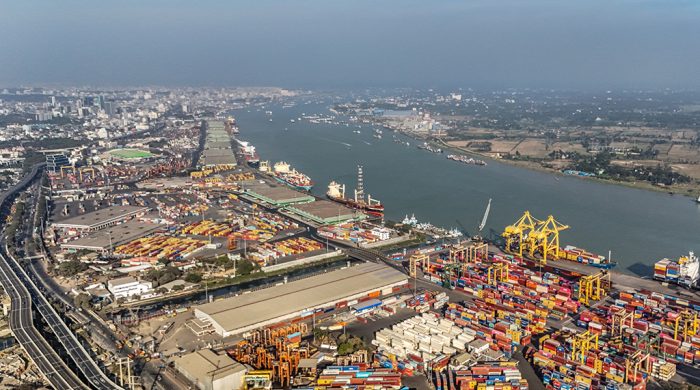
During Prime Minister Tarique Rahman’s visit to China, the leaders of the two countries jointly elevated China-Bangladesh relations to a new height. The two sides agreed to advance high-quality Belt and Road cooperation, deepen the synergy of development strategies, steadily promote the implementation of major landmark projects in such areas as ports and water conservancy, strengthen cooperation in trade, industrial and supply chains, finance and other fields, and expand cooperation in emerging industries such as new energy, the digital economy, artificial intelligence, and information and communications. These important common understandings mark the transition of China-Bangladesh relations from quantitative accumulation to qualitative upgrading.
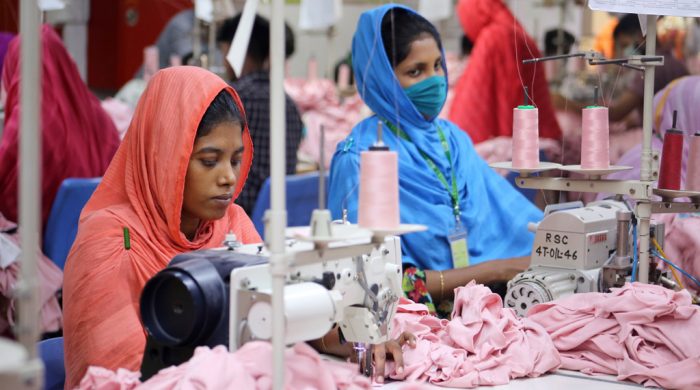
Looking back, China-Bangladesh economic and trade cooperation has delivered impressive results. From 2010 to 2025, China remained Bangladesh’s largest trading partner for 16 consecutive years. China has also granted zero-tariff treatment to 100% of taxable products exported from Bangladesh to China and extended the treatment to 2028. In investment, China has become Bangladesh’s second-largest source of foreign investment. Nearly 700 Chinese enterprises are registered with Bangladesh’s investment authorities, covering a wide range of sectors including power, energy, transportation, textiles and garments, and information and communications, and creating hundreds of thousands of local jobs. In infrastructure, the Dhaka Bypass Expressway, invested in and built by Chinese enterprises, has been put into operation, effectively improving traffic conditions around the capital.
During Tarique Rahman’s visit to China, another 12 Chinese enterprises committed a total investment amounting to US$9.2 billion in Bangladesh. China’s sustained economic growth and industrial upgrading will provide Bangladesh with broader market space and more diverse possibilities for cooperation.
China’s development is an opportunity for the world, and China-Bangladesh cooperation is a vivid practice of mutual benefit and win-win results. China stands ready to work with Bangladesh, guided by the building of a China-Bangladesh community with a shared future in the new era, to continuously elevate bilateral relations to new heights. A dynamic, open and inclusive China will surely provide broader space for Bangladesh’s development. The future of China-Bangladesh cooperation is one we can all look forward to.
The writer is Ambassador of China to Bangladesh
More News of This Category