Bangladesh struggles to stay 2nd in RMG export as rivals gain

- Update Time : Sunday, July 12, 2026
- 1 Time
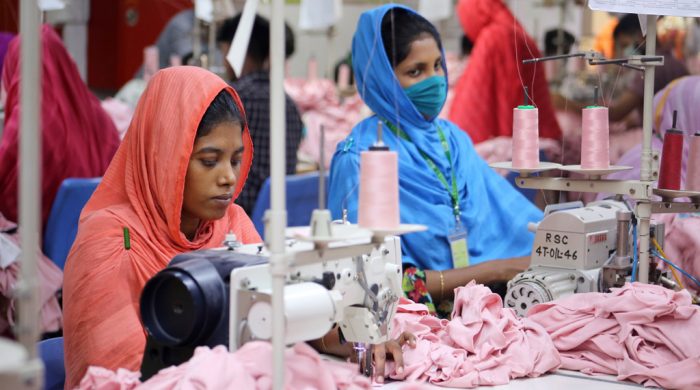
Bangladesh retained its position as the world’s second-largest readymade garment exporter in 2025 although its share of the global market declined for a third consecutive year, according to the World Trade Organization’s latest data.
Although market leader China’s share also shrank in 2025, Bangladesh’s declining share has raised concerns if the country is failing to capture the opportunities created by China’s retreat from RMG productions.
In its report titled ‘World Trade Statistics: Key Insights and Trends in 2025’ published in the past week, the WTO said that Bangladesh’s RMG exports stood at $38.82 billion in 2025—0.89 per cent up from $38.48 billion in 2024.
However, Bangladesh’s global share of RMG exports slipped to 6.76 per cent in 2025 from 6.9 per cent in 2024, 7.38 per cent in 2023 and 7.87 per cent in 2022.
The value of global RMG exports stood at around $575 billion in 2025, according to the WTO data.
Exporters said that Bangladesh’s second-place in the ranking, though intact on paper, rests on an increasingly narrow margin, with energy shortages, port inefficiencies, high financing costs and the absence of free trade agreements limiting the country’s ability to capture business shifting away from China
Bangladesh Knitwear Manufacturers and Exporters Association president Mohammad Hatem told New Age on Saturday that along with external factors like tariff and global weaker demands, domestic constraints, including gas shortages and unreliable energy supplies had also forced many factories to operate below capacity or even shut down.
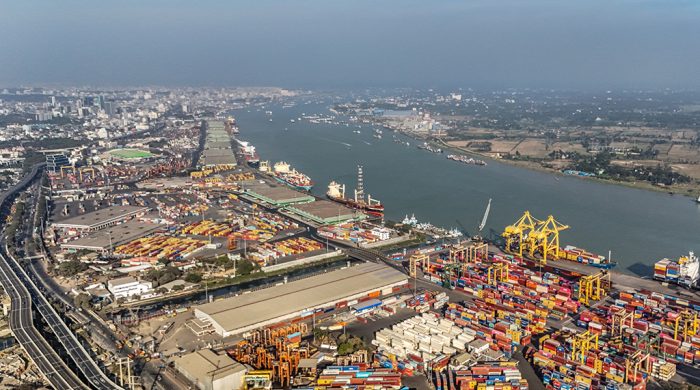
Moreover, port inefficiencies, high interest rates, customs delays and difficulties in opening letters of credit had further eroded the country’s competitiveness, he added.
‘Bangladesh failed to capture much of the production shifting from China. Without major improvements, Bangladesh risks losing its position as the world’s second-largest apparel exporter within the next one or two years,’ the industry leader said.
Bangladesh has generally held the second position among global apparel exporters since 2009, while Vietnam has usually ranked third behind market leader China.
However, Vietnam overtook Bangladesh in 2020, pushing the country to third place. Since then, the two countries have competed fiercely for the second position.
Experts and industry leaders also said that Bangladesh also went through a turbulent domestic situation in 2025 following the political transition in 2024, which toppled then prime minister Sheikh Hasina.
Under the interim government formed after the ouster of the Awami League regime amid the mass uprising in August 2024, businesses faced a series of protests, factory closures and labour unrests.
Moreover, the United States’ announcement of reciprocal tariffs in 2025 added pressure on global trade, and, under such circumstances, retaining the second position was a positive development, they said.
According to Export Promotion Bureau data, Bangladesh’s apparel export earnings also stood at $38.82 billion in 2025, matching the WTO figures.
China remained the world’s largest exporter of RMG products in 2025, although its share declined sharply to 27.35 per cent from 29.64 per cent in 2024.
Its clothing exports fell by 4.92 per cent year-on-year to $157.11 billion from $165.24 billion.
Since China dominates the global apparel market by a wide margin, its retreat should have created significant opportunities for other exporters, including Bangladesh, according to experts.
Instead, Bangladesh’s share also declined, falling from 6.9 per cent to 6.76 per cent.
Industry insiders described the trend as alarming, saying Bangladesh had failed to capture the market space vacated by China.
Compounding the concern, Bangladesh’s closest competitors moved in the opposite direction.
Vietnam’s share rose to 6.53 per cent from 6.09 per cent, with apparel exports reaching $37.51 billion—10.53 per cent up from $33.94 billion in 2024, according to the WTO data.
India moved up to fourth position with a 3 per cent market share after exporting apparel worth $17.26 billion, 5.47 per cent up, while Türkiye slipped to fifth position with a 2.93 per cent share after exporting RMG products worth $16.81 billion, down 6.11 per cent.
Cambodia also expanded its presence, with its share rising to 2.01 per cent from 1.8 per cent and exports reaching $11.56 billion in 2025, the WTO data show.
Vietnam, India and Cambodia expanded their footprint while Bangladesh’s share contracted points to a widening competitiveness gap rather than a temporary setback.
Further down the list, Pakistan’s apparel exports stood at $9.91 billion, 6.82 per cent up, while Indonesia exported $9.23 billion worth of RMG products, 5.79 per cent up.
Among the major importers, the European Union remained the largest market with a 37 per cent global share, importing apparel worth $233.83 billion—10.98 per cent up from $211 billion in 2024.
The US ranked second with a 14.23 per cent share, importing apparel worth $89.93 billion—2.33 per cent down from $92 billion in 2024.
Japan imported clothing worth $25.09 billion in 2025, accounting for a 3.97 per cent global share—1.69 per cent up.
The United Kingdom imported $22.89 billion worth of apparel, representing a 3.62 per cent share—10.90 per cent up, while South Korea imported $12.98 billion, accounting for a 2.05 per cent share—1.41 per cent own.
Exporters and industry leaders welcomed Bangladesh’s continued hold on second place, but described the position as increasingly fragile, pointing to structural weaknesses at home and faster adaptation by competing countries.
BKMEA president Hatem said that the global readymade garment market remained weak, but Bangladesh was underperforming even compared with its competitors.
‘Countries with free trade agreements have managed to perform better amid weak global demand. Uncertainties surrounding Bangladesh’s LDC graduation have also made many buyers cautious, with some shifting orders to competing countries,’ he added.
He stressed the need for accelerating product diversification, value addition, innovation, capacity expansion, improvements in the ease of doing business and keeping pace with changing fashion trends in export destinations.
Echoing Hatem, Bangladesh Garment Manufacturers and Exporters Association senior vice-president Inamul Haq Khan said that port inefficiencies continued to delay both raw material imports and export shipments, making Bangladesh less competitive.
‘Before placing orders, buyers assess the entire supply chain. Much of the business moving away from China has gone to Vietnam, Cambodia and India instead of Bangladesh,’ he added.
He also said that competitors were benefiting from free trade agreements while Bangladesh’s internal challenges — energy shortages, port congestion and high financing costs — continued to undermine its export competitiveness.
‘If Bangladesh wants to retain its position in the global apparel market, it must conclude FTAs with its major export destinations within the next three years,’ he added.
Former BGMEA director Mohiuddin Rubel said that changes in the global apparel market had created opportunities that Bangladesh had failed to seize.
‘China’s declining exports should have created opportunities for Bangladesh, but competing countries adapted faster by improving energy supply, infrastructure and access to finance,’ he added.
He said that Bangladesh now needs to focus on upgrading its industrial base through technology adoption, artificial intelligence, product innovation, shorter lead times and stronger marketing strategies to remain competitive.
Professor Mustafizur Rahman, a distinguished fellow at independent think tank Centre for Policy Dialogue, said that Bangladesh had seen little improvement over the past year in key competitiveness indicators, such as lead time, the cost of doing business and operational efficiency, contributing to its declining share in the global export market.
He also said that exports had been affected by domestic political uncertainties and external challenges, including tariffs, throughout 2025.
‘To retain its position, Bangladesh must respond more strategically, as its competitors are doing,’ he added, noting that many competing countries had secured free trade agreements, eroding Bangladesh’s long-standing duty-free advantage.
He also said that boosting productivity and diversifying products had become imperative, noting that man-made fibre products accounted for about 75 per cent of global apparel demand, while MMF represented only about 30 per cent of Bangladesh’s RMG products.
He welcomed some of the measures in the latest budget, including bonded warehouse facilities for non-bonded factories, but said Bangladesh needed a coordinated strategy encompassing trade policy, technology adoption, skills development, fiscal and monetary policies, market diversification and improved market access.
He also stressed the need for concluding FTAs and bilateral trade agreements quickly and attracting more foreign direct investment, noting that competitors, such as Vietnam had been far more successful in drawing export-oriented FDI.
Regarding merchandise trade, the WTO report said that world trade in goods and commercial services increased by 7 per cent to $34.65 trillion in 2025 from 4 per cent growth in the previous year.
Trade in goods grew by 6 per cent, while services expanded at a faster rate of 8 per cent.
The share of services in global trade reached 27.6 per cent, its highest level since 2005, reflecting the growing role and resilience of services in global trade, the WTO report said.