Mob Trauma: Govt’s strong anti-fear stance offers relief

- Update Time : Saturday, February 21, 2026
- 45 Time

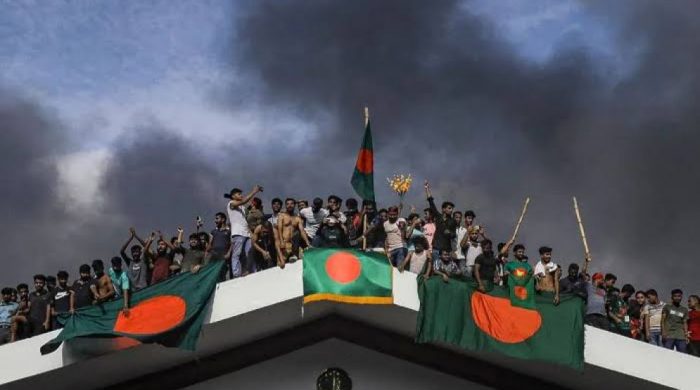
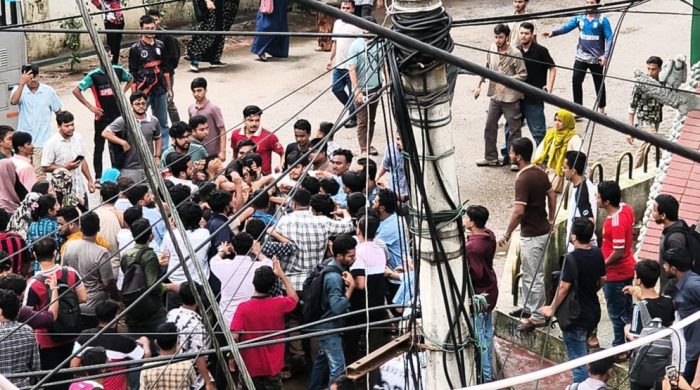
The new government’s firm message against mob violence on its very first working day has given hope to all forward-thinking citizens. It was urgently necessary for the government to clarify its position on mobs. During the previous administration, “mob culture” was among the most widely discussed issues across all quarters. Home Minister Salahuddin Ahmed has categorically declared that mob culture will not be tolerated in the country under any circumstances.
He warned that strict action would be taken against anyone who blocks roads, vandalises property or creates public suffering in the name of pressing demands. Local Government Minister and BNP Secretary General Mirza Fakhrul Islam Alamgir has also made it clear that mobs will not be allowed to form and will be dealt with firmly. Referring to recent events, he noted that the country has gone through a major storm — a revolution, a rebellion and a mass uprising. Everything will not be set right overnight, he said, but mobs will be brought under control.
Newly appointed Information Minister Zahir Uddin Swapan has also outlined his stance on mobs and fear. He has assured the nation of a fear-free media environment, acknowledging how painful it is to live in fear. The government may, if it wishes, share accounts of the suffering endured by professional journalists who are still traumatised by mob harassment.
The Information Minister himself could stand in solidarity with them. He may reflect on the painful diary of Haider Ali, Executive Editor of Kaler Kantho, who has repeatedly fallen victim to mob attacks. It is worth examining the difference between mob rule and democracy — the yearning to breathe freely. Those who have survived mob assaults know the anguish all too well.
Over the past 17 years, Haider Ali produced a series of bold investigative reports exposing corruption, plunder and mafia networks. Risking his life, he uncovered irregularities involving more than 50 MPs and ministers, including former powerful IGP Benazir and controversial contractor GK Shamim. As a consequence, he faced 11 attack cases and spent months attending courts across the country. Yet he had never been targeted by mobs — until the post-fascist interim regime, when he became a repeated victim of mob violence and false cases. Mobs even stormed his workplace. Regardless of the era, mob action is a criminal offence. Hence, the newly sworn-in government’s declaration that “the days of mobs are over” has raised hopes among peace-loving citizens.
The highly organised assaults of a reckless minority have been labelled “mob justice” or “mob culture”, though they are neither justice nor culture. When the interim government began its journey in August under Nobel Laureate Dr Muhammad Yunus, many believed a new era had dawned. There were hopes of renewed vitality in business and investment. Dr Yunus himself is a renowned economist, joined by others such as Dr Wahiduddin and Dr Salehuddin. Yet reality proved otherwise. Business and investment declined further, overshadowed by the menace of mobs, with severe consequences for the economy. Occasional boasts about GDP and foreign reserves masked deeper fragility.
Investment decisions everywhere depend on profit and growth prospects. Bangladesh is no exception. Political instability affects the economy; social unrest makes matters worse. The country has suffered deeply, with business, employment, wages, agriculture, prices, public safety and vulnerable groups all affected. Stagnation in investment, declining credit flow and uncertainty in trade have persisted for nearly 18 months — an unprecedented downturn in the nation’s history, even compared with past uprisings, global financial crises and pandemics.
In a globalised world, the rule of law and transparency attract both domestic and foreign investors. A democratic and liberal image enhances exports, remittances and foreign investment. Economic output depends on consumption, investment, government spending and net trade. Entrepreneurs seek a supportive environment to sustain production, employment and wages.
Through elections, all professions and classes now look to the new government for that environment. Investment growth is widely seen as a measure of a government’s credibility and competence. Law and order are crucial. Without curbing the menace of mobs, progress will remain not only difficult but endangered. It appears the new leadership understands this, having clearly articulated its stance. The rest depends on action. Without suppressing mob violence, neither domestic nor foreign investment will increase, and professional stability will remain elusive.
Writer: Journalist and columnist; Deputy Head of News, BanglaVision