Elections lose character under influence of money and muscle power

- Update Time : Saturday, January 31, 2026
- 51 Time
An election is not merely a formal mechanism for the transfer of power; it is the expression of the sovereign will of the people. Through voting, citizens decide who will govern them, which policies will guide the state and which ideals will shape the administration of the country. However, when money and muscle power exert undue influence over this process, elections lose their fundamental character.
In Bangladesh’s political history, elections have always been a sensitive issue.
The people of this country have waged long struggles to establish voting rights. From the Language Movement to movements against autocratic rule, the right to vote has remained at the core of every democratic struggle. Yet the unfortunate reality is that public confidence in the electoral process has been in deep crisis for a long time. Irregularities at polling centres, intimidation, the rampant use of black money and the dominance of muscle power have repeatedly called elections into question.
As a result, a perception has grown among citizens that elections are no longer meant for them.
The influence of money turns elections into an unequal contest. An honest, capable and grassroots-connected candidate cannot survive in the electoral arena without substantial financial resources. Posters, banners, campaigning, rallies and worker management—everything today depends on money.
Consequently, many qualified individuals are sidelined even before entering the race. Politics gradually becomes an expensive profession where money, rather than ideals, emerges as the primary requirement.
This money-driven politics has devastating consequences for state governance. Those who spend vast sums to get elected naturally feel compelled to recover their investment. Corruption then ceases to be an aberration and becomes a structural reality.
Public projects, recruitment, tenders and policymaking prioritise personal and group interests over the public good. Waste of state resources increases, inequality deepens and ordinary people are deprived of fair services.
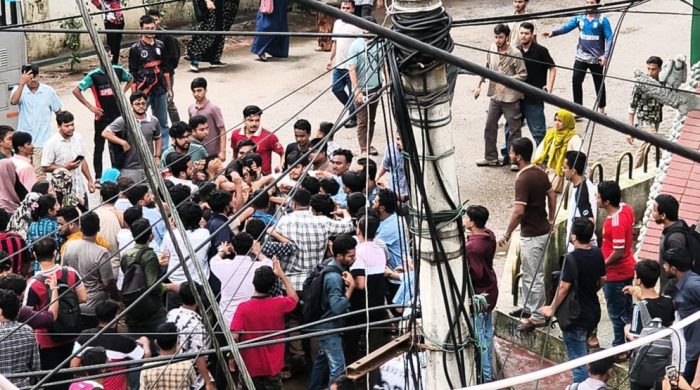
The use of muscle power makes the electoral system even more intimidating. Occupation of polling centres, attacks on rival candidates’ workers, voter intimidation and election-related violence render voting rights meaningless. Many people feel fear even when going to vote, while others choose not to go to polling stations at all. In some places, even where voters are present, there is no real opportunity to exercise their voting rights. In such circumstances, elections cease to be a festival of democracy and instead become days of fear.
The dominance of muscle power also inflicts long-term damage on political culture. It shrinks the space for tolerance, respect for dissenting opinions and peaceful political competition. Suppression of opposition views becomes established as the primary strategy for political success. Young people begin to see politics as a violent and unethical arena. This narrows the path for the emergence of new and honest leadership and fuels the spread of criminality.
Without elections free from money and muscle power, representative democracy cannot flourish. Parliament or local government institutions fail to become true representatives of the people. Lawmaking and policymaking are driven by the interests of powerful groups rather than the needs of ordinary citizens. As a result, marginalised communities fall further behind and social justice weakens.
A credible electoral system strengthens all state institutions. When people believe that their votes matter, they feel connected to the state. Civic responsibility increases, respect for the law grows and social stability takes root. Conversely, questionable elections breed frustration and resentment among citizens, increasing the risk of long-term political instability and conflict.
Ensuring elections free from money and muscle power requires a strong role from the state. The Election Commission must be not only constitutionally independent but also effective and impartial. Limits on election expenditure must be strictly enforced, and visible measures must be taken to curb the use of black money. Law enforcement agencies must remain free from partisan influence and ensure the security of voters and polling centres. Without administrative neutrality, no election can be credible.
Political parties also bear significant responsibility. In nominating candidates, they must prioritise competence, integrity and public acceptability over money and brute force. Democracy cannot be established at the national level without democratic practices within political parties themselves. Without ensuring transparency and accountability within parties, elections can never be free from the influence of money and muscle power.
The role of civil society and the media is critically important in this process. The media must be responsible and courageous in exposing electoral irregularities, violence and misuse of money. Civil society must raise voter awareness so that citizens do not sell their votes out of fear or temptation. Sustainable democracy is impossible without informed and active citizen participation.
Elections free from money and muscle power are not merely a moral demand; they are a question of the state’s survival. Development, stability and social justice rest on political legitimacy. No matter how impressive infrastructure or economic growth may appear, development is not sustainable without public consent. Strong states are built on strong democracies.
Bangladesh’s history proves that its people have never compromised on their voting rights. The struggle for democracy is an integral part of the nation’s political consciousness. To honour that historic aspiration, elections must be freed from the influence of money and muscle power. This is not a partisan demand; it is a question of the future of the state and the nation.
Ultimately, the truth is simple: if elections do not belong to the people, the state does not belong to them either. Establishing a fair, impartial and money- and muscle-power-free electoral system is therefore the most urgent demand of our time. Only then can democracy be revitalised, state institutions strengthened and public faith restored in the belief that their vote remains their greatest power.
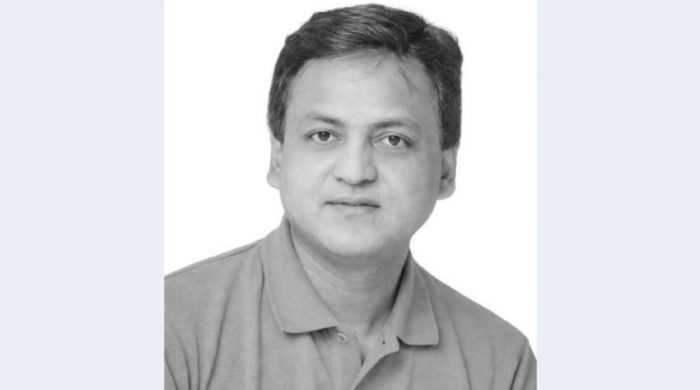
The writer is a publisher and columnist.