Parties question fairness, secrecy of expatriates’ postal voting

- Update Time : Wednesday, January 21, 2026
- 41 Time
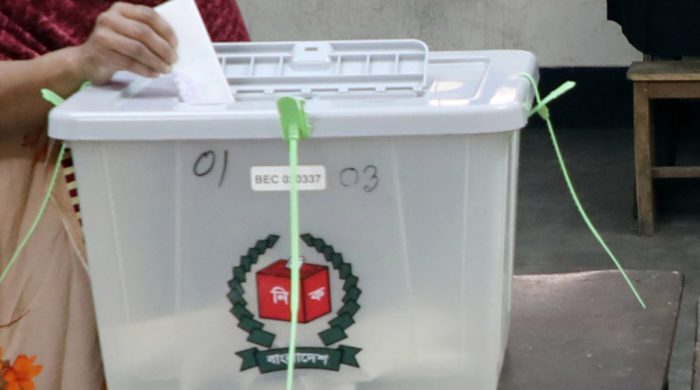
Political parties and candidates on Tuesday voiced allegations and concerns over the conduct of postal voting for expatriate Bangladeshis, questioning its fairness, transparency, voter access and ballot integrity, despite assurances from the Election Commission that the system is secure and carefully managed.
The concerns were raised at a briefing organised by the Election Commission at its headquarters in the capital, where parties and candidates were updated on the overseas postal voting mechanism.
The session was held against the backdrop of growing controversy on social media over viral images of postal ballots and complaints from candidates about limited access to overseas voters.
The Bangladesh Nationalist Party chairperson’s adviser, Ismail Zabiullah, expressed concern over the recent social media content that had cast doubt on the integrity of the Election Commission.
He referred to viral incidents involving postal ballots from Oman, Taif and Bahrain, saying that such developments were unacceptable even though the commission had claimed to be exercising caution.
Zabiullah also questioned the layout of the postal ballot papers, alleging that the BNP’s position in the middle, while three other parties appeared at the top, suggested deliberate bias and did not conform to alphabetical order in Bangla.
He further criticised the QR code-based voting process, arguing that if a ballot was misplaced or taken away, the voter would be unable to cast their vote, effectively losing it altogether.
He said that the BNP hoped the commission would still take corrective measures, stressing that every vote was crucial and urging the authorities to closely monitor the process.
Similar concerns were raised by Dhaka-4 BNP candidate Tanvir Ahmed, who highlighted the challenges of reaching expatriate voters.
He said that while he had nearly 20 days to communicate with local voters, he had no clear way to reach his 3,800 overseas voters.
He questioned how candidates were expected to engage expatriates if postal voting began before symbols were clearly allocated and voter lists shared.
The Election Commission responded by saying that it would try to circulate the overseas voter list immediately.
Representative of BNP candidate from Sirajganj, Iqbal Hasan Mahmud Tuku, raised concerns about ballot secrecy, asking whether voters were taking photographs of their completed postal ballots and uploading them to social media.
He questioned whether any ethical guidance or awareness campaign had been run to prevent such practices.
He also pointed to a scanned postal ballot from Bahrain that had appeared on social, electronic and print media, asking whether unethical activity had taken place.
EC additional secretary KM Ali Nawaz said that the secrecy of the vote was protected by law and that violating it was a criminal offence carrying specific penalties.
He warned that recording or sharing images or videos of postal ballots constituted a breach of secrecy. If proven, immediate action could include locking the individual’s national identity card, deactivating their passport and, if necessary, bringing them back to Bangladesh to face legal proceedings.
Election officials acknowledged that managing overseas voting in real time was extremely challenging due to tight timelines and global logistical constraints.
They said that, for domestic voting, postal ballots would be printed constituency-wise, showing candidate names and symbols arranged according to prescribed rules, though not all symbols would appear together.
Parties also raised concerns over symbol confusion.
The spokesperson of Gano Odhikar Parishad said that its truck symbol closely resembled the tractor symbol, while a Jatiya Party representative argued that the jackfruit and lychee symbols looked too similar on postal ballots, potentially confusing voters abroad.
According to the commission, overseas postal ballots were printed in collaboration with the Army Printing Press and distributed by the Bangladesh Post Office under what officials described as extreme time pressure.
Software is used to personalise each package to an individual voter, linking it to a unique QR code and voter profile for end-to-end traceability.
Voter verification involves liveness checks, QR code scanning and mobile phone authentication, making proxy voting impossible.
All postal ballots, both domestic and international, must reach returning officers by early February.
Officials also detailed the logistical complexities of overseas voting, including deliveries to large labour camps in the Middle East and dormitories in countries such as Singapore, where coordination with local authorities and postal services is required.
Despite repeated assurances, parties said that they remained uneasy, insisting that unresolved issues around access, secrecy and perception could undermine confidence in the electoral process unless addressed promptly.
According to the EC, postal ballot packages had been delivered to the registered addresses of 3,73,398 expatriate voters living in different countries worldwide, enabling them to take part in voting for the upcoming 13th Jatiya Sangsad election and the referendum.
The commission said that of these voters, 196,625 have already scanned the QR codes attached to their postal ballot packages, indicating receipt and initial verification of the voting materials.
Expatriate voters who registered for postal voting will be able to cast their votes and send their completed ballots back to Bangladesh from January 21, following the formal allocation of election symbols.