Operation Epic Fury and the Edge of a New Middle East War

- Update Time : Sunday, March 1, 2026
- 43 Time

February 28, 2026 may be remembered as a defining inflection point in modern Middle Eastern history. In the early hours of Saturday morning, United States and Israeli forces launched a coordinated military campaign against Iran in what officials have called “Operation Epic Fury.” Within hours, Iran retaliated with missile and drone strikes targeting US military installations in the Gulf and sites in Israel.
The speed of escalation has stunned observers. Yet the deeper reality is this: the confrontation did not emerge overnight. It is the product of years of strategic mistrust, collapsing diplomacy, nuclear anxieties, proxy warfare, and a shifting global balance of power. What we are witnessing now is not merely a military exchange. It is the visible rupture of a fragile regional order that has been under strain for decades.
The most urgent question is not who struck first. It is whether the region and the world can prevent this confrontation from spiraling into a prolonged, system-shaping war.
The Collapse of Deterrence
For years, the Middle East has operated under a tense but functional deterrence equilibrium. Iran advanced its missile and nuclear programs incrementally; Israel conducted shadow operations and targeted strikes; the United States oscillated between pressure campaigns and diplomatic engagement. Gulf Arab states hedged between Washington’s security umbrella and cautious engagement with Tehran.
Operation Epic Fury signals the collapse of that balance.
According to official statements, the joint offensive targeted Iran’s missile production infrastructure, naval capabilities in the Persian Gulf, and strategic command sites. The stated objective: to degrade Iran’s ability to threaten regional security and maritime routes. The messaging has been unambiguous. US leadership described the campaign as “massive and ongoing,” while Israeli officials emphasized eliminating existential threats.
Iran’s response was equally immediate and predictable. Missile and drone strikes targeted US bases in Bahrain, Qatar, and the United Arab Emirates, alongside attacks directed toward Israeli territory. Tehran’s doctrine has long relied on layered retaliation direct strikes, proxy mobilization, and strategic signaling to raise the cost of confrontation.
The exchange has now moved beyond covert confrontation into overt interstate conflict.
A Multi-Front Risk Environment
The danger lies not only in direct US Iran exchanges, but in the architecture of alliances and proxies that define the region.
Iran’s regional network includes armed groups in Lebanon, Iraq, Syria, and Yemen. If fully activated, these actors could open multiple simultaneous fronts. Hezbollah’s involvement alone would dramatically expand the battlespace, pulling Lebanon and possibly Syria into direct confrontation with Israel.
At the same time, US bases across the Gulf are deeply embedded within host nations whose stability depends on maintaining a careful diplomatic balance. Bahrain hosts the US Fifth Fleet. Qatar houses Al Udeid Air Base, one of Washington’s largest installations in the region. The United Arab Emirates has invested heavily in positioning itself as a global trade hub. All are now exposed.
The expansion risk is not theoretical—it is structural.
The Strait of Hormuz: The World’s Energy Chokepoint
Beyond military calculations lies the global economic dimension.
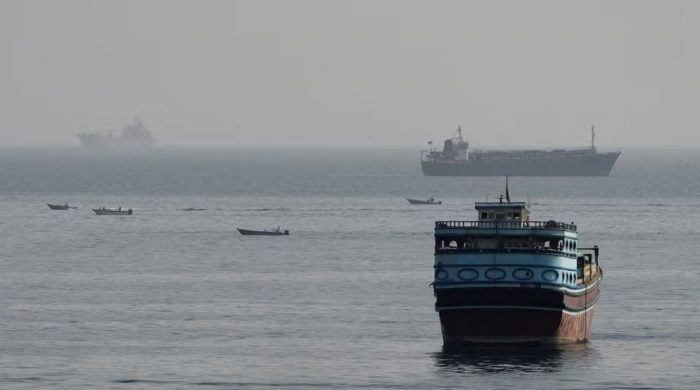
Approximately 20 percent of the world’s oil supply passes through the Strait of Hormuz. Any disruption whether through naval confrontation, mining, or strategic signaling—would immediately reverberate across global markets.
Oil prices have already surged in response to the opening strikes. Analysts warn that sustained disruption could push prices well above $100 per barrel, potentially reaching $150 in worst-case scenarios. Such spikes would not only impact energy-importing economies in Asia and Europe but would also intensify inflationary pressures globally.
For developing economies already grappling with currency volatility and debt burdens, the consequences could be severe. Energy-driven inflation has historically triggered political instability. The ripple effects would extend far beyond the Gulf.
The Political Messaging: Regime Pressure or Strategic Containment?
Perhaps the most consequential element of this crisis is not military, but rhetorical.
Statements from US and Israeli leaders have included calls for the Iranian people to “seize control of their destiny.” Such language suggests that the strategic aim may extend beyond military degradation toward political transformation.
If regime destabilization becomes an implicit or explicit objective, the conflict shifts from limited military containment to systemic confrontation. History shows that wars framed around political transformation tend to expand in duration and complexity.
Iran’s leadership, for its part, frames the confrontation as external aggression, reinforcing domestic cohesion and regional alliances. The longer the conflict persists, the greater the risk that nationalist sentiment will outweigh internal dissent.
Global Power Dynamics: The Wider Chessboard
This crisis unfolds within a broader transformation of global power structures.
China relies heavily on Gulf energy supplies. Any prolonged disruption threatens its economic stability and Belt and Road investments. Beijing may not intervene militarily, but it will seek to protect its interests diplomatically and economically.
Russia, meanwhile, views Middle Eastern instability through the lens of strategic leverage. Higher oil prices benefit Moscow’s revenue streams. At the same time, expanded US military engagement in the region may serve broader Russian geopolitical calculations.
Europe faces a different dilemma. Already managing energy diversification efforts, European economies remain vulnerable to price shocks. Diplomatic engagement, likely through backchannels, may intensify as European leaders seek de-escalation.
Thus, while the battlefield is regional, the implications are undeniably global.
Three Possible Pathways Forward
The coming weeks will likely determine which of three strategic trajectories unfolds.
1. Controlled Escalation and Negotiated Pause
In this scenario, both sides exchange calibrated strikes but avoid crossing critical thresholds such as major civilian infrastructure or energy facilities. Backchannel diplomacy possibly mediated by Oman, Qatar, or European actors reopens space for limited de-escalation. Oil prices stabilize, and a new deterrence equilibrium emerges.
This outcome requires disciplined restraint on all sides.
2. Sustained Regional Conflict
Here, tit-for-tat strikes continue. Proxy groups become more active. Maritime risks increase. Airspace closures persist. The economic strain intensifies, particularly in oil-importing nations. The conflict remains regionally contained but prolonged, reshaping alliances and defense postures.
This scenario appears plausible if neither side achieves decisive objectives quickly.
3. Strategic Conflagration
The most dangerous path involves direct attacks on energy infrastructure or full proxy mobilization across multiple fronts. US troop deployments expand. Regional actors are drawn in. Global markets react sharply. The conflict’s duration stretches into months or longer.
This trajectory would carry profound economic and humanitarian consequences.
Lessons from History
The Middle East has witnessed repeated cycles of escalation and uneasy stabilization. From the Iran-Iraq War to the Iraq invasion, from Lebanon conflicts to Gulf crises, regional wars rarely unfold as initially planned.
What begins as a limited strike can evolve through miscalculation, misinterpretation, or domestic political pressures. Escalation is often less a matter of intention than of momentum.
That is the danger today.
Military planners may calculate in terms of targets and objectives, but geopolitical systems operate through perception and reaction. One misjudged strike, one unintended casualty event, or one symbolic target could rapidly widen the conflict.
The Human Dimension
Lost amid strategic analysis is the human reality.
Airspace closures have already disrupted civilian travel across multiple countries. Residents in targeted regions face uncertainty and fear. Families in Gulf states hosting foreign military installations now confront the reality of becoming potential targets.
Conflict narratives often center on state actors and military capabilities. Yet the long-term scars of regional wars are borne by civilians—through economic hardship, displacement, and social fragmentation.
Preventing prolonged escalation is not merely a strategic necessity. It is a humanitarian imperative.
A Structural Turning Point
Operation Epic Fury may ultimately be remembered not only for its immediate impact but for what it represents: a structural turning point in Middle Eastern security architecture.
For years, regional stability relied on indirect confrontation and calibrated ambiguity. That framework has now fractured. Whether it is replaced by renewed deterrence, negotiated security guarantees, or prolonged instability remains uncertain.
One reality is clear: the Middle East stands at the edge of a transformation whose consequences will shape global energy markets, alliance structures, and geopolitical alignments for years to come.
The coming days demand not only military calculation but strategic wisdom.
Escalation is easy. Stabilization is hard.
History will judge which path prevails.