It’s not the immigrants, stupid

- Update Time : Saturday, October 24, 2026
- 12 Time
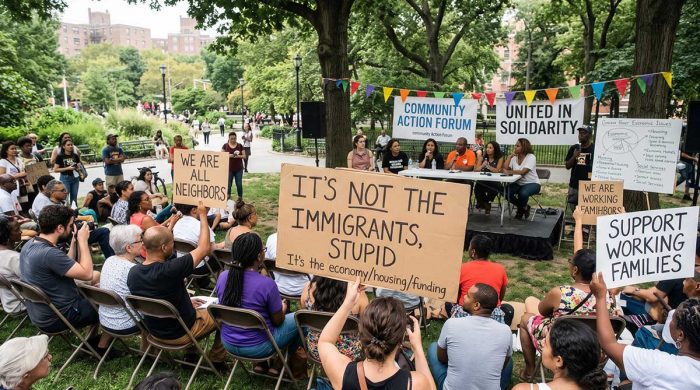
IT’S October 2026. In Limoges, a 19th-century city hall is burning. In Milan, masked teens dodge riot police near the Duomo. In Madrid, tents cover the Puerta del Sol. In Tirana, students throw stones at what they call a corrupt government.
Meanwhile, in Washington, an 80-year-old in a red tie thinks he knows the answer. ‘What’s happening in France has to do with immigration,’ Donald Trump tells reporters. ‘Not schools, not anything.’ He says he warned Macron ‘a long time ago’ to ‘close up your borders.’
Not schools? After thirty years of grading exams, I’d mark that answer in red: ‘Did you read the question?’ The French uprising actually started in a school. And the people setting bins on fire didn’t just arrive last Tuesday by boat. They are the continent’s own children.
II
IN MAY, India’s chief justice called some unemployed young activists ‘cockroaches.’ The next day, those activists started the Cockroach Janta Party (CJP), a parody of the ruling BJP, with the tagline ‘Voice of the Lazy & Unemployed.’ Exam leaks, jobless graduates and questionable voter rolls brought thousands to Delhi’s Jantar Mantar. By July, the education minister had resigned. Are these cockroaches immigrants? No. They’re Indian kids with Indian degrees but no Indian jobs.
In 2022, Sri Lanka’s government fell. In 2024, Bangladesh’s prime minister fled by helicopter after fifteen years in power. That same year, Kenya scrapped a finance bill. In 2025, Nepal’s government collapsed in just a week. Then unrest spread to Madagascar, Morocco, Peru and Bulgaria. Now, in one autumn, France, Italy, Spain, Portugal, Belgium, Albania and Poland are all facing turmoil. Some call it the Euro Spring, arriving in October, which seems fitting for a generation known for being late.
So who exactly moved to Kathmandu? Did a wave of Norwegians suddenly show up in Dhaka?
The protests in France began on September 21 at a high school in Créteil, sparked by teacher shortages, overcrowded classes, run-down buildings and classrooms hitting 40°C. Universities, unions, and the Yellow Vests joined in. On October 17, 550,000 people marched, mostly peacefully. Then came a violent weekend: about 2,500 people were detained and 3,000 shops were damaged. Court reports mention ultra-left ‘black bloc’ activists known to police, along with opportunists who had no record or politics. Macron blamed the far left. The French officials with the arrest files did not blame immigrants.
In Milan, 271 people were arrested after cost-of-living protests turned violent, and most were minors. Giorgia Meloni, known for her tough stance on migration, called them ‘thugs,’ not migrants. In Spain, the minimum wage is about €1,221 a month, while the average rent for a modest flat is about €1,130. It’s easy to see why people are living in tents. In Portugal, house prices have more than doubled since 2017. Belgian students are protesting tuition hikes. In Albania, students want Edi Rama out because of corruption and a resort linked to Kushner. There’s irony everywhere this year.
The spark is local. The fuel is local. The young people starting the fires are local.
After the 2023 riots over Nahel Merzouk’s killing, a French Senate inquiry found that about 71 per cent of those arrested were French nationals, with an average age of about 23, and nearly 60 per cent were first-time offenders. Even interior minister Gérald Darmanin noted ‘lots of Kevins and Matteos.’ Yes, many are immigrants’ grandchildren. But a girl born in Marseille isn’t an immigrant. She’s angry about French schools, French rents and French jobs, and calling her a foreigner is part of what makes her angry. As Karl Mannheim once argued, generations are shaped by shared formative experiences. For this generation, those are a pandemic, a locked housing market and a phone flaunting the 1 per cent.
III
RAPID immigration can strain housing, schools and clinics, especially when governments don’t keep up. Integration hasn’t worked in some suburbs, and foreign nationals appear more in some crime statistics, though the difference shrinks when you factor in age and poverty. Wanting secure borders isn’t racist. But none of this explains why a French-born student in Créteil blocked her own school because of 36-pupil classes.
Why do politicians keep blaming immigrants? Because it’s easy. Fixing schools costs billions, but blaming foreigners only takes a tweet. Many migrants can’t vote, so there’s no risk in insulting them. It distracts from real issues like education budgets and housing policy. And it’s simple enough to fit on a baseball cap: ‘They came, and now things are bad.’
Gordon Allport showed that frustrated people often take out their anger on weaker, visible groups. Stanley Cohen explained how ‘folk devils’ are created through moral panic and now algorithms make these panics spread even faster. Norris and Inglehart’s Cultural Backlash shows that older voters who feel left behind are the main supporters of anti-immigrant populism and they vote more than young people. JD Vance blamed liberals for ‘importing the Third World.’ The old explanation is easier to accept than the hard truth: we failed our own children.
In the 1850s, the ‘Know-Nothing’ party called Irish Catholics drunken criminals loyal to the Pope. Their great-grandson became President Kennedy. In 1882, the Chinese Exclusion Act banned an entire nationality for ‘stealing jobs’; it was repealed in 1943 as an embarrassment. In 1924, Italians, Jews and Poles were declared ‘unassimilable.’ Their children caught up with native-born Americans within a generation.
In 1938, at the Évian Conference, 32 nations almost unanimously refused more Jewish refugees, and we know where that road led. In 1968, Enoch Powell predicted ‘rivers of blood.’ No race war came; migrants staffed the NHS, the buses and eventually the cabinet. In 1972, Idi Amin expelled Uganda’s South Asians. The economy collapsed, the 27,000 who settled in Britain prospered, and by the 1990s Uganda was inviting them back.
IV
FRANCE’S 2005 riots were blamed on immigration and even ‘polygamy.’ Most of those arrested were French-born teenagers angry about joblessness and policing. After the 2011 London riots, historian David Starkey said ‘the whites have become black,’ yet research pointed to poverty and policing. Brexit blamed EU migrants, then led to lorry-driver shortages, unpicked crops and longer NHS queues. Covid became the ‘China virus’ and anti-Asian attacks followed. In 2024, a fake name, ‘Ali Al-Shakati,’ turned a Cardiff-born attacker in Southport into a Muslim asylum seeker, and a mosque was attacked. Haitians in Springfield, Ohio, were accused of ‘eating the dogs,’ and the town got bomb threats.
But what do the data really say? Research by Abramitzky and others in 2024 found that, across more than 150 years of US census data, immigrants are about 60 per cent less likely to be incarcerated than US-born people. The OECD’s 2021 Report found that immigrants’ taxes exceed what governments spend on their health, education and social protection. And David Card’s Nobel-recognised study of the Mariel boatlift, when 125,000 Cubans arrived in Miami, found no harm to local wages.
V
WHY does blaming others turn deadly? Because words can become bullets. The Christchurch killer, who murdered 51 people in 2019, called his manifesto ‘The Great Replacement.’ The El Paso shooter wrote about a ‘Hispanic invasion.’ Hanau happened in 2020. Blame isn’t just talk. Sometimes it leads to violence.
I have to say, a wrong diagnosis leads to the wrong cure. Even if you closed every border tomorrow, the classroom in Créteil would still have 36 pupils. If you tell a 19-year-old that her anger about rent is ‘really about immigration,’ she’ll realise adults aren’t listening. If you treat French-born grandchildren as foreigners for long enough, as Robert Merton’s self-fulfilling prophecy suggests, some will stop feeling French.
Europe’s fertility rate is about 1.4 children per woman. Hospitals, farms and care homes rely on migrant workers, and pensions depend on migrant taxes. Demanding to ‘close the borders’ is like biting the hand that pays for your retirement. Skilled people will go to places like Toronto or Dubai. Emergency powers, like Italy’s 500 deployed soldiers, are rarely temporary. And you can say goodbye to your kebab, your curry and half the French team that won the 2018 World Cup.
In 1992, Bill Clinton’s campaign strategist James Carville put up a sign that said, ‘The economy, stupid.’ Europe needs a new version: ‘It’s the broken promise, stupid.’ Punish those who throw bricks, but don’t mix them up with the people you want to blame.
A society that blames newcomers for its own children’s anger is like a man blaming his neighbour’s dog for the hole in his roof. He can yell at the dog all through the rainy season, but he’ll still get wet.
Dr Helal Mohiuddin is director of research and communication at the Conflict and Resilience Research Institute, Canada and a sociology professor at Mayville State University, North Dakota, USA.