Iran, Israel trade strikes as US mulls Gulf ground assaults

- Update Time : Tuesday, March 31, 2026
- 28 Time

Israel and Iran exchanged more missile fire Monday as concerns that the United States might escalate the Middle East conflict by launching ground raids against the Islamic republic’s Gulf islands sent oil prices soaring.
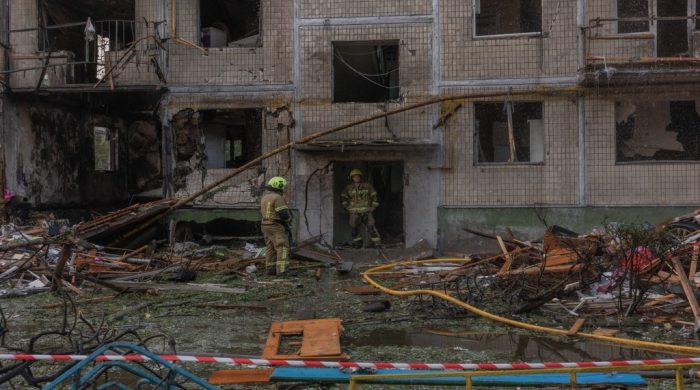
Iran also launched new strikes on a water desalination plant in Kuwait, after its own electrical facilities came under attack at the weekend, cutting power to parts of Tehran. Saudi Arabia said it had intercepted five ballistic missiles.
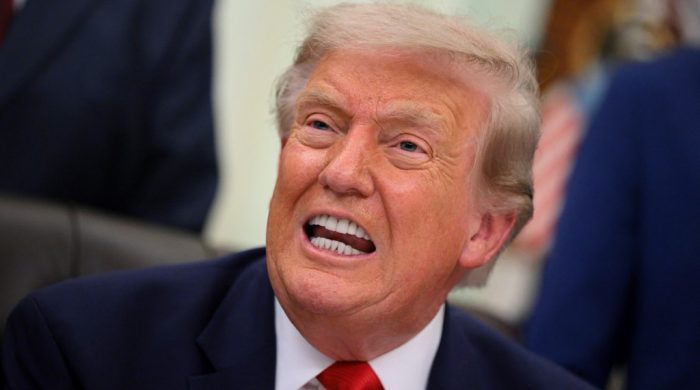
US president Donald Trump threatened Monday to destroy Iran’s crude export hub of Kharg Island, along with its oil wells and power plants, unless Tehran quickly accepted a peace deal, compounding fears that have already sent energy prices soaring.
The risk of further escalation, including a potential US ground operation to seize Kharg Island, is sending tremors through financial markets, as well as neighbouring Gulf countries.
In a post on his Truth Social network, Trump expressed confidence that a negotiated settlement would soon be reached, adding that the United States was in ‘serious discussions’ with ‘a more reasonable regime’ in Tehran.
But he warned that if a deal was not struck — including to reopen the Strait of Hormuz shipping lane — US forces would destroy ‘all of their Electric Generating Plants, Oil Wells and Kharg Island (and possibly all desalinisation plants!).’
A spokesman for the Iranian foreign ministry said Iran was not seeking nuclear weapons but the issue of whether to remain part of the non-proliferation treaty was under review in parliament.
The war has inflicted havoc on the global economy, with fuel shortages across much of Asia, stock markets in turmoil, and oil prices soaring — the main US benchmark rising past $100 a barrel and UK-traded Brent up sharply and trading close to $117.
With economies already reeling from recent energy price rises, and Trump openly mulling a military operation to seize Iran’s main export terminal, market experts warned that any US ground operation or wider Iranian retaliation could send oil prices to historic highs.
‘If the US were to launch a ground invasion of Iran, possibly taking the Kharg Island, or if Tehran were to intensify retaliatory strikes on energy infrastructure or fully close the Strait, projections of $200 bbl oil will not be an otherworldly supposition anymore,’ analyst Tamas Varga of PVM Energy said.
Oil has never cost more than $150 a barrel, last hitting record highs during the July 2008 commodity boom, but the global benchmark Brent crude has risen in price by nearly 60 per cent since the start of the war, and the US standard WTI by more than half.
Israel’s military said it had struck the Imam Hossein University in Tehran run by Iran’s Revolutionary Guards, claiming the institution was used for advanced weapons research.
As Israel pressed its offensive against Iran-backed Hezbollah in south Lebanon — hitting, an official said, an army checkpoint and killing at least one Lebanese soldier — Indonesia confirmed Monday one of its peacekeepers was killed after the UN force said a projectile hit one of its positions.
Separately, the Israeli military said a soldier was killed on Sunday in combat in southern Lebanon, bringing to six the number of troops killed since fighting with Hezbollah began this month.
An Israeli airstrike on a residential building near Beirut’s southern suburbs killed at least three Hezbollah members, a security source said.
The strike ‘targeted an office used by Hezbollah, killing three members and seriously wounding three others’, while the Israeli army, for its part, announced it had ‘begun striking Hezbollah terrorist infrastructures in Beirut’.
On the ground there appeared to be no let-up in hostilities. Israel said its air defence batteries responded to ‘missiles launched from Iran’, after earlier announcing it was striking ‘terror regime military infrastructure across Tehran’.
On the diplomatic front, Pakistan — acting as a go-between for Washington and Tehran — hosted foreign ministers from Saudi Arabia, Turkey and Egypt in Islamabad for talks on the crisis.
Pakistan foreign minister Ishaq Dar said the visiting diplomats had discussed how to ‘bring an early and permanent end to the war.’
He said Iran and the United States had expressed ‘confidence in Pakistan to facilitate the talks’ and that he had spoken to his Chinese counterpart Wang Yi as well as UN secretary-general Antonio Guterres and other foreign ministers who also backed the idea.
Nevertheless, the speaker of Iran’s parliament has accused Washington of using diplomacy as a smoke screen.
Despite making diplomatic overtures, including proposing a 15-point plan to end the war, the United States has also been sending more military assets into the region, including an amphibious assault ship carrying 3,500 Marines.
Iran confirmed that an Israeli strike last week had killed the commander of the naval force of the Revolutionary Guards, Alireza Tangsiri, who Israel had declared was the officer directly responsible for Tehran’s operation to block the Strait of Hormuz to maritime traffic.
The weeks of strikes have also taken a heavy toll on ordinary people in Iran.
‘I miss a peaceful night’s sleep,’ an artist in Tehran said, saying night-time strikes were ‘so intense it felt like all of Tehran was shaking’.
The war has escalated into a regional conflagration as Tehran retaliates with attacks on Gulf states and virtually seals the critical Strait of Hormuz oil shipping lane.
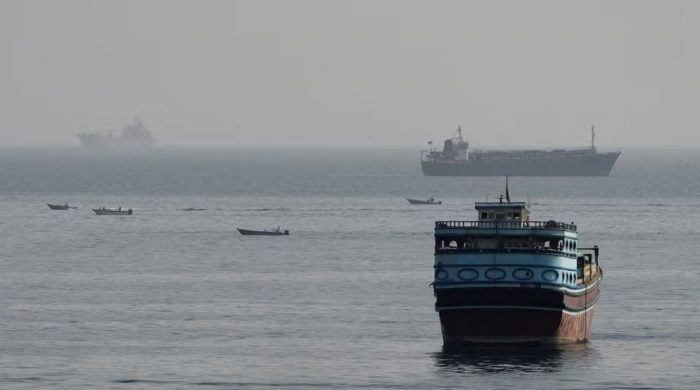
Iran says it has closed the Strait of Hormuz, which previously accounted for a quarter of the world’s seaborne oil trade and a fifth of liquefied natural gas shipments, to vessels from hostile nations.
Rockets fired overnight targeted an Iraqi military base inside the Baghdad airport complex, which also houses a support centre for the US embassy, Iraq’s defence ministry said.
Iran said its envoy to Lebanon would remain, despite being ordered out of the country.
‘Our ambassador… will continue his work as Iran’s ambassador in Beirut and remains present there,’ foreign ministry spokesman Esmaeil Baqaei told a press briefing, adding that the embassy in Beirut remains ‘operational’.
Lebanon’s foreign ministry accused him of making statements ‘interfering in Lebanon’s internal politics’.
The American University of Armenia said it was moving all classes online over Iranian threats to target US universities in the region.
Iran made the warning after saying US-Israeli strikes had destroyed two Iranian universities.
Syria’s military said a large-scale drone attack targeted its bases near the border with Iraq, in the latest such incident since the outbreak of the war.