Govt faces reform challenges amid uncertainty

- Update Time : Sunday, May 24, 2026
- 28 Time
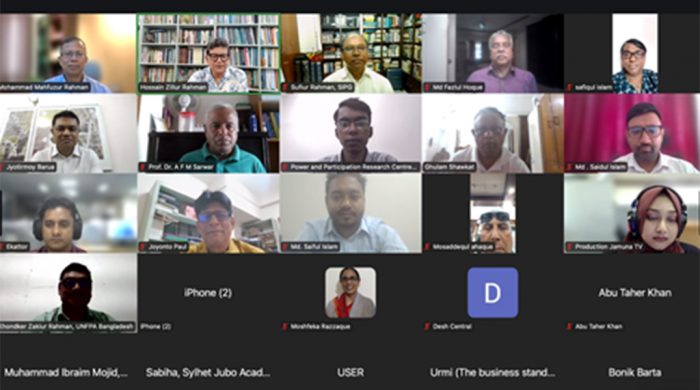
Experts on Saturday said that the early months of the new government have generated expectations of change, although the reform agenda remains constrained by long-standing institutional weaknesses and ongoing geopolitical pressures.
They also said the government should be given more time to stabilise and demonstrate clearer policy direction, noting that three months is too short for a conclusive assessment.
Regarding the upcoming national budget, the experts stressed the need for realistic fiscal planning, warning against the persistent tendency to set revenue and expenditure targets that exceed the economy’s capacity, ultimately creating implementation gaps.
They were speaking on Saturday at a webinar titled ‘Three Months of the New Government: A Preliminary Review’, organised by the Power and Participation Research Centre as part of its Ajker Agenda series.
The experts noted that Bangladesh›s evolving policy landscape has sparked broader discussion about how the BNP-led government is handling institutional changes, market stability, and its regional position, raising concerns about the clarity and focus of its reform plans.
At the webinar, Fazlul Haque, former president of the Bangladesh Knitwear Manufacturers and Exporters Association, said the government had inherited accumulated economic pressures alongside ongoing external shocks, including the Middle East crisis.
He said these challenges had heightened the need for a more contractionary and decisive budget, particularly at a time when private sector credit growth is weak, exports are under pressure, and the investment climate remains fragile.
‘There is confidence in the government, but it needs more time to stabilise and demonstrate clearer policy direction. Three months is too short a period for a conclusive assessment,’ he said.
Referring to the upcoming national budget, he stressed the importance of realism in fiscal planning, noting that revenue and expenditure targets have historically exceeded implementation capacity, creating persistent gaps and pressure on development spending.
‘The next budget should adopt more realistic revenue targets and a more practical tax framework. Business-friendly, predictable and stable tax and VAT policies are essential to maintaining the competitiveness of export-oriented industries,’ he added.
He also warned that excessive government borrowing from the banking sector could further squeeze private sector credit, a pressure already being felt in manufacturing, including the garment industry.
He called for reduced tax harassment and stronger policy support for businesses.
Supreme Court advocate Barrister Jyotirmoy Barua said core structural weaknesses—particularly the politicisation of state institutions and entrenched administrative and judicial shortcomings—persisted despite the change in government.
He said long-standing deficits in accountability across the administration, police, judiciary, and education sectors continue to undermine economic stability, investment climates, and overall governance.
‘One of the key weaknesses of Bangladesh’s economic and democratic framework lies in the politicisation of institutions,’ he said, adding that mob violence and weak law and order remain serious concerns.
Mohammad Mahfuzur Rahman, chairman of the Osmani Centre for Peace and Security Studies, said Bangladesh’s strategic environment is increasingly shaped by intensifying global power rivalries and immediate regional dynamics.
He pointed to competing influences from India and China, a deepening US presence in the Bay of Bengal, and the growing securitisation of shared resources, such as water, along with the unresolved Rohingya crisis and uneven international burdensharing.
He said Bangladesh must adopt a strategy of ‘adversarial cooperation’ to balance complex regional relationships and safeguard national interests.
Ambassador Sufiur Rahman said more profound engagement with ASEAN remains strategically important for long-term economic and diplomatic gains, while cautioning that China’s regional dominance continues to shape Bangladesh’s policy space.
He stressed the need to build on past experiences to strengthen future policy direction.
PPRC chair Hossain Zillur Rahman said Bangladesh’s civic discourse must move beyond emotion-driven narratives to evidence-based analysis and constructive public engagement.