Banks’ dollar holdings keep falling

- Update Time : Monday, June 22, 2026
- 24 Time
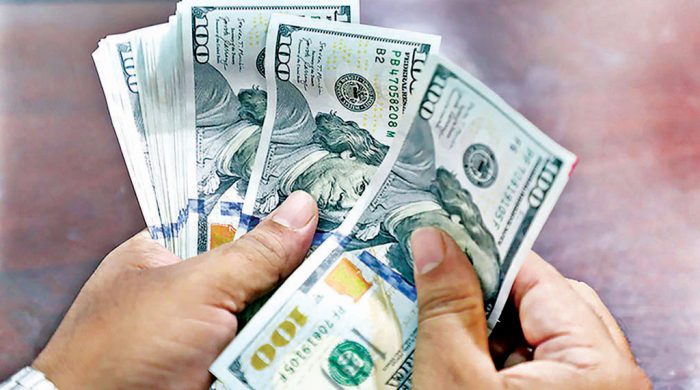
Commercial banks’ foreign currency holdings declined in May from a year earlier despite record remittance inflows and improved stability in the foreign exchange market, as Bangladesh Bank continued to absorb dollars from banks while import payments remained high.
Data from Bangladesh Bank showed that banks’ gross foreign currency holdings stood at $4.48 billion at the end of May, down from $4.97 billion a year earlier.
The decline came even though banks’ dollar liquidity improved from the beginning of the year.
Holdings rose to $4.48 billion in May from $3.57 billion in January, which was the lowest level since July 2018 when banks held around $3.39 billion in foreign currency balances.
The main reason behind the decline was the central bank’s continued dollar purchases from commercial banks.
Since July 2025, Bangladesh Bank has bought more than $6 billion from the market through auctions at rates ranging between Tk 121 and Tk 122.75 per dollar.
The central bank said that the purchases are aimed at rebuilding foreign exchange reserves and maintaining exchange rate stability.
Between FY2021 and FY2025, Bangladesh Bank had sold more than $25 billion from reserves to meet import payment pressures.
With remittance inflows recovering and dollar supply improving, the regulator reversed its position and resumed large-scale purchases during the current fiscal year.
Bankers said that the central bank’s absorption of excess dollars significantly reduced banks’ foreign currency balances.
Many banks also preferred selling surplus dollars to the central bank because demand for foreign currency loans remained weak amid sluggish private-sector investment.
At the same time, import payments continued to exert pressure on dollar liquidity.
Bangladesh Bank data showed import settlement reached $58.2 billion during July-April of FY2025-26, up from $54.8 billion in the corresponding period of the previous fiscal year.
However, Export earnings dropped to $36.01 billion during the period, slightly lower than $36.5 billion a year earlier, widening the trade gap and increasing demand for foreign currency.
Despite these pressures, remittance inflows continued to support the foreign exchange market.
Bangladesh received $3.42 billion in remittances in May, up from $2.96 billion in the same month of 2025.
The strong trend followed inflows of $3.11 billion in January and $3.22 billion in December.
In the first 11 months of FY2025-26, remittances rose to $32.75 billion from $27.6 billion a year earlier, reflecting stronger use of formal banking channels, a narrower gap between official and informal exchange rates, and a more market-based exchange rate regime.
Economists said that improved remittance inflows have eased pressure on the taka and enabled Bangladesh Bank to rebuild reserves without disrupting market stability.
However, they noted that sustained reserve growth will depend on stronger export performance and a recovery in private investment.
As of June 17, Bangladesh’s foreign exchange reserves stood at $31.23 billion under the IMF’s BPM6 methodology, while gross reserves were $35.8 billion under the traditional calculation, indicating a significant improvement from a year earlier when reserves were under pressure from high import costs and external payment obligations.