Jaya Barman’s journey through folk music

- Update Time : Friday, August 7, 2026
- 0 Time

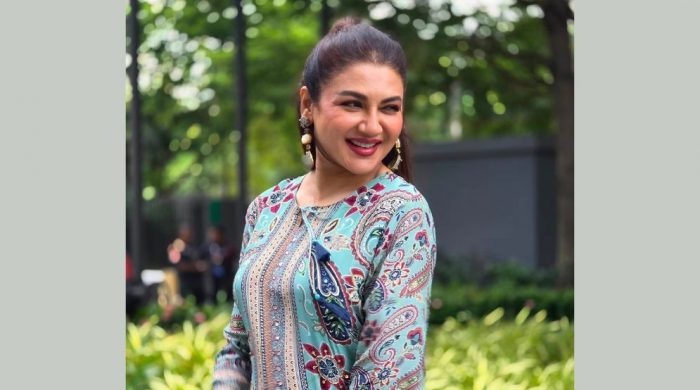
For folk singer Jaya Barman, distance has never diminished her connection to her roots. Although she has built her life in Paris, thousands of miles away from Bangladesh, her heart continues to beat to the rhythm of Bengali songs. Surrounded by a different language and culture, she has remained steadfast in preserving and promoting the rich musical heritage of Bengal, with a dream of introducing Bengali folk music to the audience around the world.
Jaya recently began an important new chapter in her musical journey with a visit to Bangladesh. During her visit, Jaya recorded her first original duet with renowned Bangladeshi musician Samarjit Roy. The song, written by Sanjay Roy, has been composed and arranged by Samarjit Roy. Recording has already been completed, and work on the music video is currently underway.
Music has been part of Jaya’s life since childhood. Her musical journey began under the guidance of her mother, Pratima Barman, who introduced her to the world of songs. As her passion grew, she received formal training in Nazrul Sangeet from renowned artiste Neelima Sen. She later pursued classical music under distinguished Indian gurus Shyam Sundar Goswami and Priyanka Maitra, whose teachings helped shape her vocal technique and artistic expression.
Although she now lives in France, Jaya’s family roots remain deeply embedded in Bangladesh. Her father’s ancestral home is in Narayanganj, while her mother’s family comes from Narsingdi.
Among all musical genres, folk songs occupy a special place in Jaya’s heart. She credits her mentor, Neelima Sen, for nurturing this love and inspiring her to explore the richness of Bengal’s folk traditions. According to Jaya, every folk song carries the stories of ordinary people, the history of the land and the cultural values that define Bengali identity. Performing these songs on international stages, she believes, is both an honour and a responsibility.
Jaya draws inspiration from legendary singers Lata Mangeshkar, Sabina Yasmin and Runa Laila, whose artistry, emotional depth and stage presence continue to influence her. She also finds profound inspiration in the philosophy of Fakir Lalon Shah, whose teachings have helped her understand that music is not merely about melody but about expressing humanity and spirituality.
One of Jaya’s greatest concerns is that many young Bengalis growing up abroad are gradually losing touch with their language and cultural heritage. She believes Bengali music can bridge that gap if it is presented through contemporary arrangements, high-quality production and digital platforms that appeal to younger audience. At the same time, she stresses that the foundation of cultural identity must begin at home through the practice of Bengali language, music and traditions within families.