Power cuts, road chaos mar rural Eid

- Update Time : Wednesday, June 3, 2026
- 30 Time
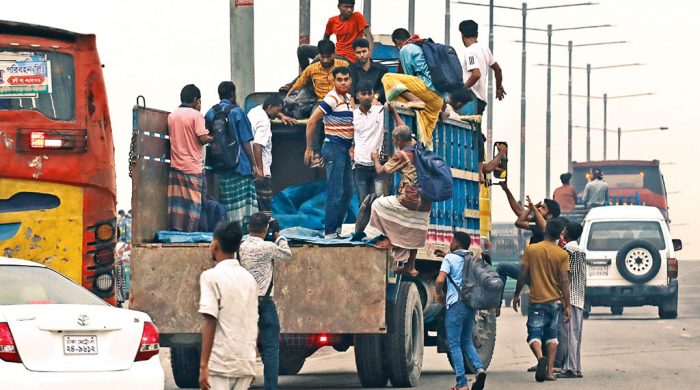
EID-UL-AZHA was supposed to be a time of festive reunion. For a large majority in Bangladesh, it was a time of real suffering, discomfort, and frustration — long hours of power outages, delays in highways, and so on. Public suffering shows that the people in charge of transportation and electricity were a failure in their responsibilities. What was supposed to be an occasion of festivity and joy turned out to be an occasion of public suffering.
People from Khulna, Barishal, Rangpur to Noakhali took to social media to report their struggle without electricity for as long as 10–15 hours a day. As people travelled from one district to another to spend with their families, they had to endure the chaos on the road or railways. Without a shade, access to safe water or toilet, people waited for their buses or trains. At times, they have suffered through the day stuck in traffic jam. Saw vehicles break down without access to immediate assistance. Public experience around Eid makes visible the problems within the system. These were incidental or story of bad luck, but systemic and common experience of people.
Yet these challenges are not without solutions. Electricity demand in Bangladesh rises sharply between April and June due to intense heat, making supply particularly strained during this period. Although the country’s installed generation capacity now exceeds 25,000MW, the main bottleneck lies in the transmission and distribution system rather than generation. Significant amounts of electricity are lost during transmission and delivery, particularly in reaching consumers across different parts of the country. Recent estimates indicate that Bangladesh’s power system still experiences around 10 per cent transmission and distribution losses, well above the global benchmark of 6–8 per cent, reflecting persistent inefficiencies in the grid. Aging infrastructure, including overloaded transformers and outdated feeders, frequently fails under high temperature and peak demand conditions. While authorities point to rising demand and distribution constraints as explanations, these factors do not fully justify the persistent weaknesses in the electricity distribution network, which remains the critical gap in ensuring reliable access to power.
The transportation network in Bangladesh faces pressure during Eid is no new news either. According to typical mobility patterns in Bangladesh during recent years, several million people travel from Dhaka to their home districts for Eid, with estimates generally ranging between 5 and 10 million over the Eid period. Yet, the concerned authorities appeared unprepared and their steps short fall on ensuring safety for passengers. The Road Safety Foundation reported at least 274 people killed and over 1,500 injured in 342 road accidents during the 10-day Eid travel period in March. Overcrowded buses, poor vehicle maintenance, and weak emergency response systems are among the key manifestations of administrative failures in Bangladesh.
These images should serve as a clear signal to policymakers in Bangladesh that responsibility must be defined and concrete solutions developed to address the problems in the electricity and transportation sectors.
First, the government needs to conduct an audit of the transport system to identify existing fault lines, particularly in view of the pressure during Eid. This includes examining the reasons behind the failure to enforce transport regulations at terminals and on highways in Bangladesh.
Second, the government should consider immediate mitigation measures to reduce the suffering caused by power outages. This could include ensuring emergency access to generators and solar batteries, distributed across towns and community centers during peak demand periods. District administrations should also ensure the availability of shaded areas, clean drinking water, and basic healthcare facilities at transport terminals across Bangladesh.
Third, increase investment in electricity distribution and transport infrastructure. Upgrading transformers, segregating feeder lines, and introducing automated fault-location systems would help reduce and prevent blackouts. In the transport sector, improved road maintenance, stronger vehicle regulation, and better terminal services would ease traffic congestion during holiday periods. Funding from development agencies and government budgets should be directed toward projects with clear, measurable outcomes and effective monitoring mechanisms.
Fourth, put in place demand management and contingency planning. Utility companies should treat scheduled power cuts as a last resort, only after all mitigation measures have been exhausted. Authorities should issue travel advisories in stages, encourage flexible work and travel schedules around major holidays, and run public information campaigns on energy conservation during peak periods.
Fifth, strengthen government oversight and transparency. Civil society participation in district-level energy and transport committees can help monitor service quality and identify lapses. Utilities and transport authorities should also publish outage maps and analyses of disruptions to rebuild public trust and improve accountability.
The wider implication is clear: development that prioritises gains at the center, such as expanding generation capacity at large plants or building new roads, while neglecting last-mile delivery and service is failing people. Rural districts cannot be treated as an afterthought. Access to electricity and safe, dignified transport are not luxuries but essential public goods necessary for collective health and prosperity.
The double failures in infrastructure management during the recent Eid period should not be dismissed. Instead, they must catalyse stronger commitments to transparency, targeted mitigation for affected populations, increased investment in rural power and transport networks, robust contingency planning, and greater oversight of local operations. Only then can future holiday seasons fulfill their promise as periods of rest and celebration rather than endurance.
In the meantime, what is required from government and service providers is both a clear explanation of these failures and a concrete road map for how meaningful change will be achieved.
Ahammad Foyez is managing editor at New Age.