A Dissection of an Interview

- Update Time : Sunday, May 24, 2026
- 33 Time
Former Prime Minister Sheikh Hasina, currently living in self-imposed exile in India, has said in an email interview with Hindustan Times that she will return to Bangladesh “very soon”. Bangladesh, she said, is “her country, her father’s country”, and she will certainly come back whenever she chooses. However, her return, according to her, depends on the restoration of a “democratic environment” in the country.
Her remarks evoke a line from 18th-century Bengali poet Bharatchandra Ray: “Stones float on water, monkeys sing songs — even when seen, they are hard to believe.” Considering the lessons in democracy she and her party delivered to the nation from 2009 until July 2024, the word “democracy” hardly suits the lips of either her or her party colleagues.
If she wishes to return, she certainly can. She has returned before. Ironically, she first came back to Bangladesh on 17 May 1981 during the rule of Ziaur Rahman — a regime she frequently describes as “undemocratic”. That return, she recalled in the interview, remains “an emotional and memorable day” in her life. Yet two more memorable 17 Mays have passed without her returning home.
She fears that under the current BNP administration, Bangladesh could once again witness the “dark days” experienced during the BNP-Jamaat coalition government between 2001 and 2006. The entrenched belief within the Awami League mindset — that Bangladesh enters a “golden age” only under Awami League rule, while every other government leads the country into darkness, jeopardising independence, freedom of speech and the rule of law — remains one of the principal obstacles to restoring genuine democracy in Bangladesh.
She does not consider her absence from the country as “silence”. According to her, she is “fighting for the country every moment”, remaining active through diplomatic channels, international legal frameworks and international media platforms. She also alleged that during the interim government’s year-and-a-half tenure, a “silent political genocide” had been carried out against her party. Many Awami League leaders and activists, she claimed, had been forced to flee the country to save their lives and would return once “minimum democratic conditions and the rule of law” were restored.
However, her anticipated return today differs greatly from her return in 1981. After the assassination of her father Sheikh Mujibur Rahman and most of her family members on 15 August 1975, she spent nearly seven years in exile before returning home. At that time, no criminal cases were pending against her.
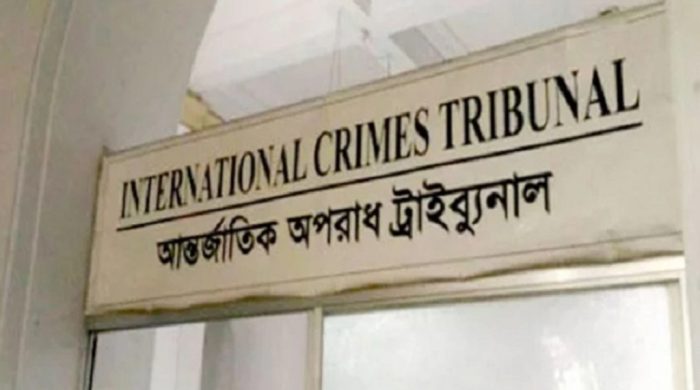
Now the situation is markedly different. The International Crimes Tribunal has sentenced her to death in absentia in a case involving crimes against humanity. Several similar cases are also pending before the tribunal, all of which are non-bailable. Former Home Minister Asaduzzaman Khan Kamal has likewise received a death sentence in another case. Numerous former Awami League ministers, leaders, journalists and intellectuals aligned with the party are currently facing murder charges.
Even if the rule of law is not fully functional, the existing legal framework would require law enforcement agencies to arrest Sheikh Hasina immediately upon her return unless she voluntarily surrenders before the court. The higher judiciary may later review her death sentence and potentially acquit her if legal inconsistencies are found. That remains the legal position.
During the Awami League era, several individuals sentenced to death for crimes against humanity and murder, as well as others serving life sentences for sedition, eventually returned from exile during the interim government period and surrendered before the courts. They were imprisoned, but higher courts later reviewed their convictions and acquitted them.
Additionally, three political leaders who had spent years awaiting execution were eventually freed through judicial review and later won seats in the 13th National Parliamentary Election. They include former BNP ministers Lutfuzzaman Babar and Abdus Salam Pintu, as well as Jamaat-e-Islami leader ATM Azharul Islam.
Sheikh Hasina and other accused Awami League leaders may similarly seek political rehabilitation through the same judicial process. A second possibility also exists. If the BNP government adopts a conciliatory stance, it could withdraw cases filed against Sheikh Hasina, her former ministers, party leaders and loyalists accused of crimes against humanity and murder, thereby paving the way for the Awami League’s political rehabilitation.
A third path would be a dramatic political reversal in favour of the Awami League. There are even rumours that the BNP came to power after assuring the Awami League of political rehabilitation. During the February election, Sheikh Hasina reportedly instructed Awami League supporters to vote for BNP candidates.
Yet politics rarely operates on generosity, particularly in Bangladesh, where political history is rooted more in vengeance than reconciliation. Sheikh Hasina herself repeatedly attacked the Zia family in public. Standing in Parliament, she declared: “Zia is a killer, Khaleda Zia is a killer, Tarique Zia is a killer — they will be tried.”
She denied Ziaur Rahman’s contribution to the Liberation War and even attempted to remove his mausoleum. Three-time Prime Minister Khaleda Zia was evicted from her residence and imprisoned in what critics described as politically motivated cases. Sheikh Hasina also labelled her “pro-Pakistan” and frequently used deeply offensive language against her political rival.
At one point, she mocked Khaleda Zia’s medical treatment and age, despite the latter’s deteriorating health. Her followers often amplified such rhetoric with even greater intensity, seemingly deriving satisfaction from political humiliation.
Some may dismiss these remarks as political theatrics. However, during the Awami League’s uninterrupted 15-and-a-half years in power, thousands of BNP leaders and activists were allegedly killed or disappeared, while hundreds of thousands faced fabricated cases, imprisonment or life on the run in an effort to permanently eliminate the BNP from politics. Had these events simply been forgiven as “things of the past”, Bangladesh might by now have become a political paradise.
Historically, the Awami League has shown little tolerance towards rival political forces capable of challenging its dominance. Many believe the BNP’s earlier leniency towards the Awami League was a mistake it is unlikely to repeat. Furthermore, after what critics describe as three “electoral dramas” staged under Sheikh Hasina’s leadership to cling to power, it appears improbable that a BNP government would easily facilitate the rehabilitation of a party widely accused of authoritarianism.
By transforming electoral democracy into autocratic rule, Sheikh Hasina effectively buried the rule of law she so frequently championed. As head of government, she exercised power with little institutional balance and appointed loyalists to key state positions who seemed more eager to demonstrate personal allegiance than fulfil constitutional responsibilities.
As a result, the People’s Republic of Bangladesh gradually evolved into what many observers described as an all-consuming elected dictatorship, effectively becoming a one-party state under Sheikh Hasina. One political scientist termed such a transformation “democide” — the killing of democracy itself.
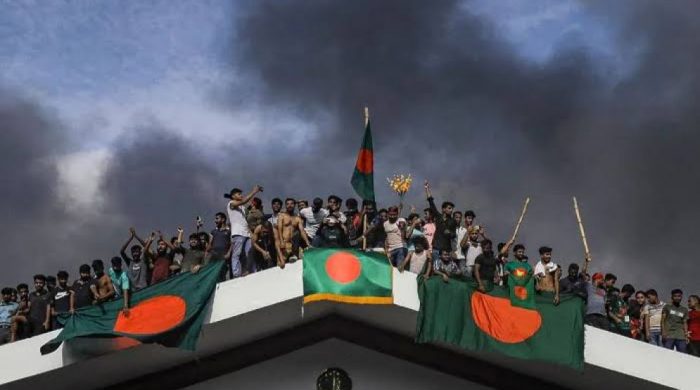
Had the July Revolution of 2024 not occurred, Bangladesh might have descended even further into unchecked abuse of power and impunity. Sheikh Hasina fled the country in haste under extraordinary circumstances to save her life. Since self-preservation is a fundamental human instinct, leaving the country was not inherently wrong. Equally, as a citizen, she retains the right to return to her homeland.
The government has not imposed any formal restriction on her return. If she genuinely respects the rule of law and believes the courts erred in their decisions against her, she retains the legal right to challenge those rulings. Many people continue to wait for both her return and the possibility of her political rehabilitation.
The writer is a senior journalist based in the United States.