Rejuvenating soil fertility

- Update Time : Sunday, May 17, 2026
- 49 Time
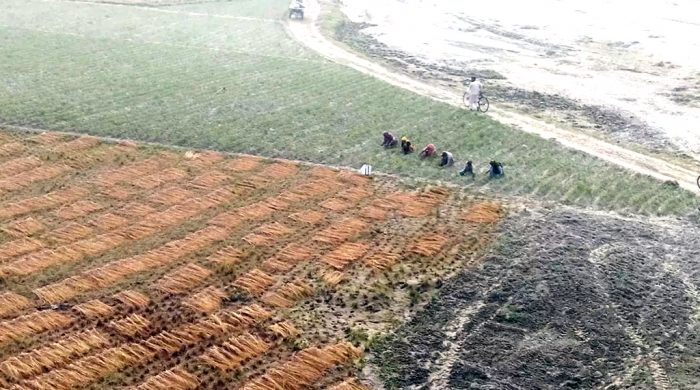
SOIL is not only a medium for crop farming. It is a living and dynamic natural resource that sustains food production, environmental balance and rural livelihood. The prosperity of agriculture has for long depended on the fertility of soils, particularly in vast floodplains, terraces, coastal belts and haor ecosystems where millions of farmers cultivate rice and other crops throughout the year. However, the fertility of these soils is gradually declining because of excessive dependence on chemical fertilisers, the depletion of organic matter, intensive cropping and unsustainable land management practices. Rejuvenating soil fertility has, therefore, become essential for not only maintaining agricultural productivity but also ensuring long-term food security and environmental sustainability.
Bangladesh has achieved remarkable progress in food grain production over the past few decades. The country has transformed itself from a food-deficit nation into one that is nearly self-sufficient in rice production. This success has largely been driven by the expansion of irrigation, the adoption of high-yielding varieties and increased use of chemical fertilisers, particularly urea. While these inputs have significantly boosted crop yields, excessive and imbalanced fertiliser use has created new challenges for soil health.
Many farmers apply large amount of nitrogenous fertilisers hoping for higher yields, often neglecting a balanced application of phosphorus, potassium, sulphur, zinc, boron and organic matter. In many areas, fertiliser use is guided more by habit and perception than by scientific soil testing. As a result, soil gradually loses natural productivity and become deficient in essential nutrients. Continuous cultivation without adequate replenishment of soil organic matter is accelerating this degradation process.
One of the most alarming problems in soil is the decline in organic matter content. Ideally, agricultural soils should contain at least 3–5 per cent organic matter for maintaining good soil structure, nutrient availability, microbial activity and moisture retention. However, in many parts, soil organic matter has fallen below 1.5 per cent while in some intensively cultivated areas, it is even lower. Such depletion reduces the soil’s capacity to hold nutrients and water, making crops increasingly dependent on chemical fertilisers and irrigation.
The situation is further aggravated by intensive cropping systems where two or three crops are grown annually on the same land. Modern agriculture removes large quantities of nutrients from the soil every season. Yet, crop residues are often removed from fields for fuel or livestock feed instead of being incorporated back into the soil. In some areas, residues are even burnt, causing loss of valuable organic carbon and nutrients while contributing to environmental pollution.
Climate change also exerts increasing pressure on soil health. Coastal soils become more saline because of sea-level rise and saline water intrusion. Floods, droughts, river erosion and erratic rainfall patterns affect soil structure and nutrient dynamics across the country. In hilly regions, soil erosion caused by deforestation and unplanned cultivation removes fertile topsoil. The challenges demand a comprehensive strategy for restoring soil fertility while minimising excessive dependence on chemical fertilisers.
Reducing chemical fertiliser use does not mean abandoning fertilisers altogether. Rather, it means promoting balanced, efficient and integrated nutrient management practices that maintain soil health while sustaining crop productivity. Chemical fertilisers remain important for modern agriculture, but their use must be optimised and complemented with organic and biological sources of nutrients.
One of the most effective ways to rejuvenate soils is increasing the addition of organic matter. Farmyard manure, compost, poultry litter, vermicompost, biogas slurry and crop residues can significantly improve soil structure and fertility. Organic matter enhances microbial activity, improves water-holding capacity, increases nutrient retention and reduces nutrient losses. Soils rich in organic matter are also more resilient to drought and climate stress.
Green manuring is another valuable but under-used practice. Crops such as sunhemp can be cultivated and incorporated into the soil before flowering to enrich organic matter and nitrogen content. Sunhemp grows well in many agro-ecological zones and can substantially improve soil structure and fertility within a short period. Green manuring not only reduces the requirement for nitrogen fertilisers but also enhances microbial activity and suppresses weeds. Reviving this traditional practice could contribute significantly to sustainable soil management.
They also play important roles in maintaining soil fertility. Continuous mono-cropping, particularly repeated rice cultivation, depletes specific nutrients and weakens soil health over time. The inclusion of legumes such as mung bean, lentil, cow pea and soya bean in cropping systems can naturally enrich soils through biological nitrogen fixation. Diversified cropping systems improve nutrient cycling, reduce pest incidence, and enhance overall agroecosystem sustainability.
Balanced fertilisation based on soil testing is essential for efficient nutrient management. Farmers often apply fertilisers without knowing the actual nutrient status of the soils. Expanding soil testing facilities and strengthening agricultural extension services can help farmers apply the right fertiliser in the right amount at the right time. Site-specific nutrient management can reduce unnecessary fertiliser use, lower production costs and minimise environmental pollution.
The adoption of modern fertiliser technologies may also help improve nutrient use efficiency. A deep placement of urea briquettes, coated fertilisers, slow-release fertilisers and nano fertilisers are increasingly discussed as methods for reducing nutrient losses while improving crop uptake. Nano fertilisers, in particular, have the potential to increase nutrient efficiency by delivering nutrients in a more precise and controlled manner. Such technologies may contribute to reducing excessive fertiliser consumption while sustaining yields although further research and field validation under Bangladesh conditions remain important.
These fertilisers also deserve greater attention. Beneficial microorganisms can enhance nutrient availability, stimulate root growth, and improve soil biological activity. Rhizobium inoculants for legumes, phosphate-solubilising bacteria, and mycorrhizal fungi may help reduce dependency on synthetic fertilizers in certain cropping systems. Promoting locally adaptable bio-fertiliser technologies could support environmentally friendly agriculture in future.
These practices such as minimum tillage, residue retention and cover cropping can further contribute to soil restoration. Excessive tillage often damages soil structure and accelerates organic matter decomposition. Conservation-oriented practices help protect soils from erosion, improve moisture conservation, and support soil biodiversity. In many countries, these approaches are increasingly recognised as essential for climate-smart agriculture.
These are crucial for achieving sustainable soil management. Many farmers still perceive higher fertiliser application as the easiest way to higher yields. Changing this mindset requires effective extension campaigns, field demonstrations, farmer training and dissemination of practical knowledge. Educational institutions, research organisations and the media all have important roles to play in promoting soil health awareness.
Government policies should increasingly focus on integrated soil fertility management rather than merely expanding fertiliser distribution. Subsidy policies may be redesigned to encourage balanced fertilisation, compost production, organic recycling and efficient nutrient technologies. Investments in soil research, organic input production, and local-level soil testing laboratories are also needed. Public-private partnerships can help accelerate the adoption of sustainable soil management practices.
Protecting soil fertility is ultimately an investment in the nation’s future. Healthy soils are fundamental to food security, environmental protection, climate resilience and rural prosperity. If soil degradation continues unchecked, agricultural productivity may become increasingly costly and unsustainable. Bangladesh cannot ensure long-term food security by relying solely on ever-increasing chemical fertiliser use. The country must instead pursue a balanced pathway that combines scientific nutrient management with restoration of soil organic matter and biological health.
Rejuvenating soil fertility, therefore, demands a national commitment involving farmers, scientists, policymakers, extension workers and civil society. Sustainable agriculture begins beneath our feet. By restoring soil health today, Bangladesh can secure productive agriculture, safer environments, and resilient food systems for future generations.