Progress — How Much Further Will You Advance?

- Update Time : Saturday, February 28, 2026
- 41 Time

Progress, we are told, is relentless and unstoppable. The population of Dhaka has reportedly reached 36.6 million, making the capital of Bangladesh the second largest city in the world, after Jakarta. United Nations population experts predict that, at its current rate of “development”, Dhaka could well take first place by 2050.
The signs are already visible. Improvements in transport have not led to decentralisation; rather, they have accelerated centralisation. Everything is now concentrated in Dhaka, while economic activity in the districts continues to shrink. People stream towards the capital in search of work and survival.
Fires in slum areas such as Korail are no longer unusual events. They occur repeatedly. One may reasonably assume they will continue to occur until the land is cleared for high-rise, upmarket developments. Where once stood makeshift settlements, glittering shopping malls, restaurants and fashion outlets will appear. Thousands of slum dwellers will be made homeless. Yet they will not return to their villages — where there is neither work nor shelter. They will remain in Dhaka, settling in new slums.
Newspaper reports indicate that defaulted loans have doubled in the past year. Like slums reduced to ashes, this too might be described as a form of “progress”. World Bank data show — and we are not blind to the evidence — that inequality in Bangladesh is rising at a ruthless pace.
Violence, too, continues to grow. Domestic violence is on a steady upward trajectory. There is even, disturbingly, a refinement in the nature of crimes. A recent case in Dhaka’s Kalabagan area saw a man allegedly murder his wife and conceal her body in a deep freezer in their home, rather than disposing of it elsewhere. The murder was reportedly linked not only to marital discord but also to disputes over property. The couple had been married for nearly two decades and had two teenage children.
As crime evolves, security inevitably declines. It has never been robust, but it appears no stronger now. One of the organisers of the July uprising, Sharif Osman Hadi, was shot at close range by assailants on motorcycles while travelling in an autorickshaw in broad daylight. In Mohammadpur, a housewife and her schoolgirl daughter were killed in their home, allegedly by a part-time domestic worker. The crime bore signs of chilling preparation — false identity, gloves, a specialised knife, and a calculated escape. Such incidents are grim markers of a troubling social trajectory.
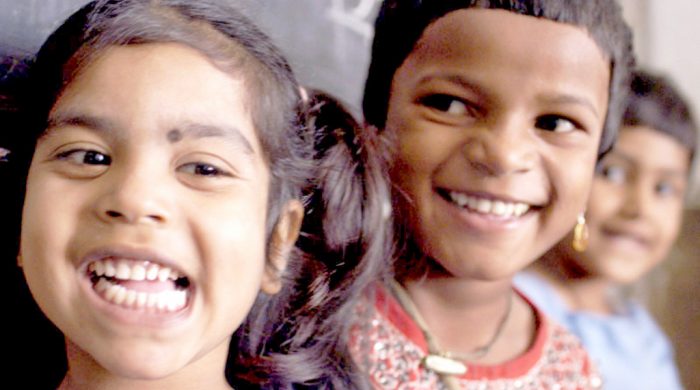
A recent study indicates that 11 per cent of adolescents are overweight, while 40 per cent of boys and 43 per cent of girls lack sufficient physical activity. The number of physically inactive boys is increasing. Inequality — a by-product of our development model — persists even in youth health indicators. Another alarming statistic reveals that 86 per cent of children experience some form of violence.
Dhaka once had a large children’s park. It has remained closed for seven years under the pretext of modernisation. During this prolonged “development”, children have been denied access. Across the country, opportunities for play continue to shrink.
Even diseases reflect shifting patterns. HIV/AIDS, once associated with the developed world, has taken root in Bangladesh, with cases reportedly rising.
Such developments are characteristic of a capitalist model that benefits a minority while marginalising the majority. Globally, it produces unemployment, displacement and conflict. Climate change is perhaps its most critical manifestation. Despite repeated pledges at UN climate conferences to reduce carbon emissions and compensate vulnerable nations, implementation remains elusive. A recent summit in Brazil was widely deemed ineffective. The United States under Donald Trump did not send representatives, with Trump publicly questioning the legitimacy of climate concerns. Future generations may well look back at this period with disbelief.
World Bank figures suggest that 62 million people in Bangladesh — one-third of the population — are at risk of falling below the poverty line. Even this institution, often seen as a guardian of the global capitalist system, acknowledges that the fruits of growth have accrued largely to the wealthy, widening income disparities. Subsidies meant for the vulnerable disproportionately benefit comparatively well-off households. Urban employment has stagnated. Many young people work for wages nearly half of what might be considered fair compensation.
Loan defaulters rarely invest their borrowed funds in industry; rather, money is often siphoned abroad. There was hope that such practices would decline following the governmental change in August 2024. Instead, defaulted loans have doubled over the past year.
At the same time, the birth rate is rising — even as advanced capitalist countries worry about demographic decline. Contributing factors include increasing child marriage and declining commitment to family planning. Parents, fearing insecurity and social threats, marry off daughters early. Patriarchal structures remain entrenched, and concerns over sexual harassment — in public spaces, schools and even homes — have intensified. Female athletes have achieved international recognition, yet credible reports of harassment within sporting circles persist. Media outlets report cases of abuse, sometimes even within their own institutions.
Government enthusiasm for family planning appears to have waned, due largely to bureaucratic indifference. In plain terms, officials lack incentive. Where there is little personal gain, enthusiasm seldom flourishes.
For many children, survival itself is precarious. In Gopalganj, a teenage mother reportedly threw her ten-day-old daughter into floodwaters, overwhelmed by anxiety about the child’s future. She attempted suicide as well but survived; the infant did not. Around the same time, a newborn girl was left at a hospital in Rajshahi with a note reading: “I am Muslim. I am unfortunate. I am compelled by circumstances to leave the baby. Please someone take her. Date of birth: 4 November 2025.”
The note reveals both victimhood and surrender to circumstance — a tragic reality faced by many.
Cultural life, too, reflects erosion. Music education in government primary schools has faced resistance. Collective musical practice has declined. Commercial entertainment flourishes, yet often with spectacle outweighing substance. Baul singers, long bearers of philosophical and spiritual traditions, have historically faced suppression — during Pakistan’s era and, at times, in independent Bangladesh. There have been reports of assaults on Baul artists in recent years, even imprisonment of victims rather than perpetrators. Such incidents raise troubling questions about tolerance and cultural freedom.
The 12 February election marks the beginning of a new political chapter, with a democratically elected government assuming office under the slogan “Bangladesh First”. One hopes that this commitment will translate into policies that place the welfare, dignity and security of all citizens genuinely at the forefront.
The writer is an Emeritus Professor at the University of Dhaka.