Myanmar has begun presenting its defence in a landmark genocide case at the United Nations’ top court, denying that its military campaign against the Rohingya amounted to genocide and arguing that The Gambia has failed to provide sufficient proof.
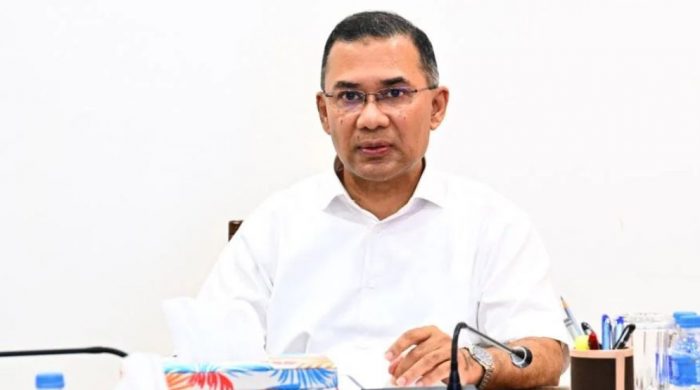
Ko Ko Hlaing, a representative of Myanmar’s government, told judges at the International Court of Justice (ICJ) in The Hague that the allegations brought by The Gambia were “unsubstantiated”. He insisted that the evidence submitted did not meet the high threshold required to establish the crime of genocide.
The case was launched in 2019 by The Gambia, a Muslim-majority West African state, acting with the backing of the 57-member Organisation of Islamic Cooperation. The Gambia accuses Myanmar of violating the 1948 Genocide Convention through a campaign of mass killings, sexual violence and expulsions targeting the Rohingya Muslim minority.
Opening The Gambia’s arguments earlier in the week, Justice Minister Dawda Jallow told the court that Myanmar’s authorities had subjected the Rohingya to decades of persecution and years of dehumanising propaganda, followed by a brutal military crackdown and “continual genocidal policies” aimed at erasing the community’s existence in Myanmar.
More than 700,000 Rohingya fled from Myanmar’s Rakhine State into neighbouring Bangladesh during the 2017 army operations, joining earlier waves of refugees. Thousands were killed, and UN investigators later documented widespread accounts of killings, mass rape and the burning of entire villages.
A UN fact-finding mission in 2018 concluded that senior military figures should be investigated for genocide in Rakhine and for crimes against humanity elsewhere in the country.
Myanmar, which has been under military rule since a coup ousted the elected civilian government in 2021, rejected the UN report and has consistently claimed its actions targeted militants or insurgents rather than civilians.
On Friday, Hlaing told the ICJ that “Myanmar was not obliged to remain idle and allow terrorists to have free rein” in northern Rakhine, where most Rohingya once lived. He said the “clearance operations” referred to in the case were military terminology for counter-insurgency or counter-terrorism campaigns.
The Gambia’s legal team has argued that the killing of women, children and older people, alongside the systematic destruction of Rohingya villages, cannot be justified as part of counter-terrorism efforts. Philippe Sands, one of the lawyers representing The Gambia, said that when all the evidence was considered together, the only reasonable conclusion was that genocidal intent “permeated and informed” Myanmar’s state-led actions against the Rohingya.
Today, more than a million Rohingya refugees live across the border in Bangladesh’s Cox’s Bazar region alone, in what the UN describes as some of the largest and most densely populated refugee camps in the world. Conditions remain dire, with overcrowding, insecurity and shrinking aid supplies.
Hlaing told the court that Myanmar remained committed to securing the return of people from Rakhine State now living in camps in Bangladesh, saying the authorities had worked since 2017 to establish repatriation arrangements.
He said external factors, including the Covid-19 pandemic, had hindered those efforts and argued that this record contradicted The Gambia’s portrayal of an intent to destroy or permanently expel the Rohingya population. A finding of genocide, he added, would leave an “indelible stain” on Myanmar and was therefore of “fundamental importance” to the country’s reputation and future.
The ICJ has set aside three days to hear witnesses in the coming sessions, including Rohingya survivors, but those hearings will be closed to the public and media to protect those giving evidence. A final judgment on the merits of the case is not expected before late 2026, with some reports suggesting the ruling could come six to eight months after the close of the current hearings.
The proceedings are being closely watched worldwide. This is the first full genocide case the ICJ has heard in more than a decade, and legal experts say the court’s reasoning is likely to influence other cases brought under the Genocide Convention, including South Africa’s case against Israel over the war in Gaza.
The case centres on the 1948 UN Genocide Convention, adopted in the aftermath of the Holocaust. The treaty defines genocide as certain prohibited acts — such as killing members of a group or causing them serious bodily or mental harm — committed with the intent to destroy, in whole or in part, a national, ethnic, racial or religious group.
Source: BBC