JS repeals ordinances related to SC, restores 2009 NHRC law amid opposition protests

- Update Time : Thursday, April 9, 2026
- 20 Time

The Jatiya Sangsad on Thursday repealed ordinances related to Supreme Court judges’ appointments and the court secretariat, while restoring the National Human Rights Commission Act 2009 through the passage of new legislation.
The House also repealed three ordinances related to the National Human Rights Commission and restored the National Human Rights Commission Act 2009 by passing the National Human Rights Commission (Repeal and Re-enactment) Bill, 2026.
Law minister Md Asaduzzaman had earlier tabled the Supreme Court Judges Appointment (Repeal) Bill 2026, the Supreme Court Secretariat (Repeal) Bill 2026, and the National Human Rights Commission (Repeal and Re-enactment) Bill 2026 on April 6.
The bills were passed by voice vote on Thursday despite strong protests from opposition lawmakers.
The legislation repeals three ordinances related to the National Human Rights Commission and reinstates the 2009 Act on an interim basis.
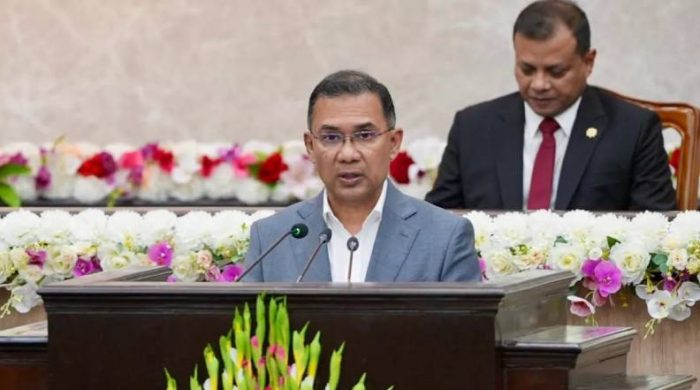
During the session, presided over by speaker Hafiz Uddin Ahmed, Cumilla-4 lawmaker Hasnat Abdullah strongly opposed the move.
He argued that the 2009 NHRC law had previously been used to suppress opposition voices and warned that returning to it would represent a backward step for the country.
He questioned the neutrality of the commission, noting that the six-member selection committee is largely composed of government representatives, which could compromise its independence.
Hasnat pointed to provisions in the 2009 law that require prior approval from authorities to investigate alleged human rights violations involving state agencies, arguing that this could hinder transparent and impartial inquiries.
Responding to the criticism, law minister Asaduzzaman described the remarks as politically driven and more suited to public rallies than parliamentary proceedings.
He said that the reinstatement of the 2009 law was a temporary measure to ensure the commission remains operational while further consultations are carried out.
The minister said that the bill made clear that broader engagement with stakeholders would take place before finalising reforms.
He also criticised the 2025 ordinance, arguing that it lacked clear provisions on investigations and penalties and could undermine neutrality by allowing the commission to act as a complainant in cases.
The minister said that while the government remained committed to holding human rights violators accountable, the legal framework must be transparent and inclusive.
Consultations with a wide range of stakeholders, including marginalised communities and political parties, were expected before final amendments are introduced, he said.
According to the bill, repeal of the Supreme Court Secretariat-related ordinances would dissolve the secretariat established under those ordinances. Its budget, ongoing projects and programmes will be transferred to and vested in the government’s Law and Justice Division. The posts created for the secretariat will also be abolished.
The bill titled the Supreme Court Judges Appointment (Repeal) Bill, 2026, states that, despite the repeal of the 2025 ordinance, any actions taken or measures adopted under it shall be deemed to have been lawfully taken or adopted.
Similarly, the National Human Rights Commission (Repeal and Re-enactment) Bill, 2026, provides that although the National Human Rights Commission (Amendment) Ordinance, 2024, the National Human Rights Commission Ordinance, 2025, and the National Human Rights Commission (Amendment) Ordinance, 2025 will be repealed, any actions taken under those ordinances will remain valid.
On the day, JS also passed nine other bills unanimously.
Law minister placed Legal Aid Services (Amendment) Bill, 2026, which was passed unanimously.
Similarly, the Bangladesh Energy Regulatory Commission (Amendment) Bill, 2026, placed by power, energy and mineral resources minister Iqbal Hassan Mahmood, the Public Procurement (Amendment) Bill, 2026, placed by planning minister Amir Khosru Mahmud Chowdhury, were passed unanimously.
On behalf of expatriates’ welfare and overseas employment minister Ariful Haque Choudhury, state minister Md Nurul Haque placed the Overseas Employment and Migrants (Amendment) Bill, 2026.
On behalf of Ariful, Nurul placed the Bangladesh Labour (Amendment) Bill, 2026.
Both bills were passed unanimously.
Local government state minister Mir Shahe Alam, on behalf of local government, rural development and co-operatives minister Mirza Fakhrul Islam Alamgir, placed the Local Government (Union Parishads) (Amendment) Bill, 2026. The bill was passed unopposed.
Earlier, the youth and sports state minister Md Aminul Haque placed the National Sports Council (Amendment) Bill, 2026, the Bangabandhu Krirasebi Welfare Foundation (Amendment) Bill, 2026, and the Sheikh Hasina National Institute of Youth Development (Amendment) Bill, 2026.
According to chief whip Nurul Islam, lawmakers were under pressure to ratify 133 ordinances issued by the interim government within the 30 days of starting the first session, as stipulated under Article 93 of the constitution.