Half of youth find no job in 10 years: WB

- Update Time : Wednesday, March 18, 2026
- 61 Time

The World Bank on Tuesday urged the newly elected government led by the Bangladesh Nationalist Party to undertake the long-pending macro-economic and financial sector reforms for employment generation as nearly half of working-age youth did not find jobs in the past decade.
In the past decade, 14 million youth entered Bangladesh’s labour market, competing for only 8.7 million jobs, according to a press release issued by the Washington-based global lender in connection with a three-day visit by its vice-president for South Asia, Johannes Zutt, in the capital Dhaka.
‘Nearly half of working-age youth did not find jobs. Young women face particularly steep barriers,’ said Zutt.
Economists have long been asking the government to address problems in the economic sectors, including banks and ports, without which private investment in the country would not increase.
The crisis of job creation will continue, said Bangladesh Institute of Development Studies director general AK Enamul Haque.
Especially, the growing number of unemployed university graduates is a big concern, added the BIDS DG.
The country is now grappling with the rising rate of unemployed graduates at 13.5 per cent, the highest among all education levels, according to the Labour Force Survey 2024.
The rate more than doubled over the past eight years when the survey put the overall unemployment rate at 3.66 per cent in the country.
In the recent years, about 7 lakh students have been graduated from about 172 public and private universities.
Enamul lamented that the interim government, the tenure of which ended recently, could not make a significant progress in making reforms on the economic front in its 18-month tenure.
The private sector credit growth in Bangladesh dropped to a record low of 6.03 per cent in January, marking a continued decline from 6.1 per cent in December 2025.
Without higher private sector investment, the manufacturing sector could not create more jobs, said Mustafa K Mujeri, executive director of the Institute for Inclusive Finance and Development, an independent research organisation.
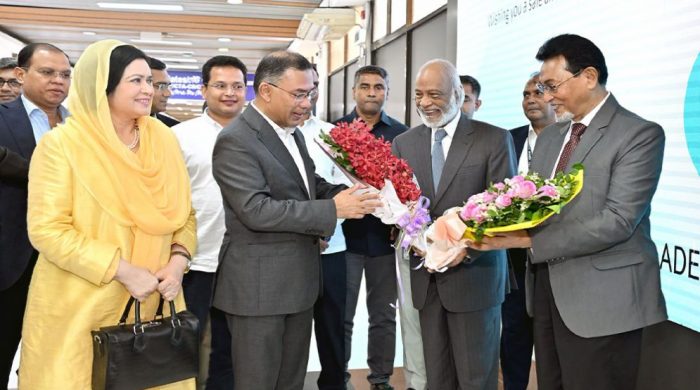
In his three-day visit, the WB vice-president for South Asia met with high-ups of the newly elected government as well as other government officials and civil society representatives.
Appreciating the government priority for large-scale job creation, alongside skills and investment, Zutt said that they were stepping up their focus on supporting the government.
‘With global uncertainties rising, it is urgent for the government to undertake the long-pending macro-economic and financial sector reforms that are needed to address foundational bottlenecks to economic growth and job creation,’ added Zutt.
He met with finance and planning minister Amir Khasru Mahmud Chowdhury, commerce minister Khandakar Abdul Muktadir, prime minister’s adviser on finance and planning Rashed Al Titumir, and the Bangladesh Bank governor Mostaqur Rahman to discuss the government’s development priorities and the areas in which the WB could help.