Electric vehicles can cut running costs by 75 per cent: DCCI

- Update Time : Saturday, June 27, 2026
- 0 Time
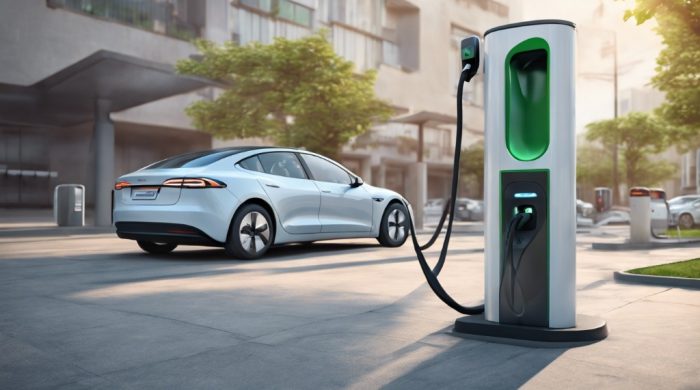
Electric vehicles could slash transport running costs by as much as 75 per cent compared to fossil fuel vehicles but deep structural barriers, from crippling energy shortages to near-absent charging infrastructure are slowing Bangladesh’s transition, according to a paper presented by the Dhaka Chamber of Commerce and Industry on Saturday.
DCCI president Taskeen Ahmed presented the paper at a seminar titled The Electric Vehicle: Challenges and Prospects in Bangladesh, organised by the chamber in collaboration with the Bangladesh Sustainable and Renewable Energy Association at DCCI Auditorium in Motijheel, Dhaka.
Against Bangladesh’s total registered vehicle fleet of 67.24 lakh, only 669 registered EVs (excluding electric three-wheelers) are on the road, the paper noted, a striking contrast with an estimated six million locally manufactured, largely unregulated electric three-wheelers already in circulation.
The government has set a target of 30 per cent EV adoption in the public and autonomous sectors by 2030.
The presentation highlighted that EVs offer a running cost of approximately Tk 2.8 to 3.8 per kilometre compared to Tk 11 to 14 per kilometre for petrol and diesel vehicles, along with 30 to 50 per cent lower maintenance expenditure.
Yet the high initial purchase price remains a significant deterrent for consumers, it said.
Six structural challenges were identified as the primary barriers to EV growth — limited charging infrastructure with uneven urban-rural coverage, high upfront vehicle costs, a severe depot shortage with fewer than 30 state-run depots nationwide despite over 53,000 buses operating across the country, underdeveloped battery safety and recycling ecosystems, uncertain payback periods, and most critically, the ongoing energy crisis.
With national electricity demand standing at around 17,000 MW, persistent power shortfalls are forcing industries to operate at roughly half their capacity, making large-scale EV grid charging a daunting challenge.
Bangladesh has introduced a series of policy incentives in recent budgets, including reducing EV charger import duties from 39.75 per cent to 1 per cent, cutting EV registration AIT from Tk 2,00,000 to between Tk 25,000 and Tk 1,00,000 depending on motor capacity, raising auto loan limits for electric and hybrid vehicles from Tk 60 lakh to Tk 80 lakh, and extending VAT exemptions on local EV assembly until June 2031.
Drawing on cross-country comparisons, the paper cited Norway, where EVs account for 97.4 per cent of new car sales, as a model built on sustained tax exemptions, toll waivers and near-total renewable electricity generation.
China and India were cited for demonstrating scalable approaches centred on two- and three-wheeler electrification before expanding to larger vehicles.
The DCCI recommended that Bangladesh adopt a phased EV roadmap prioritising two- and three-wheeler local manufacturing, launch pilot EV bus deployments of 300 to 500 units in Dhaka and Chattogram, mandate standardised charging equipment, integrate EV-ready provisions into building codes, and develop a centralised national charging rollout plan aligned with urban planning.
A National Energy Storage Roadmap is being formulated to support clean energy and EV battery systems, the paper noted.