Can foreign policy be driven by personal emotion?

- Update Time : Tuesday, August 25, 2026
- 0 Time

A politician can be outspoken. A diplomat can be firm. A minister can take an uncompromising position. But when a state minister speaks on an important foreign-policy issue before the government itself has clearly stated its position—and does so in a way that makes it sound like the official decision of the state—a basic question inevitably arises: Who, exactly, is setting the country’s foreign policy?
Humaiun Kobir is not new to international affairs. He spent many years in Britain and has experience working in government and private offices there. According to his profile published on the Ministry of Foreign Affairs website, he held several positions connected to the UK government.
He also served as a Cabinet Executive Officer in the office of the Mayor of Lewisham, where he supported senior executives, coordinated administrative work, engaged with stakeholders and helped advance local-government priorities.
Later, he worked as a Strategy Assistant at the Mayor of London Economic Development Agency, contributing to strategic planning, economic development initiatives and policy analysis.
Before becoming a state minister in Bangladesh this week, Humaiun Kobir also served as the prime minister’s adviser on foreign affairs with the rank of a state minister. That is clearly valuable experience. But experience, however extensive, does not give anyone unlimited authority to speak for the state beyond the responsibilities and mandate of their office.
The controversy over Humaiun Kobir’s citizenship, for example, should have been relatively easy to settle. Reports have raised questions about whether he formally renounced his British citizenship before joining the government. Given the constitutional provisions relating to foreign citizenship and eligibility to serve as a member of parliament, minister, state minister or deputy minister, these are not unreasonable questions.
At its core, this is a matter of fact. The simplest way to end the debate would have been to publish the relevant documents.
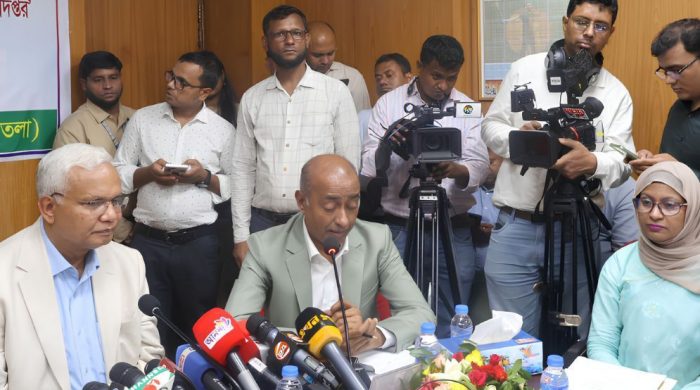
Instead, when journalists raised the issue, Humaiun Kobir questioned which newspaper was interested in it. He also referred to the political events of 2008 and the caretaker government led by Moeen U Ahmed and Fakhruddin Ahmed. That response did little to address the question and, if anything, added to the controversy.
Responding to a journalist, Humaiun Kobir said: “I am dealing with citizens, and you are talking about netizens! What netizens? I deal with citizens; I work. You talk about netizens! So which newspaper is it? Who is so upset that they will not let me work? Why are they so upset? Is it the itch of 2008 coming back? Is the itch of Moeenuddin-Fakhruddin era flaring up again?”
Public officials are entitled to expect respect for their office. But legitimate questions from journalists should not automatically be treated as personal attacks. Journalists are not there to flatter ministers. Their job is to ask questions—and sometimes those questions will be uncomfortable.
The controversy also raises a broader concern about Humaiun Kobir’s approach to diplomacy.
Diplomacy is not a television talk show. Not every disagreement with another country needs to become a public confrontation, and not every diplomatic difference needs to be turned into a personal dispute.
The more serious issue, however, concerns his remarks on matters of strategic importance.
Take the Mecca Joint Defence Agreement involving Saudi Arabia, Türkiye and Pakistan. The agreement provides for collective defence, meaning that an armed attack on one member would be considered an attack on all three. This is not a routine diplomatic arrangement; it is a matter with clear strategic and security implications.
Humaiun Kobir has said that Bangladesh has expressed interest in the agreement. He has also suggested that it would not be unusual for Muslim-majority countries to participate in such a security arrangement.
Yet reports indicate that Bangladesh has not made any formal decision to join. That difference matters.
If the government has decided to explore the possibility of joining the agreement, it should say so clearly. If discussions are still at an early stage, that should also be made clear. And if Humaiun Kobir was merely expressing his personal assessment rather than announcing an official government decision, then the government should clarify that without delay.
Bangladesh has traditionally tried to maintain a careful balance in its foreign policy. The principle of “friendship to all, malice towards none” has helped the country maintain relations with competing powers while avoiding unnecessary involvement in strategic alliances.
In particular, Bangladesh has generally avoided military and defence alliances.
That does not mean the policy can never change. Circumstances change, and governments may decide that national interests require a new approach. No foreign-policy principle is beyond reconsideration.
If the government believes that Bangladesh’s security interests now require a different strategic direction, it has every right to make that argument. But a decision of this importance should come through institutional discussion, proper assessment and a clear government process. An elected government should also be prepared to explain such a major policy shift to the public.
Foreign policy should not depend on the views or impulses of a single individual or a small group.
This is particularly important when it comes to India. Bangladesh is fully entitled to strengthen its ties with Saudi Arabia, Türkiye and Pakistan. At the same time, it is equally entitled to manage its relationship with India on the basis of equality, fairness and mutual respect.
Bangladesh-India relations are already sensitive. Careless or unnecessary personal remarks on foreign policy can create avoidable tension—not only with India, but with other countries as well. Rebuilding and maintaining trust in international relations requires restraint as much as confidence.
Strong diplomacy does not need to be dramatic.
In fact, some of the most effective diplomacy happens quietly, away from microphones and television cameras. Often, the best diplomats are not those who speak the loudest, but those who achieve the most.
The questions surrounding Humaiun Kobir, therefore, go beyond one individual minister.
Has he formally renounced his British citizenship? If so, can he provide the relevant documents? When he said Bangladesh was interested in joining the Mecca defence arrangement, was he stating the government’s position or expressing his own view? And when he responded to journalists’ questions about his citizenship, was that simply his personal reaction, or did it reflect the government’s position?
These are not hostile or politically motivated questions. In a democratic society, they are normal, legitimate and necessary.
There is sometimes a tendency to believe that the louder a minister speaks about foreign policy, the more seriously the world will listen.
That is not how diplomacy works.
Bangladesh must ensure that when a minister speaks on matters of foreign policy, the country—and the world—can be confident that the words represent the government’s position, not merely the personal opinion of the individual speaking.|